
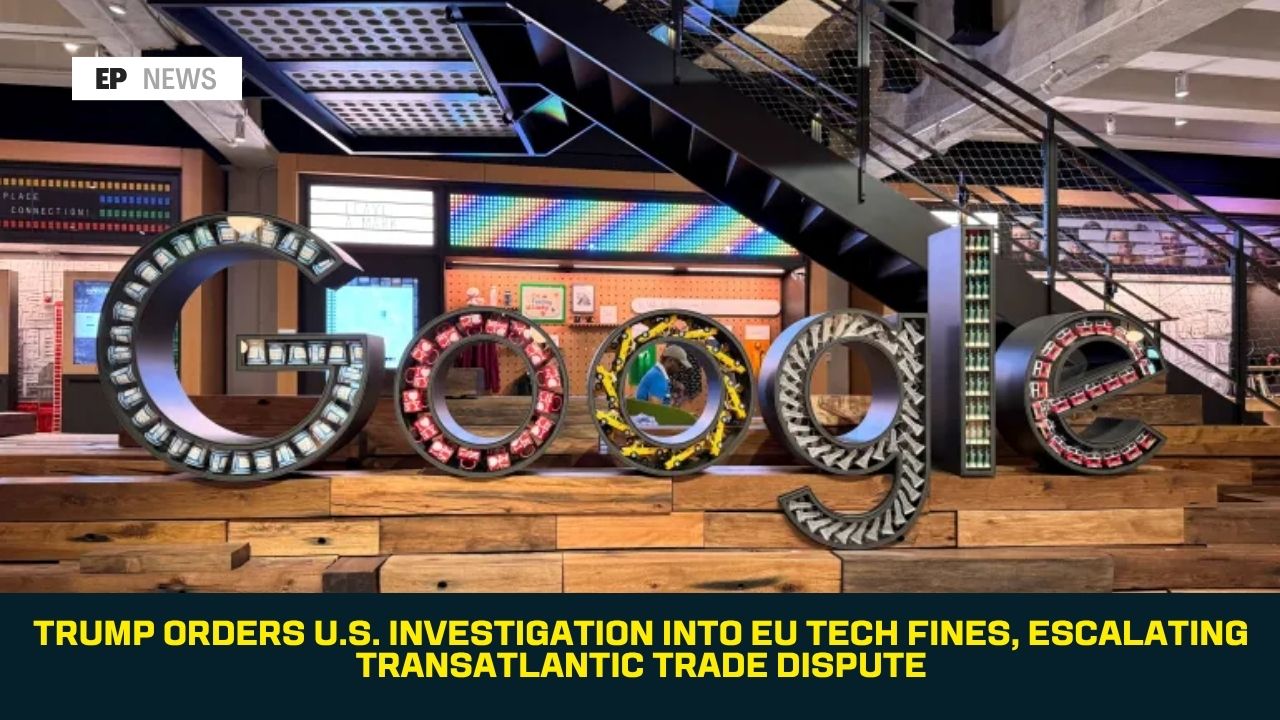
Trump Orders U.S. Investigation Into EU Tech Fines, Raising New Trade Tensions
The United States and the European Union are once again at the center of a major trade dispute after President Donald Trump announced that his administration will launch a formal investigation into the European Union’s treatment of American technology companies.
The announcement comes after European regulators imposed another significant antitrust penalty on Google and continued regulatory pressure on several U.S.-based technology giants. Trump argued that the EU has unfairly targeted American companies through billions of dollars in fines and regulatory actions, calling the bloc’s practices “unethical.”
The latest move could become one of the biggest trade developments between Washington and Brussels in 2026 and may influence future negotiations involving digital markets, tariffs, and international technology regulation.
Why Did Trump Launch the Investigation?
According to statements released by President Trump, the administration believes European regulators have repeatedly imposed excessive financial penalties on American technology firms while giving domestic competitors preferential treatment.
The investigation will examine whether EU enforcement actions amount to unfair trade practices that harm U.S. businesses operating overseas. Officials are expected to evaluate:
- EU antitrust investigations
- Digital competition rules
- Financial penalties against American companies
- Potential discrimination against U.S. businesses
The administration says the investigation will determine whether additional U.S. trade measures are necessary.
Google Fine Becomes Immediate Trigger
The latest announcement follows a major European Commission decision imposing another large antitrust fine on Google.
European regulators concluded that Google violated digital competition regulations by using its dominant position to steer consumers toward its own products and services, harming competitors.
The latest financial penalty reportedly approaches €890 million (approximately $1 billion), adding to years of regulatory action against Google inside Europe.
Other American Companies Also Mentioned
While Google remains the primary focus, President Trump also referred to several other major American technology companies, including:
- Apple
- Meta
- Amazon
According to Trump, these companies have collectively faced billions of dollars in European penalties over recent years.
The White House argues these enforcement actions represent a broader pattern rather than isolated legal decisions.
Why Europe Regulates Big Tech
European regulators maintain that their actions are designed to protect consumers and ensure fair competition.
The EU has spent years enforcing its Digital Markets Act and broader competition laws, arguing that dominant digital platforms should not abuse their market position.
Regulators say their investigations apply equally regardless of where a company is headquartered.
Previous enforcement has involved:
Search, Android and advertising investigations.
Apple
App Store competition policies.
Meta
Digital advertising and data privacy issues.
Amazon
Marketplace competition concerns.
European officials argue these rules encourage innovation by preventing dominant firms from limiting competition.
Possible Impact on U.S.–EU Trade
Although the investigation itself does not immediately impose tariffs or penalties, it could become the first step toward broader trade action.
Possible outcomes include:
New Trade Negotiations
Washington may seek negotiations aimed at reducing regulatory conflicts.
Tariff Discussions
If the investigation concludes that EU practices are discriminatory, the administration could consider additional trade measures.
Legal Challenges
The dispute could eventually involve international trade mechanisms or negotiations between both governments.
Business Uncertainty
Large technology firms operating globally may face continued regulatory uncertainty while governments negotiate.
How Markets Could React
Investors often monitor trade disputes closely because regulatory conflicts can affect:
- Technology company earnings
- International investment
- Cross-border digital services
- Supply chains
- Market confidence
However, financial analysts note that investigations typically take time before producing policy changes.
What This Means for Consumers
For everyday consumers, the investigation is unlikely to produce immediate changes.
However, future developments could influence:
- Digital app marketplaces
- Online advertising
- Smartphone ecosystems
- Subscription services
- Digital competition rules
If both governments negotiate new agreements, consumers could eventually see changes in how digital platforms operate internationally.
Global Significance
The dispute highlights a broader global debate over how governments should regulate dominant technology companies.
The United States generally emphasizes supporting innovation while ensuring competitiveness.
The European Union has taken a more aggressive regulatory approach, introducing stricter rules governing large online platforms.
The differing philosophies have increasingly become a source of diplomatic and economic friction.
What Happens Next?
The newly announced U.S. investigation is expected to proceed over the coming months.
Officials will review:
- EU regulatory decisions
- Economic impact on American companies
- Trade law implications
- Possible policy responses
No immediate retaliatory measures have been announced, and any future action would likely follow the investigation’s findings.
Frequently Asked Questions (FAQ)
Why did President Trump announce the investigation?
The administration says it wants to determine whether European Union fines against American technology companies constitute unfair trade practices.
Which companies are involved?
Google is the immediate focus, while Apple, Meta, and Amazon were also mentioned as examples of U.S. firms facing EU regulatory action.
Has the United States imposed new tariffs?
No. The announcement concerns the launch of an investigation, not immediate tariffs or sanctions.
Why does the EU fine technology companies?
European regulators say the penalties enforce competition laws and prevent dominant companies from abusing market power.
Conclusion
President Trump’s decision to launch a formal investigation into European Union penalties on American technology companies marks a significant new chapter in U.S.–EU trade relations. While no immediate economic measures have been announced, the investigation could shape future negotiations over digital regulation, international competition policy, and trade. As both sides defend their respective approaches, businesses, investors, and consumers will be watching closely for the next developments in one of the world’s most important economic relationships.