
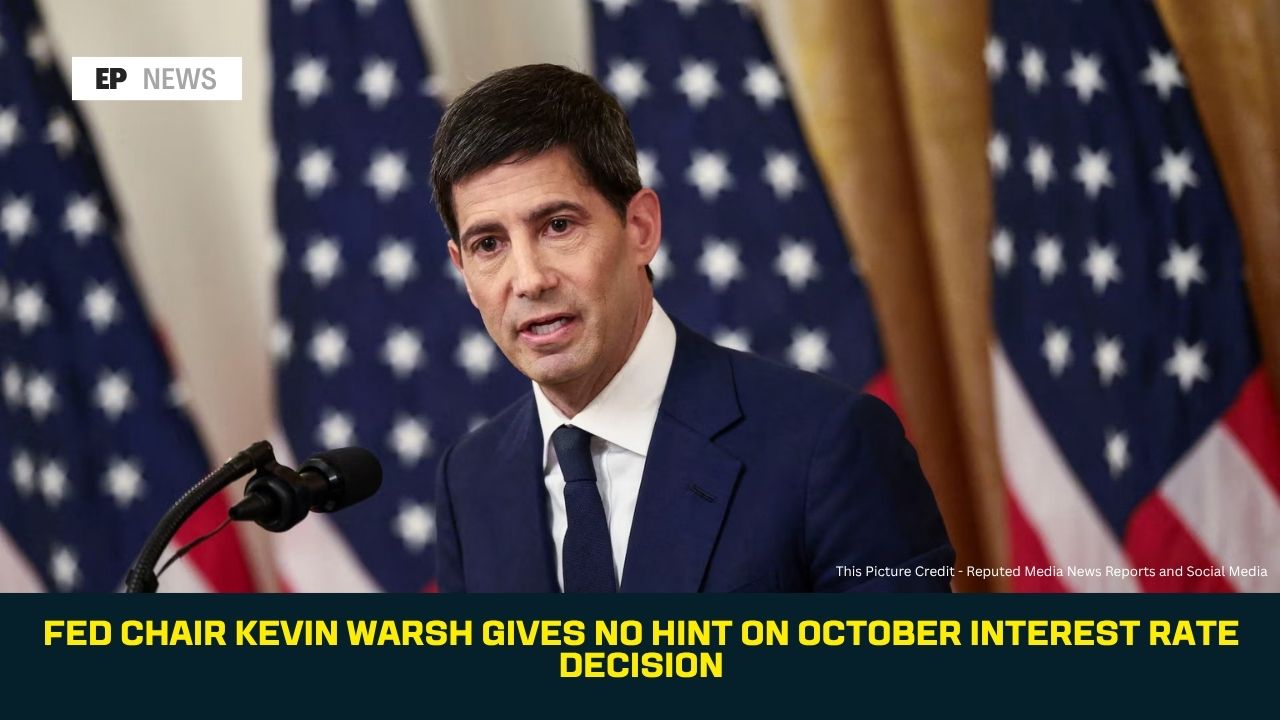
Fed Chair Kevin Warsh Gives No Hint on October Interest Rate Decision
Publication Date: October 16, 2026
Category: U.S. Economy / Personal Finance
Location: Bangkok, Thailand
Federal Reserve Chair Kevin Warsh has declined to signal whether the central bank will raise interest rates again or leave them unchanged at its next policy meeting, keeping investors and American households waiting for greater clarity about the direction of monetary policy.
Speaking at the 2026 IMF-World Bank annual meetings in Bangkok on Friday, October 16, Warsh said he does not prejudge interest-rate decisions before official meetings. His comments came ahead of the Federal Reserve’s October 27–28 meeting, when policymakers are expected to assess economic conditions and decide their next move.
According to Reuters, the Federal Reserve raised rates in September. Warsh said that decision was intended to reinforce the central bank’s commitment to price stability and reduce monetary accommodation. He did not indicate whether another increase was likely in October.
The lack of a clear signal leaves an important question unanswered for consumers, businesses and financial markets: will borrowing costs rise further, or will the Federal Reserve pause to evaluate the effects of its recent decision?
For Americans, the outcome matters because interest-rate policy can influence credit-card costs, auto financing, business loans, savings yields and broader economic activity. However, the effect on individual financial products varies, and the Fed’s next decision will depend on the evidence policymakers review.
What Did Kevin Warsh Say About Interest Rates?
Warsh made clear that he did not want to prejudge the Federal Reserve’s upcoming policy meetings. Rather than promising an increase or a pause, he emphasized that decisions should be made through the central bank’s formal process.
His remarks are significant because investors often look for clues in speeches by the Fed chair. Even small changes in language can affect expectations about borrowing costs and financial markets.
This time, however, Warsh did not offer a definitive preview of the October decision. Reuters reported that market participants expected the central bank to hold short-term rates steady, but the chair did not confirm that outcome.
It is important to distinguish between market expectations and an official policy decision. Expectations can change as new economic information becomes available, and the Federal Reserve is not required to follow investors’ predictions.
The October meeting will provide a formal opportunity for policymakers to review conditions and decide whether the current policy stance remains appropriate.
Why the September Rate Increase Matters
The Federal Reserve raised interest rates in September, according to Warsh’s remarks reported by Reuters. He said the move was intended to support price stability and remove some monetary accommodation.
Interest-rate increases are one of the tools central banks use to influence financial conditions. Higher policy rates can make borrowing more expensive, potentially slowing spending and investment. That can help reduce inflationary pressure, although the effects are not immediate and depend on wider economic conditions.
The same policy can also create challenges for households and businesses that rely on credit. A family financing a vehicle, a small business seeking a loan or a consumer carrying a variable-rate credit-card balance may face different costs as financial conditions change.
The effects are not identical across all borrowers. Some loans have fixed interest rates, while others adjust according to market benchmarks or lender pricing. Existing fixed-rate mortgages, for example, generally do not change their interest rate simply because the Federal Reserve adjusts its policy rate.
Warsh’s September comments therefore provide context for the next meeting, but they do not establish that another rate increase is coming.
What the October 27–28 Fed Meeting Could Decide
The Federal Reserve’s next meeting is scheduled for October 27–28. Policymakers will have to decide whether to raise rates again, maintain the current level or consider another appropriate adjustment based on the economic information available to them.
A decision to hold rates steady would not necessarily mean the central bank had declared victory over inflation. It could simply indicate that policymakers wanted more time to assess the effects of previous decisions and incoming data.
An additional increase, on the other hand, could indicate that policymakers believe tighter financial conditions are needed to support price stability. Such a move would also need to be evaluated against risks to economic growth and employment.
The chair’s comments do not resolve that choice. They reinforce the point that the final decision has not been announced in advance.
Consumers should therefore be cautious about headlines claiming that a particular outcome is guaranteed. Until the Federal Reserve releases its decision, a rate increase or pause remains an outcome to be assessed rather than a confirmed event.
How Fed Interest Rates Affect American Households
The Federal Reserve does not set every interest rate paid by consumers. Instead, its policy decisions influence broader financial conditions, which can affect the rates banks and other lenders offer.
The precise effect depends on the type of financial product, the lender, the borrower’s credit profile and market conditions.
Credit cards
Many credit cards have variable interest rates. When market rates rise, annual percentage rates on these accounts can also increase, depending on the terms of the account and the benchmark used.
For consumers who carry balances from month to month, even a modest rate change can add to borrowing costs. Paying more than the minimum payment, reducing outstanding balances and avoiding unnecessary new debt can help limit interest expenses.
Consumers should review their card agreements and statements rather than assuming every account will respond in the same way to a Fed decision.
Mortgages and home loans
The effect on mortgage rates is more complicated. Fixed-rate mortgage pricing is influenced heavily by longer-term Treasury yields, mortgage-backed securities markets, inflation expectations and lender conditions.
As a result, a Federal Reserve rate cut does not guarantee an immediate decline in mortgage rates, and a rate increase does not necessarily produce an equal increase in every mortgage product.
Homebuyers and homeowners considering refinancing should compare current offers, closing costs and the full terms of a loan instead of relying on predictions about the Fed alone.
Auto loans
Auto financing costs can depend on market interest rates, lender funding costs, the vehicle being purchased, the loan term and the borrower’s credit history.
When evaluating a vehicle purchase, buyers should compare the annual percentage rate, total interest paid and overall loan cost. A longer repayment term may lower the monthly payment while increasing the total amount paid over time.
The October policy decision may influence financial conditions, but it will not determine every auto-loan offer.
Savings accounts and certificates of deposit
Higher interest rates can support stronger yields on some savings accounts and certificates of deposit. However, banks do not all adjust their deposit rates at the same pace or by the same amount.
If the Federal Reserve holds rates steady, savers should not assume their bank will automatically keep a particular rate unchanged. Deposit rates remain subject to each institution’s pricing decisions and account terms.
Consumers can compare annual percentage yields, minimum balance requirements, withdrawal restrictions and fees when deciding where to keep savings.
What Investors Will Watch Before the Meeting
Financial markets will continue assessing the information available before the October meeting. Warsh’s comments suggest that investors should not expect a firm answer from the chair before policymakers meet.
Several factors may influence market expectations, including inflation data, employment figures, consumer spending and other indicators of economic activity. The Federal Reserve also evaluates risks that may not be captured by a single report.
Market participants will pay attention to whether incoming data changes their view of inflation and economic momentum. But even if investors become more confident about a particular outcome, the final decision remains with the Federal Open Market Committee.
Investors should also remember that markets can react to expectations before an official announcement. Asset prices may move in anticipation of a decision, then change again when the actual decision or accompanying guidance differs from what traders expected.
For long-term investors, reacting to every shift in rate expectations can create unnecessary trading costs and risk. Decisions should reflect individual goals, time horizons, diversification and capacity for loss rather than a single forecast about the next meeting.
Could the Fed Raise Rates Again?
A further increase remains possible, but Warsh did not announce that one was planned. Reuters reported that market expectations leaned toward rates remaining steady at the October meeting, while the chair declined to preview the outcome.
The central bank will have to weigh the need to maintain price stability against the effects of tighter financial conditions. The appropriate choice depends on policymakers’ assessment of the economy and the risks they see ahead.
It would be misleading to interpret Warsh’s refusal to give a preview as evidence that rates must rise or that a pause is certain. His statement was about not prejudging the decision, not a hidden promise of a particular outcome.
The most reliable indicator will be the official policy announcement following the meeting, along with any explanation the Federal Reserve provides for its decision.
What Consumers Can Do While Waiting for the Decision
Americans do not need to predict the exact outcome of the meeting to make sensible financial preparations.
Consumers with variable-rate debt can review their current interest rates and consider a realistic repayment plan. Those planning a major purchase can compare financing offers and assess whether the monthly payment remains affordable if borrowing costs change.
Savers can check the rates and conditions on their existing accounts. Investors can revisit their long-term plans and avoid making rushed decisions based solely on short-term market speculation.
Anyone considering refinancing should compare the total costs of the new loan with the potential savings. A lower advertised rate does not automatically make refinancing worthwhile if fees and other expenses outweigh the benefit.
These steps can help households prepare for different interest-rate outcomes without assuming the Federal Reserve has already chosen one.
Frequently Asked Questions
When is the next Federal Reserve interest-rate meeting?
The next meeting is scheduled for October 27–28, 2026, according to Reuters’ October 16 report.
Did Kevin Warsh confirm another interest-rate increase?
No. Warsh said he does not prejudge interest-rate decisions and did not reveal whether the Fed would raise rates or hold them steady at the October meeting.
Did the Federal Reserve raise rates in September 2026?
Yes. Warsh referred to the September rate increase in remarks reported by Reuters. He said the move was intended to reinforce price stability and reduce monetary accommodation.
Will mortgage rates fall if the Fed holds rates steady?
Not necessarily. Mortgage rates are influenced by longer-term market yields, inflation expectations and lender conditions, among other factors. A Fed pause does not guarantee that mortgage rates will decline.
What should consumers do before the October Fed decision?
Consumers can review variable-rate debts, compare savings yields, evaluate financing offers and maintain a realistic budget. These steps can help prepare for changing financial conditions without relying on a specific rate forecast.
Conclusion
Federal Reserve Chair Kevin Warsh has kept the October interest-rate decision open, declining to indicate whether policymakers will raise rates again or leave them unchanged. His comments at the IMF-World Bank meetings in Bangkok underscore the central bank’s approach of making decisions at official meetings rather than promising a particular outcome in advance.
The September rate increase provides important context, but it does not determine what happens next. Policymakers will have to assess economic conditions before deciding how to proceed on October 27–28.
For American households, the practical message is to avoid treating market expectations as a confirmed Fed decision. Borrowing costs, mortgage rates and savings yields can respond differently to changes in monetary policy. Reviewing personal finances and comparing actual financial offers will be more useful than relying on predictions alone.
Source: Reuters, “Fed’s Warsh gives no hint on October policy decision,” published October 16, 2026.
This article is for general news and educational purposes and is not individualized financial advice.