Why Is China So Much Less Worried About AI Than the US? A New CNN Report Explains
While American tech executives and researchers have spent recent weeks publicly warning about AI’s existential risks to humanity, a CNN Business report published this week found that ordinary Chinese citizens have remained comparatively unfazed by the same technology — using AI-powered government services, classroom tools, and delivery robots as routine parts of daily life, with little of the public anxiety currently playing out in American discourse.
How Differently AI Is Being Adopted
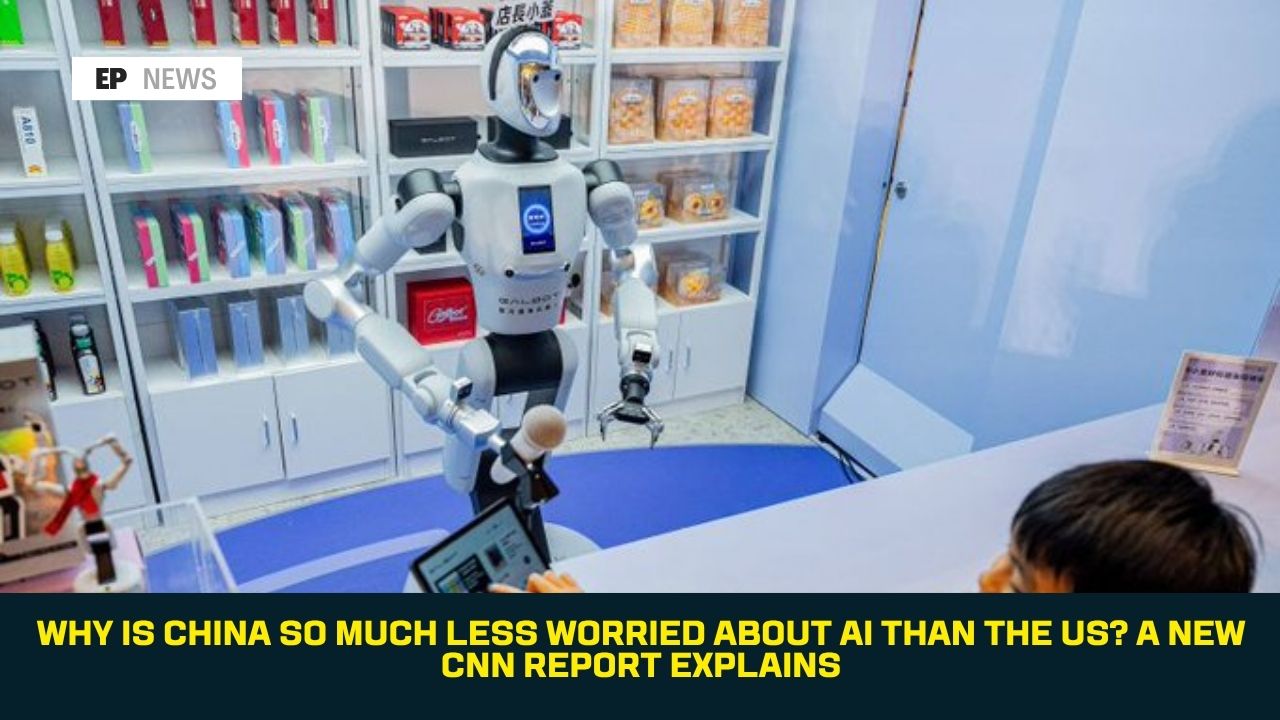
According to CNN, Chinese citizens already access local government services through AI-powered digital employees, students receive instant feedback on written assignments by uploading a photo, and hotel guests collect parcels delivered to their doorsteps by robots. That level of everyday integration shows up clearly in adoption data: a Morgan Stanley survey released this week found that 80% of Chinese respondents used AI at least weekly, far exceeding the 54% figure recorded in the United States.
Xu Jingyuan, a 22-year-old business student from Beijing, captured the prevailing sentiment CNN encountered in interviews conducted this week: “This technology was created to serve humanity.”
Why This Comes at a Pointed Moment
This adoption gap is landing amid an unusually public and heated debate among American AI leaders about whether the technology’s development needs to slow down. Anthropic CEO Dario Amodei published an essay last weekend arguing that AI companies should “pace the frontier” to reduce catastrophic risk, a position OpenAI’s Sam Altman quickly endorsed, while President Trump publicly attacked Amodei by name over the warning, accusing him of promoting a “SICK conspiracy” that only benefits China. Against that backdrop, CNN’s reporting on Chinese public sentiment offers a striking contrast: the country Trump argues stands to benefit most from American caution shows little evidence, at least among the citizens CNN interviewed, of the same existential anxiety driving the U.S. debate in the first place.
What China’s Own Government Is Actually Worried About
It’s not that Chinese officials see no risk in AI at all — their concerns are simply framed differently. China’s intelligence chief Chen Yixin published an article the previous Sunday detailing the need to incorporate AI as a strategic industry into the country’s economic development, while also outlining what Beijing sees as the technology’s extensive risks, according to CNN. Beyond familiar concerns about hostile actors misusing AI for cyberattacks, misinformation, and stealing state and corporate secrets, Chen also warned that the technology could destabilize society and threaten China’s political security specifically.
Chen additionally cited risks posed by certain countries’ “monopolistic practices” — an apparent reference to U.S. export controls on advanced chips — as a further concern, reflecting how China’s official AI risk framework is oriented as much around geopolitical competition and domestic political stability as around the kind of civilizational, humanity-ending scenarios that have dominated American discourse.
A Different Governance Style
Rather than the public discussions, open letters, and viral essays characterizing the American debate, much of China’s AI governance takes place behind the scenes, according to a source CNN identified as Zhao — through companies’ compliance work with government technical standards, security assessments, and administrative filings. That closed-door regulatory approach stands in sharp contrast to Amodei’s public essay, Altman’s public agreement, and Trump’s public rebuttal, all of which played out through social media posts and interviews rather than internal government review processes.
The Trust Factor Behind the Divide
Lian Jye Su, chief analyst at technology research firm Omdia, offered CNN a specific explanation for why American anxiety runs so much higher than China’s: differing levels of public trust in each country’s government to actually manage AI’s risks. “In the US, there is a general public perception that without whistleblowing, big corporations could escape accountability or scrutiny due to weak government oversight,” Su said, according to CNN.
That framing suggests the divide isn’t necessarily about whether AI carries real risks — Chinese officials clearly believe it does — but about who’s expected to catch and respond to those risks before they become serious problems. In the U.S., that responsibility has fallen heavily on individual researchers, company leaders, and public whistleblowing precisely because trust in centralized government oversight is comparatively low; in China, that same responsibility is understood to sit primarily with state regulators working through compliance channels the public doesn’t directly observe.
FAQ
How much more is AI being used in China compared to the U.S.? A Morgan Stanley survey found 80% of Chinese respondents use AI at least weekly, compared to 54% in the United States.
Does the Chinese government see no risks in AI? No. Officials, including intelligence chief Chen Yixin, have publicly outlined risks including cyberattacks, misinformation, threats to political stability, and concerns about foreign “monopolistic practices” like U.S. export controls — but these concerns are framed around state security and social stability rather than existential threats to humanity.
Why is the American AI safety debate playing out so publicly? It’s tied partly to lower public trust in U.S. government oversight of large corporations, according to analyst Lian Jye Su, which has pushed the burden of raising AI safety concerns onto individual company leaders, researchers, and public whistleblowing rather than closed-door regulatory review.
How does China regulate AI differently than the U.S.? Largely through behind-the-scenes compliance work — companies working with government technical standards, security assessments, and administrative filings — rather than the public debates, open letters, and social media disputes that have characterized recent U.S. discourse.
Is this related to the recent Trump-Amodei dispute over AI regulation? It provides useful context for it. Trump has argued that AI safety warnings from figures like Anthropic’s Dario Amodei primarily benefit China; this reporting suggests Chinese public sentiment shows comparatively little of the same existential concern driving the American debate in the first place.
Conclusion
This gap between American anxiety and Chinese acceptance of AI reflects more than just differing appetites for the technology itself — it points to fundamentally different assumptions about who is responsible for catching AI’s risks before they cause serious harm, and how much each public trusts its own institutions to do that job. As the American debate over pacing AI development continues playing out in public essays and presidential social media posts, China’s comparatively quiet, compliance-driven approach offers a useful point of contrast for understanding just how differently two of the world’s leading AI powers are approaching the same underlying technology.
Sources: CNN Business (via KVIA, ABC17News, KRDO, KTVZ, LocalNews8/KIFI, KESQ, applevalleynewsnow.com, KION Central Coast, NewsBreak) (reporting dated September 16-17, 2026).