
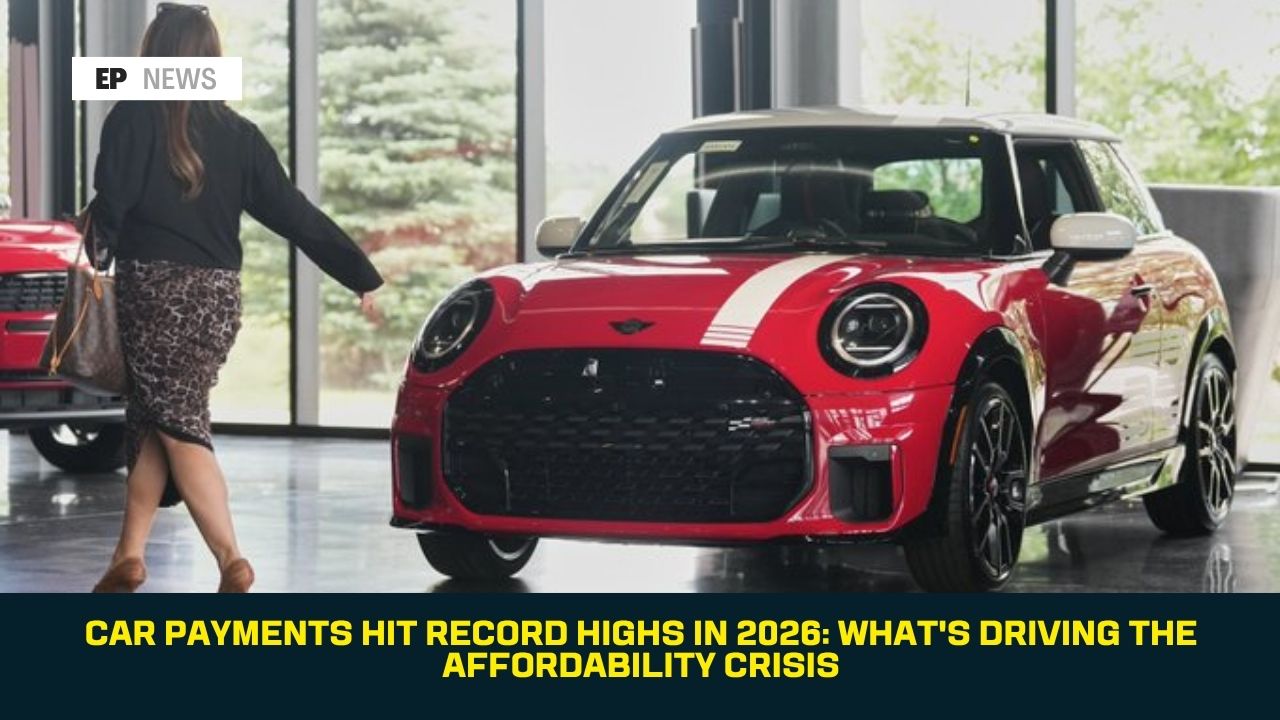
Car Payments Hit Record Highs in 2026: What’s Driving the Affordability Crisis
Buying a car has never cost the average American more each month. The typical monthly payment for a new vehicle climbed to somewhere between $765 and $770 in the first half of 2026, the highest level ever recorded, according to industry data tracking auto financing trends throughout the year.
Used vehicle payments and lease payments both rose as well, though at a somewhat slower pace, leaving virtually no corner of the car-buying market untouched by rising costs.
The increases arrive at a moment when auto loan originations remain elevated, loan terms are stretching longer than ever, and a growing share of buyers are trading in vehicles they still owe more on than they’re worth. Taken together, the trends paint a picture of a car market where affordability has become the central challenge for a large share of buyers.
How we got to a $770 payment
Several forces are compounding at once to push monthly payments higher. The most basic is price. The average amount financed for a new vehicle climbed to roughly $43,610 by the middle of 2026, up from about $42,582 just six months earlier, reflecting both sticker price increases and buyers financing a larger share of each purchase.
Down payments haven’t kept pace. Buyers put down an average of $5,815 on new vehicles and $4,016 on used vehicles in the second quarter of 2026, which, relative to the total price of a modern vehicle, represents a smaller cushion than in past years. A smaller down payment means a larger loan balance and a higher monthly bill for the life of the loan.
Interest rates add another layer of cost. Even with rates on new-car loans projected to ease only slightly this year, they remain well above the levels buyers grew accustomed to a decade ago, meaning a larger share of every monthly payment goes toward interest rather than paying down the vehicle’s actual price.
Buyers are responding by stretching loan terms
Faced with rising prices and elevated rates, a growing share of buyers are extending their loan terms to keep monthly payments manageable, in some cases spreading payments out over as long as seven years. Stretching a loan from a traditional 60-month term to 84 months can meaningfully lower the monthly bill, but it comes at a real cost. On an illustrative loan, extending from 60 to 84 months cuts the monthly payment by roughly $248 while adding approximately $2,366 in total interest paid over the life of the loan.
The trade-off matters beyond the extra interest. Longer loan terms mean buyers spend more time owing more than their vehicle is worth, particularly during the years when new cars depreciate fastest, which sets up the next problem working against affordability.
Negative equity is at a record high
Nearly one in three vehicle trade-ins, about 31 percent, now carry negative equity, meaning the owner owes more on the loan than the car is currently worth. The average shortfall on those trade-ins reached roughly $7,183 in early 2026. When a buyer trades in a vehicle with negative equity, that leftover balance typically gets rolled into the new loan, meaning the buyer starts their next vehicle already behind before a single new payment is made.
This cycle tends to compound over time. A buyer who rolls negative equity into a new loan is more likely to end up underwater again by the time they’re ready for their next vehicle, particularly if they’ve also stretched the new loan’s term to keep the monthly payment affordable.
Four-figure payments are becoming common
The share of buyers making truly large monthly payments has grown notably. About 19 percent of new car loans now come with a monthly payment exceeding $1,000, along with roughly 8.7 percent of new car leases. A four-figure car payment, once a rarity reserved for luxury buyers, has become a routine part of the market for a meaningful share of new-vehicle purchasers.
Payment size also varies significantly by credit tier. Nonprime borrowers, with credit scores in the 601 to 660 range, paid an average of $811 a month on new vehicles, actually higher than the overall average, while subprime borrowers with scores between 501 and 600 averaged $792 a month.
Borrowers with prime and super-prime credit, meanwhile, account for the large majority of vehicle financing overall, with those scoring 661 or above representing more than two-thirds of all retail vehicle financing.
Delinquencies are creeping upward
The affordability squeeze is starting to show up in repayment data as well. Auto loans that were at least 90 days delinquent reached 5.6 percent of outstanding auto debt in the first quarter of 2026, up more than 12 percent from a year earlier. Shorter-term delinquencies told a slightly different story, with the share of loans becoming 30 days past due actually falling modestly from the prior year, suggesting that while more borrowers are falling seriously behind, fewer are missing a single payment in isolation.
Total auto loan originations came in at $182.1 billion in the first quarter of 2026, roughly in line with the prior quarter but below the record pace set in mid-2025. Borrowers in their 30s and 40s originated the largest share of new auto debt, each taking on roughly $38 billion to $40 billion in new loans during the quarter.
What buyers can do to protect their budget
Financial experts generally point to a handful of concrete strategies for buyers navigating this environment. Making as large a down payment as a household’s finances reasonably allow directly reduces the loan balance and the resulting monthly payment. Shopping loan terms across banks, credit unions, and captive finance arms of automakers, rather than accepting the first financing offer at the dealership, can also meaningfully change the total cost of a loan, since rates vary noticeably by lender type.
Sticking to shorter loan terms where the budget allows helps avoid the negative equity trap that longer loans tend to create, even though it means a higher monthly payment upfront. For buyers already underwater on a current vehicle, waiting to trade in until the loan balance and vehicle value are closer together, rather than rolling a large negative equity balance into a new loan, can prevent the cycle from repeating with the next purchase.
Frequently Asked Questions
Why did the average car payment become so high in 2026? A combination of higher vehicle prices, smaller down payments relative to those prices, and elevated interest rates has pushed the average new-vehicle payment to record levels, even as some buyers stretch loan terms to try to keep payments manageable.
Is a 7-year car loan a bad idea? It depends on the buyer’s situation, but longer loan terms generally mean paying significantly more in total interest and spending more time owing more than the car is worth. For buyers focused on minimizing total cost rather than just the monthly payment, a shorter term is usually preferable when it fits the budget.
What is negative equity and why does it matter? Negative equity means owing more on a car loan than the vehicle is currently worth. It matters because trading in a car with negative equity typically rolls the shortfall into the next loan, starting the new financing arrangement already behind and making it harder to build equity going forward.
How much should I put down on a car in 2026? There’s no universal answer, but a larger down payment directly reduces both the loan balance and the monthly payment. Buyers able to put down more than the current national averages of roughly $5,800 for new vehicles and $4,000 for used vehicles will generally see meaningfully lower monthly costs.
Are auto loan delinquencies a sign of broader financial trouble? The rise in serious, 90-day-plus delinquencies suggests a growing share of borrowers are struggling to keep up with auto payments specifically, though it’s one data point among many used to assess overall household financial health rather than a standalone warning sign.
The bottom line
Record car payments reflect a market where nearly every input, from vehicle prices to interest rates to shrinking down payments, has moved in the same direction at once. Buyers who stretch loan terms to manage the monthly hit are often setting themselves up for a longer stretch of negative equity, which can make the next vehicle purchase even harder to afford. With delinquencies already climbing among borrowers with weaker credit, the current environment rewards buyers who prioritize a manageable loan structure over simply chasing the lowest possible monthly payment.