
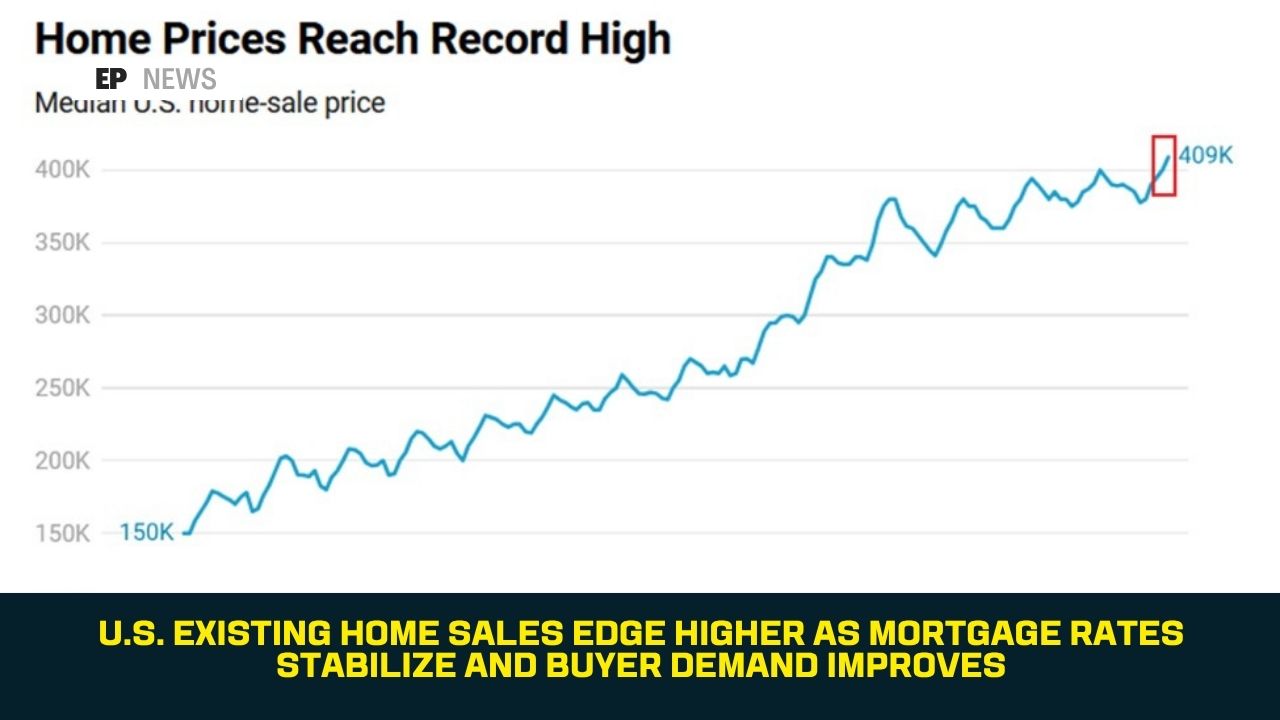
U.S. Existing Home Sales Edge Higher as Mortgage Rates Stabilize and Buyer Demand Improves
The U.S. housing market showed signs of renewed momentum this week as existing home sales posted a modest increase, supported by relatively stable mortgage rates and improving buyer confidence. While affordability remains a challenge in many parts of the country, real estate analysts say recent market conditions have encouraged more buyers and sellers to return after months of cautious activity. Recent industry data indicates that the housing market continues adjusting to higher borrowing costs while benefiting from steady employment and resilient consumer demand. (Reuters)
Housing remains one of the most closely watched sectors of the U.S. economy because it affects consumer spending, construction activity, employment, and household wealth.
Housing Market Shows Signs of Stabilization
After experiencing slower activity earlier in the year, the residential real estate market has begun showing gradual improvement.
Several factors are contributing to the recovery:
- More stable mortgage interest rates.
- Strong labor market conditions.
- Continued population growth in many metropolitan areas.
- Increased buyer activity during the summer season.
- Improving confidence among home sellers.
Although sales remain below the exceptionally strong levels seen during the pandemic housing boom, economists believe market conditions have become more balanced.
Mortgage Rates Remain the Biggest Factor
Mortgage rates continue to play a major role in determining housing affordability.
When borrowing costs decline or stabilize:
- Monthly mortgage payments become more predictable.
- More first-time buyers enter the market.
- Existing homeowners are more willing to sell.
- Real estate transactions generally increase.
Financial experts say future Federal Reserve policy decisions could continue influencing mortgage rates throughout the remainder of 2026.
Inventory Is Slowly Improving
One of the housing market’s biggest challenges has been limited inventory.
Recent reports suggest the number of homes available for sale has increased modestly compared with earlier this year.
Additional inventory provides buyers with:
- More property choices.
- Better negotiating opportunities.
- Reduced competition in some markets.
- A healthier balance between supply and demand.
However, inventory levels remain below long-term historical averages in many regions.
Regional Trends Across the United States
Housing activity continues to vary by region.
Markets experiencing stronger demand generally include areas with:
- Population growth.
- Expanding employment opportunities.
- New business investment.
- Lower housing costs compared with major coastal cities.
Some high-cost metropolitan areas continue experiencing slower sales because affordability remains a concern.
Impact on the Broader Economy
The housing sector influences numerous industries beyond real estate.
Improved home sales often support:
- Construction companies.
- Home improvement retailers.
- Furniture manufacturers.
- Mortgage lenders.
- Insurance providers.
- Local governments through property taxes.
Economists view housing activity as an important indicator of overall economic confidence.
Challenges Still Facing Buyers
Despite recent improvement, several challenges remain.
Homebuyers continue facing:
- Elevated home prices.
- Limited inventory in desirable neighborhoods.
- Higher insurance costs in some regions.
- Rising property taxes.
- Increased closing expenses.
Real estate professionals recommend that buyers carefully compare financing options and understand total ownership costs before purchasing a home.
What Experts Will Watch Next
Housing analysts will continue monitoring:
- Mortgage rate movements.
- Federal Reserve policy.
- Home price trends.
- Housing inventory.
- New home construction.
- Consumer confidence.
These factors will help determine whether the market continues improving through the second half of 2026.
Frequently Asked Questions
Why are existing home sales important?
Existing home sales provide insight into housing demand, consumer confidence, and overall economic activity.
What affects mortgage rates?
Mortgage rates are influenced by inflation, Federal Reserve policy, bond markets, and overall economic conditions.
Is the housing market recovering?
Recent data suggests the market is becoming more stable, although affordability challenges continue in many areas.
Conclusion
The latest housing data suggests the U.S. residential real estate market is gradually regaining momentum as mortgage rates stabilize and buyer confidence improves. While affordability and inventory remain important challenges, stronger employment and steady economic conditions continue supporting demand. As the Federal Reserve, lenders, and consumers navigate changing market conditions, the housing sector is expected to remain a key indicator of the U.S. economy throughout the rest of 2026.
Read More Article