
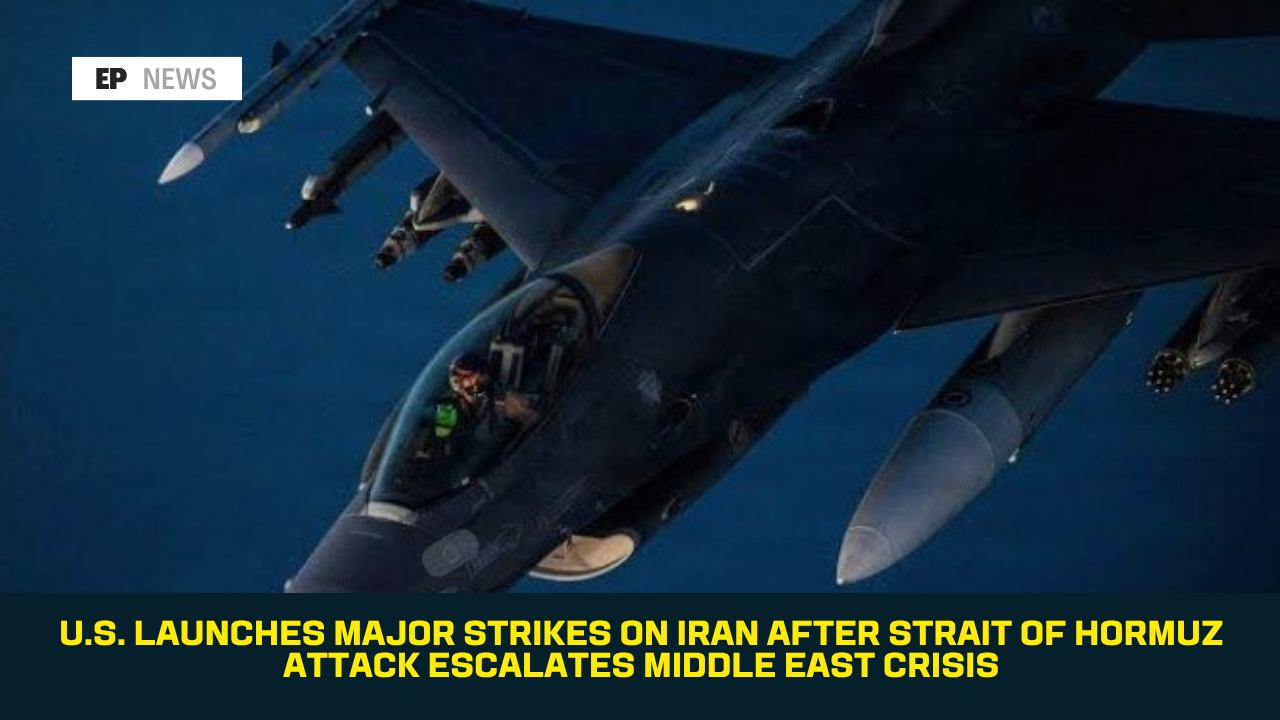
U.S. Launches Major Strikes on Iran After Strait of Hormuz Attack Escalates Middle East Crisis
The United States launched a new round of military strikes against Iran early Sunday after an Iranian attack on a commercial vessel in the Strait of Hormuz dramatically escalated tensions in the Middle East. According to U.S. military officials, the operation targeted missile launch sites, drone facilities, ammunition storage areas, and military communication infrastructure that Washington said were linked to attacks on international shipping.
The latest military action marks one of the most significant escalations in the ongoing conflict between the United States and Iran. Officials said the strikes were intended to reduce Iran’s ability to threaten commercial vessels traveling through one of the world’s most strategically important maritime routes.
Why the Strait of Hormuz Matters
The Strait of Hormuz is considered one of the world’s most critical energy corridors.
Before the current conflict began, roughly one-fifth of the world’s traded crude oil and liquefied natural gas passed through the narrow waterway connecting the Persian Gulf with the Gulf of Oman.
Any disruption to shipping in the region can quickly affect:
- Global oil prices
- Fuel costs
- International trade
- Shipping insurance
- Financial markets
Because of its strategic importance, governments and investors closely monitor every military development involving the Strait.
U.S. Military Response
According to U.S. Central Command, American forces struck approximately 140 military targets across Iran during the latest operation.
Officials said the targets included:
- Missile launch facilities
- Drone launch sites
- Weapons storage depots
- Military communications systems
- Other operational infrastructure
The Pentagon stated that the objective was to reduce Iran’s capability to conduct further attacks against civilian shipping and commercial vessels operating in the Gulf.
Iran Responds
Following the U.S. strikes, reports indicated that Iran launched additional attacks targeting locations in Bahrain, Qatar, and the United Arab Emirates, further increasing concerns about regional security.
Authorities in several Gulf nations issued missile and drone alerts as emergency services monitored the evolving situation.
Impact on Global Markets
Energy markets reacted immediately to the renewed conflict.
Investors remain concerned that prolonged military activity could disrupt oil shipments through the Strait of Hormuz, leading to higher energy prices and increased transportation costs worldwide.
Financial analysts are also watching:
- Crude oil prices
- Airline stocks
- Shipping companies
- Defense industry shares
- Safe-haven assets such as gold
Market volatility is expected to remain elevated while the security situation continues to develop.
International Response
Governments around the world are urging restraint and encouraging diplomatic efforts to prevent a broader regional conflict.
Several allies have called for renewed negotiations while emphasizing the importance of maintaining freedom of navigation through international waterways. Diplomatic discussions are expected to continue as world leaders seek to reduce tensions.
What Happens Next?
Experts say the coming days will be critical.
Key developments to monitor include:
- Additional military operations
- Diplomatic negotiations
- Oil market movements
- Shipping activity through the Strait of Hormuz
- Statements from the White House and Iranian officials
These events could influence both global markets and international security policy.
Frequently Asked Questions
Why did the United States launch new strikes?
U.S. officials said the strikes were carried out after an attack on a commercial vessel in the Strait of Hormuz and were intended to reduce Iran’s ability to threaten international shipping.
Why is the Strait of Hormuz so important?
It is one of the world’s busiest energy shipping routes and carries a significant share of global oil and natural gas exports.
Could this affect gasoline prices?
Yes. Any disruption to shipping through the Strait of Hormuz can influence global oil prices, which may eventually affect fuel prices in many countries.
Conclusion
The latest U.S. military operation against Iran represents a significant escalation in Middle East tensions and underscores the strategic importance of the Strait of Hormuz. As governments work to balance military responses with diplomatic efforts, global markets remain focused on the potential impact on energy supplies, international trade, and regional stability. The coming days are expected to play a crucial role in determining whether the situation moves toward de-escalation or further confrontation.