
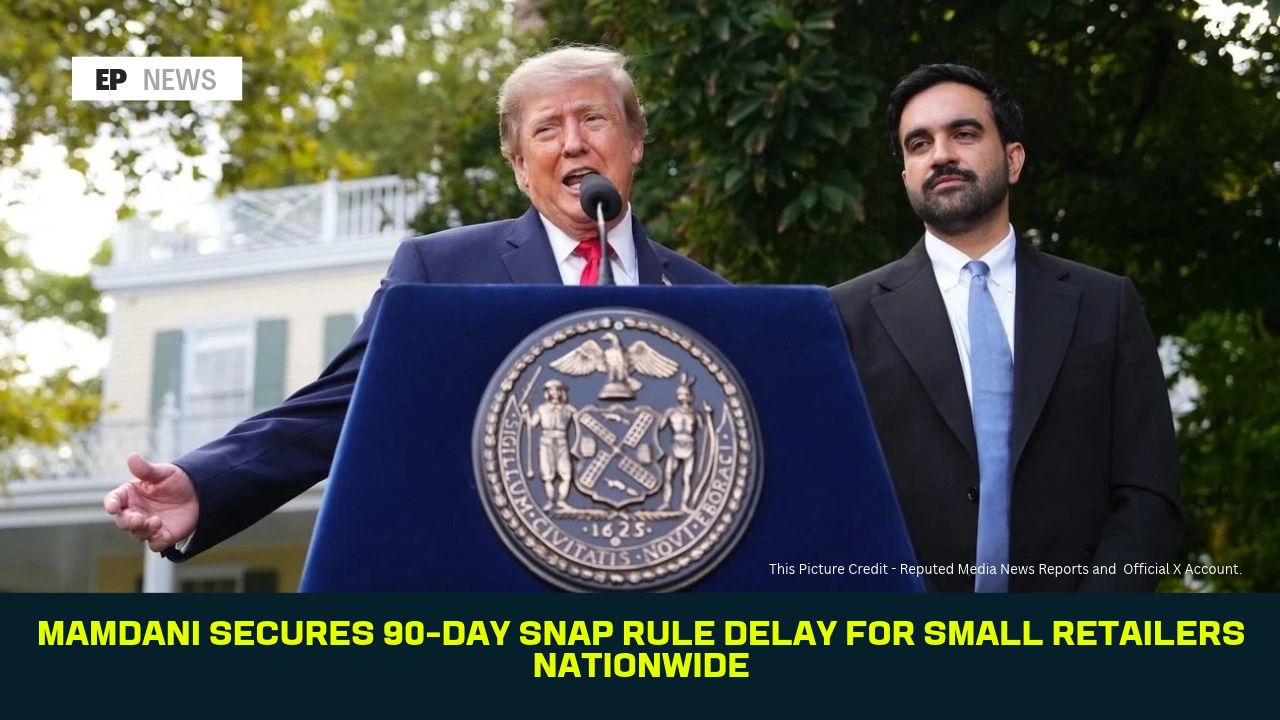
Mamdani Secures 90-Day SNAP Rule Delay for Small Retailers Nationwide
New York City Mayor Zohran Mamdani announced on November 13 that the Trump administration had agreed to give small retailers across the United States an additional 90 days to comply with new federal food-stocking requirements tied to the Supplemental Nutrition Assistance Program, widely known as SNAP.
The announcement offers temporary relief to bodegas, convenience stores and small grocery retailers that accept SNAP benefits. Many store owners had warned that they needed more time to understand the new federal standards, find qualifying products, adjust their inventories and make changes to their limited retail spaces.
The agreement is significant because stores that fail to meet federal stocking standards risk losing their authorization to accept SNAP payments. For households that depend on nearby neighborhood shops to purchase groceries, the availability of participating retailers can affect how easily they access food assistance.
However, the announcement does not mean SNAP benefits have been increased, nor does it cancel the new federal requirements. Instead, it delays the start of enforcement, giving retailers more time to prepare.
What Happened in the SNAP Rule Announcement?
Mamdani announced the 90-day extension after discussions with President Donald Trump and Agriculture Secretary Brooke Rollins. According to New York City’s official announcement, the U.S. Department of Agriculture will delay enforcement of the new stocking standards for SNAP-authorized retailers.
The rule had been scheduled for implementation on November 4, 2026. Small retailers had raised concerns that the original timetable did not leave enough time to make the required changes.
Mamdani said neighborhood businesses had approached his administration because they were worried about their ability to comply. He argued that losing SNAP authorization could hurt small businesses and make it harder for some families to find convenient places to purchase groceries.
The White House also confirmed that retailers accepting SNAP would receive an additional 90 days to comply with the stocking requirements, according to reporting by amNewYork.
The extension is nationwide, not limited to New York City. That means qualifying small retailers in other states are also expected to benefit from the additional preparation time.
What Is SNAP and Why Does It Matter?
The Supplemental Nutrition Assistance Program is a federal food-assistance program administered by the USDA. It helps eligible low-income households purchase food through benefits issued on an electronic benefits transfer card, commonly called an EBT card.
SNAP is one of the largest food-assistance programs in the United States. The New York City mayor’s office said more than 36 million Americans rely on the program.
Recipients generally use their benefits at authorized grocery stores, supermarkets, convenience stores and other participating retailers. The program is particularly important for households that have limited budgets and need to manage regular food expenses.
The availability of authorized stores matters, too. A supermarket may not be close to every household, and some communities depend on smaller neighborhood retailers for everyday groceries.
That is why the new stocking standards became an important issue for small businesses and food-access advocates. If a neighborhood store cannot meet the federal requirements and loses its authorization, customers may have to travel farther to find another participating retailer.
What Are the New USDA Stocking Requirements?
The updated USDA standards require SNAP-authorized retailers to offer a wider selection of staple foods.
Under the requirements described by New York City and amNewYork, most affected retailers must stock at least seven varieties of food in each of four categories:
- Dairy products
- Grains
- Proteins
- Fruits and vegetables
The previous standard generally required three varieties in each category. The updated requirements raise that number to seven.
The rules also increase the expectations for perishable food availability. Retailers must offer perishable foods in at least three of the four staple-food categories, compared with two under the previous standard.
The purpose of the changes is to make a broader selection of nutritious staple foods available at stores that participate in SNAP.
For larger supermarkets, expanding the variety of products may be easier because they generally have more shelf space, refrigeration capacity and established supply chains. Smaller stores, however, can face practical challenges.
A neighborhood bodega may have limited storage, a small refrigerator section and fewer suppliers. Adding new varieties of dairy, produce, grains and protein products can require changes to purchasing, storage and store layouts.
Why Were Small Retailers Concerned?
The main concern was the amount of time available to prepare.
Small retailers said they needed clearer information about which products would qualify, where they could purchase those products and how the requirements would be assessed.
The New York City mayor’s office said USDA implementation guidance was not issued until September 4, leaving businesses with a short period to prepare for the November 4 implementation date.
For a small store, compliance is not simply a matter of ordering a few additional products. Owners may need to identify new suppliers, check product eligibility, reorganize shelves, increase refrigeration capacity and manage the risk of food spoilage.
These changes can create additional costs for businesses already dealing with rent, wages, utilities, delivery expenses and fluctuating food prices.
The issue is particularly important for bodegas and corner stores, which often operate with limited space and serve customers who live or work nearby.
According to the New York City mayor’s office, bodega organizations estimate that SNAP purchases account for approximately 15% to 20% of sales at a typical New York City store. Some Bronx store owners have reported a share as high as 30%.
For businesses that depend on SNAP customers, losing authorization could therefore have a meaningful financial impact.
How Does the 90-Day Extension Help Bodegas and Grocery Stores?
The extension gives retailers additional time to prepare before federal enforcement begins.
Instead of facing immediate enforcement under the original timetable, affected stores now have a further 90-day period to work toward compliance.
During that period, retailers can review the updated standards, identify products that count toward the requirements, contact distributors and make inventory adjustments.
The extra time may also help businesses avoid making rushed purchasing decisions. Ordering unfamiliar products without understanding the rules could leave a store with inventory that does not count toward compliance or that customers do not regularly purchase.
New York City said it would work with USDA’s Food and Nutrition Service and city agencies to provide guidance and support to local store owners.
The city’s Department of Small Business Services also encouraged bodega owners with questions to seek compliance education through its business support services.
The extension does not remove the requirement to comply. Retailers should treat the additional period as preparation time rather than a permanent exemption.
What Does This Mean for SNAP Recipients?
For people receiving SNAP benefits, the announcement is mainly about preserving access to participating stores.
The delay does not provide recipients with additional money, change their individual benefit amounts or automatically alter their eligibility.
Instead, it gives neighborhood retailers more time to meet the new standards so that they can continue participating in the program.
This distinction is important. SNAP recipients may use their benefits at authorized retailers, but the retailer itself must meet federal program requirements to remain authorized.
If a small store loses its SNAP authorization, customers cannot use their EBT benefits there. They may need to visit another authorized retailer, which could be inconvenient for people without reliable transportation or those living in areas with fewer grocery options.
The extension may therefore help protect access to local food retailers while businesses prepare for the updated standards.
It is also important to remember that the stocking rule is separate from other federal changes affecting SNAP eligibility and work requirements. The 90-day retailer extension does not automatically reverse those separate policies.
Why the Issue Is Important Beyond New York City
Although Mamdani’s announcement focused heavily on New York City bodegas, the agreement applies to small retailers across the country.
Many American communities rely on convenience stores and smaller grocery businesses for everyday food purchases. In some rural areas, a small store may be one of the few nearby places where residents can buy groceries.
In urban neighborhoods, bodegas and corner stores can provide convenient access to food without requiring customers to travel to a large supermarket.
The New York City administration warned that losing neighborhood SNAP retailers could reduce shopping options and deepen existing food-access problems.
The debate also highlights a policy challenge: how to improve the nutritional quality and variety of food available through a federal assistance program without placing unrealistic short-term burdens on small businesses.
Supporters of stronger stocking standards argue that SNAP-authorized retailers should offer a wider selection of staple foods. Retailers and their advocates have emphasized that businesses need clear instructions and sufficient time to make the changes.
The 90-day extension provides additional time, but it does not settle the wider debate over how the standards should be implemented.
What Happens After the 90-Day Delay?
The next important question is how the USDA will implement the delay and communicate the revised enforcement timetable.
Retailers will need clear information about when compliance checks will begin, how the requirements will be evaluated and what happens if a store still does not meet the standards after the additional period.
Businesses should not assume that the new requirements have disappeared. They remain part of the federal rules described in the announcement.
Store owners who accept SNAP should review the USDA guidance, check their existing inventory against the required food categories and contact the relevant agency if they are unsure whether particular products qualify.
SNAP recipients should also understand that the extension concerns retailers, not their individual benefits. People with questions about their own benefits should contact their state SNAP agency or consult official program information.
As of November 14, the public announcement establishes a 90-day enforcement delay, but retailers should watch for further USDA instructions explaining the operational details.
Frequently Asked Questions
1. Did Trump approve a 90-day extension for SNAP recipients?
No. The extension concerns SNAP-authorized retailers. It gives stores additional time to comply with federal food-stocking standards. It does not automatically increase or extend individual SNAP benefits.
2. Who announced the SNAP rule delay?
New York City Mayor Zohran Mamdani announced the agreement on November 13, 2026, following discussions with President Donald Trump and Agriculture Secretary Brooke Rollins.
3. Does the 90-day delay apply across the United States?
Yes. The announcement concerns small retailers nationwide, rather than only stores in New York City.
4. What are the new SNAP stocking requirements?
Most affected SNAP-authorized retailers must offer at least seven varieties of food in each of four categories: dairy, grains, proteins, and fruits and vegetables. The updated standards also increase the requirement for perishable food categories.
5. Why did small stores ask for more time?
Store owners said they needed more time to understand the rules, find qualifying products, adjust their inventory and make necessary investments in storage and refrigeration.
6. Does the extension cancel the new USDA rule?
No. The announcement delays enforcement for 90 days. It does not cancel the new stocking standards.
7. Can customers still use SNAP benefits at participating bodegas?
The extension is intended to give retailers more time to comply and continue serving SNAP customers. Individual stores must still maintain the authorization required to accept SNAP payments.
Final Thoughts
The 90-day SNAP enforcement delay is an important development for small retailers that serve low-income households across the United States.
For neighborhood bodegas and convenience stores, the additional time could make it easier to adjust inventories, understand federal requirements and protect their ability to accept SNAP payments.
For SNAP recipients, the issue is about maintaining access to convenient places to purchase food. The extension does not change individual benefit amounts, but it may help prevent participating neighborhood stores from losing access to the program before they have had enough time to prepare.
The next step will be the USDA’s implementation guidance and the way retailers use the additional time. The new stocking standards remain in place, so the coming months will be important for both small businesses and the communities that depend on them.
Sources and Reporting
- New York City Mayor’s Office — November 13, 2026: Official announcement of the 90-day extension.
- amNewYork — November 13, 2026: Reporting on the nationwide agreement, White House confirmation and retailer requirements.
- Bloomberg Law — November 13, 2026: Coverage of the agreement and its impact on small retailers.
- NACS — November 13, 2026: Convenience retail industry response to the enforcement delay.
Editorial note: This article distinguishes the delay in enforcement from the effective date of the rule and from individual SNAP benefit eligibility. Update the story if USDA publishes additional implementation details.