
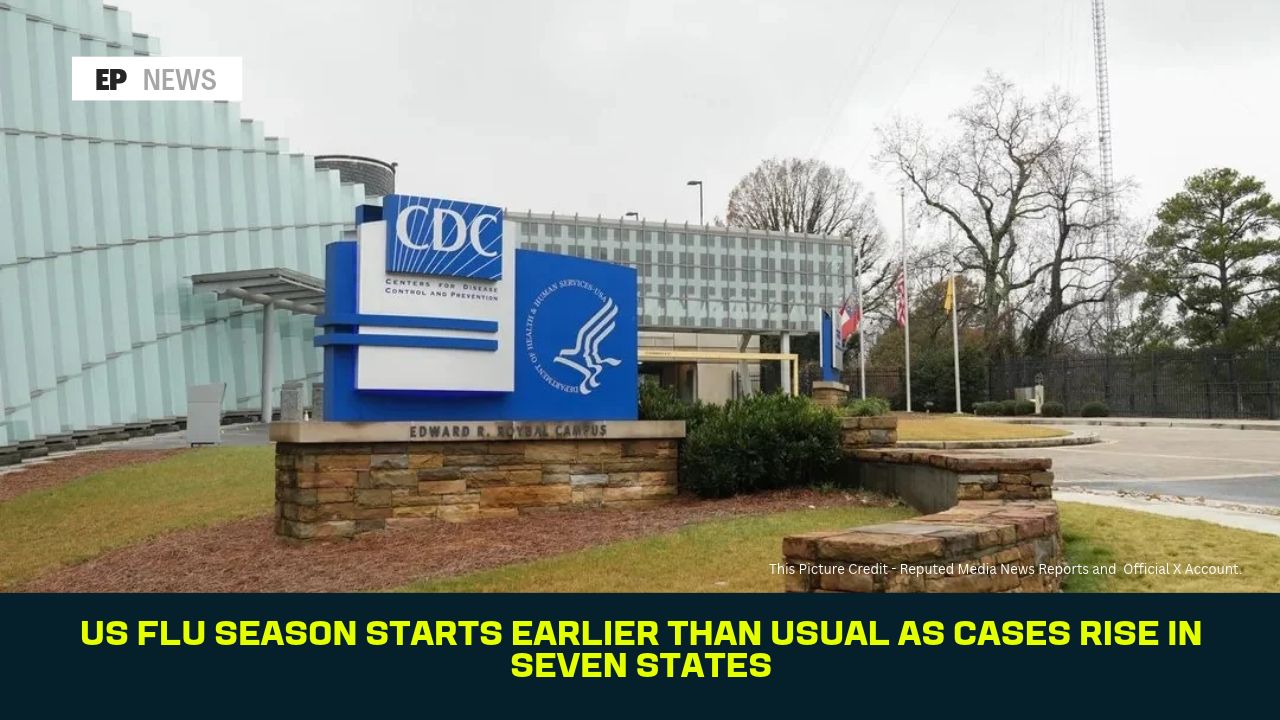
US Flu Season Starts Earlier Than Usual as Cases Rise in Seven States
Category: U.S. News / Health
The 2026-27 influenza season is getting underway earlier than usual across the United States, with health officials reporting increasing flu activity in several parts of the country. New data from the Centers for Disease Control and Prevention (CDC) show that seven states were reporting high or very high flu activity during the week ending November 7, compared with only two states the previous week.
The latest figures, released on November 13, highlight a growing public health concern as millions of Americans prepare for Thanksgiving travel and holiday gatherings. Louisiana is currently among the hardest-hit states, while California, Oregon, South Carolina, Tennessee, Texas and Washington are also reporting elevated activity.
The CDC estimates that at least 2.6 million illnesses, 36,000 hospitalizations and 2,100 deaths have been associated with influenza so far during the 2026-27 season.
Although the early increase is attracting attention, health officials have not concluded that this season will necessarily become more severe than previous years. The CDC says an early rise in flu activity does not automatically predict a higher seasonal peak or greater overall severity.
CDC Reports Rising Flu Activity Across Seven States
The CDC’s latest FluView report, covering the week ending November 7, shows that seasonal influenza activity is increasing in many parts of the country.
Seven states were reporting high or very high activity, compared with two states during the previous reporting week. The states identified in the Associated Press report include California, Louisiana, Oregon, South Carolina, Tennessee, Texas and Washington.
Louisiana is currently seeing particularly significant activity.
The increase is important because influenza typically becomes more widespread during the colder months, although the timing and intensity of each season can vary.
The CDC also reported that 3.2% of outpatient healthcare visits were associated with respiratory illness during the latest reporting week. This measure includes illnesses with symptoms such as fever and cough or sore throat; it is not a count of laboratory-confirmed flu infections alone.
Clinical laboratories reported that 11.3% of tested respiratory specimens were positive for influenza during the week ending November 7.
Together, these indicators suggest that influenza is becoming a more significant part of the country’s seasonal respiratory illness picture.
All CDC surveillance figures are preliminary and may change as additional reports are received.
At Least 2.6 Million Flu Illnesses Estimated So Far
One of the most important figures in the latest CDC report is the estimated national disease burden.
The agency estimates that the United States has experienced at least:
- 2.6 million illnesses associated with influenza.
- 36,000 hospitalizations associated with influenza.
- 2,100 deaths associated with influenza.
These are CDC estimates rather than a final count of every individual infection.
Many people with flu symptoms do not visit a doctor or receive a laboratory test. As a result, surveillance systems use multiple sources of information to estimate the overall impact of influenza.
The figures also show why health officials continue to emphasize prevention, vaccination and early medical attention for people at higher risk of complications.
The CDC reported five influenza-associated pediatric deaths during the 2026-27 season as of its November 13 update. Two additional child deaths were reported to the agency during the latest reporting week.
The pediatric death figures are also preliminary and may increase as investigations are completed.
Louisiana Is Among the Hardest-Hit States
Louisiana is currently experiencing particularly high flu activity, according to the latest reporting.
Public health experts say the state has often been among the earlier places to experience seasonal influenza increases.
Dr. Fred Lopez, an infectious diseases specialist at the LSU Health Sciences Center in New Orleans, told the Associated Press that flu activity was taking off and could continue increasing over the next month or two.
The reasons behind regional differences can be complex. Vaccination coverage, access to healthcare, population characteristics and local transmission patterns can all influence how influenza spreads.
The South and West have been among the regions seeing early increases this season.
However, the situation can change quickly. States reporting relatively low activity now may experience increases later as travel, school activities and indoor gatherings create more opportunities for respiratory viruses to spread.
The CDC’s weekly surveillance reports provide a way to monitor these changes rather than relying on a single nationwide number.
H1N1 Is the Most Frequently Reported Influenza Virus
The latest CDC report also provides information about which influenza viruses are circulating.
During the week ending November 7, public health laboratories reported 680 influenza viruses. Of these, 670 were influenza A and 10 were influenza B.
Among the 460 influenza A viruses that were further subtyped:
- 455, or 98.9%, were influenza A(H1N1)pdm09.
- Five, or 1.1%, were influenza A(H3N2).
This means H1N1 was overwhelmingly the most frequently identified subtype among the influenza A viruses that were subtyped during that reporting week.
H1N1 is not a completely new virus. The A(H1N1)pdm09 virus emerged in 2009 and has continued circulating as part of seasonal influenza activity.
The CDC also noted genetic diversity among currently circulating H1N1 viruses. Influenza viruses can change over time, which is one reason vaccine formulations are reviewed and updated.
However, the agency said it is still too early to determine what viruses will dominate the full season or whether the genetic changes will have a meaningful impact on vaccine effectiveness.
Could the Flu Season Become More Severe?
The early rise in cases has raised questions about whether the United States could face a particularly difficult influenza season.
The CDC is urging people to pay attention, but its current assessment does not classify the season as severe.
As of November 13, the agency’s preliminary in-season severity assessment classified influenza activity as low across all age groups: children, adults and older adults.
That assessment could change as more information becomes available.
The CDC also warns that an early increase in influenza activity does not necessarily mean the season will reach a higher peak or cause more illness and deaths overall.
Still, there are reasons for public health officials to monitor the situation closely.
The Associated Press reported that the flu hospitalization rate in mid-October was the highest recorded at that point in autumn in more than 15 years, citing comments from a Johns Hopkins University expert.
The CDC’s estimates and the hospitalization data show that the season is already having a measurable impact.
Whether that impact continues to increase will depend on how the virus spreads over the coming weeks and months.
Thanksgiving Travel Could Increase Opportunities for Flu Transmission
The timing of the early flu increase is particularly important because the United States is approaching the Thanksgiving holiday period.
Millions of people travel during Thanksgiving to visit relatives, attend gatherings and take vacations.
Airports, public transportation systems, schools, shopping areas and family events can bring people into closer contact.
When someone with influenza travels or attends a gathering, the virus may spread to others, particularly in crowded indoor environments.
Infectious disease specialists have warned that holiday travel and social gatherings could contribute to increased transmission later in November.
The concern is not limited to people who are already experiencing severe symptoms. Some individuals may spread respiratory viruses before they fully recognize that they are sick.
Public health advice generally emphasizes staying home when ill, practicing good respiratory hygiene and avoiding close contact with people at higher risk of complications.
For families planning Thanksgiving celebrations, these precautions can help reduce the chance of spreading influenza to older relatives, young children and people with certain underlying health conditions.
What Does the CDC Recommend About Flu Vaccination?
The CDC continues to recommend annual seasonal influenza vaccination for people aged six months and older, subject to individual medical considerations.
People who are recommended to receive the vaccine but have not yet been vaccinated for the 2026-27 season are encouraged to do so.
Vaccination is an important public health measure because it can reduce the risk of influenza illness and help protect against severe outcomes.
The effectiveness of a seasonal flu vaccine can vary from year to year. It depends partly on how closely the vaccine viruses match the influenza viruses circulating in the community.
The CDC says it is too early to determine the effectiveness of this season’s vaccine against the viruses currently spreading.
However, preliminary expert comments reported by AP indicate that the current vaccine appears able to recognize the circulating H1N1 virus. Health officials will need more data to assess actual vaccine performance during the season.
People who have already had flu symptoms or a flu infection should not automatically assume they are protected against every influenza strain circulating during the season.
Anyone with questions about vaccination, timing or medical suitability should speak with a healthcare professional.
Who Faces a Higher Risk of Flu Complications?
Influenza can affect people of all ages, but certain groups are more likely to develop serious complications.
These include:
- Young children, especially those under five years old.
- Adults aged 65 and older.
- Pregnant women.
- People with chronic conditions such as asthma, diabetes or heart disease.
- Individuals with weakened immune systems.
Flu complications can include pneumonia, worsening of existing medical conditions and hospitalization.
People in higher-risk groups should take seasonal prevention advice seriously and contact a healthcare professional promptly if they develop concerning symptoms.
The CDC also notes that prescription antiviral medications are available to treat influenza. These medications work best when started early and are particularly important for people at higher risk of complications.
Antiviral treatment is different from vaccination: a vaccine is intended to prevent illness or reduce its impact, while antiviral medicines are used to treat an infection.
Treatment decisions should be made with a qualified healthcare professional.
How Does This Season Compare With Last Winter?
The previous U.S. flu season also placed a substantial burden on healthcare systems.
The Associated Press reported that the CDC estimated at least 32 million illnesses, 380,000 hospitalizations and 24,000 deaths during the 2025-26 influenza season.
That season intensified during late December, with some areas experiencing particularly high levels of illness.
The current season has already produced millions of estimated illnesses, but it is still early in the influenza calendar.
Comparing the current preliminary figures with the final estimates from last season would be misleading because the reporting periods are different.
The important question is how quickly activity develops during the coming weeks and whether hospitalization and severe-disease indicators continue to rise.
The CDC will continue publishing weekly FluView reports to track influenza activity across the country.
What Should Americans Watch in the Coming Weeks?
Several developments will help determine how the 2026-27 flu season progresses.
First, health officials will monitor whether more states move into high or very high activity categories.
Second, hospitalization data will provide a clearer picture of the pressure influenza is placing on healthcare systems.
Third, laboratory surveillance will help scientists understand which influenza strains are circulating and whether the balance between H1N1, H3N2 and influenza B changes.
Finally, vaccine effectiveness estimates will become more useful as the season progresses and more real-world data become available.
The CDC’s FluSight forecasts predict a likely increase in flu hospital admissions and emergency department visits associated with influenza for the week ending November 28.
Those forecasts are estimates, not confirmed future outcomes, and they may change as new information becomes available.
For now, the combination of early activity, rising illness estimates and approaching holiday travel makes influenza an important public health story to follow.
Frequently Asked Questions
1. Why is the 2026-27 U.S. flu season making headlines?
The season is starting earlier than usual and activity is increasing in several regions. The CDC reported high or very high flu activity in seven states during the week ending November 7, 2026.
2. Which U.S. states are reporting high flu activity?
The Associated Press identified California, Louisiana, Oregon, South Carolina, Tennessee, Texas and Washington among the states reporting high activity.
3. How many flu illnesses have been reported in the United States?
The CDC estimates at least 2.6 million influenza-associated illnesses so far during the 2026-27 season. This is an estimate, not a final count of confirmed cases.
4. Is H1N1 the main flu virus circulating in the United States?
H1N1 was the most frequently reported influenza A subtype among the viruses subtyped by public health laboratories during the week ending November 7. The CDC says it is too early to know which viruses will dominate the full season.
5. Is the 2026-27 flu season more dangerous than last year?
It is too early to make that conclusion. The CDC currently classifies the season’s preliminary severity as low across age groups, although activity is increasing.
6. Should people get a flu vaccine in November 2026?
The CDC recommends annual influenza vaccination for people aged six months and older. Those who are recommended to receive the vaccine and have not yet done so are encouraged to get vaccinated. Individual medical questions should be discussed with a healthcare professional.
7. Could Thanksgiving travel increase flu cases?
Travel and indoor gatherings can create more opportunities for respiratory viruses to spread. Health experts expect influenza transmission could increase as people gather for the holidays.
8. How many people have died from flu this season?
The CDC estimates at least 2,100 influenza-associated deaths so far in the 2026-27 season. It also reported five pediatric flu-associated deaths as of its November 13 update. These figures are preliminary.
Final Thoughts
The early rise in influenza activity is an important public health development for the United States as the country approaches Thanksgiving and the winter holiday season.
The CDC’s latest report shows that seven states are experiencing high or very high activity, while the estimated national burden has already reached at least 2.6 million illnesses, 36,000 hospitalizations and 2,100 deaths.
H1N1 is currently the most frequently identified influenza A subtype in the latest laboratory data, but health officials say it is too early to determine how the virus mix or vaccine effectiveness will develop over the full season.
The early start does not guarantee that 2026-27 will become a more severe flu season than previous years. Nevertheless, vaccination, staying home when sick and seeking timely medical advice when needed remain important ways to reduce the impact of influenza.
With holiday travel approaching, Americans should follow CDC updates and take reasonable precautions to protect themselves, their families and vulnerable members of their communities.
Sources and Reporting
- Centers for Disease Control and Prevention — November 13, 2026: Weekly U.S. Influenza Surveillance Report, Week 44
- Associated Press — November 13, 2026: The US flu season is off to a very early start. It’s hitting the South and West now
- CDC FluView: U.S. Influenza Surveillance
Health disclaimer: This article is for general news and educational purposes. It is not a substitute for individual medical advice.