
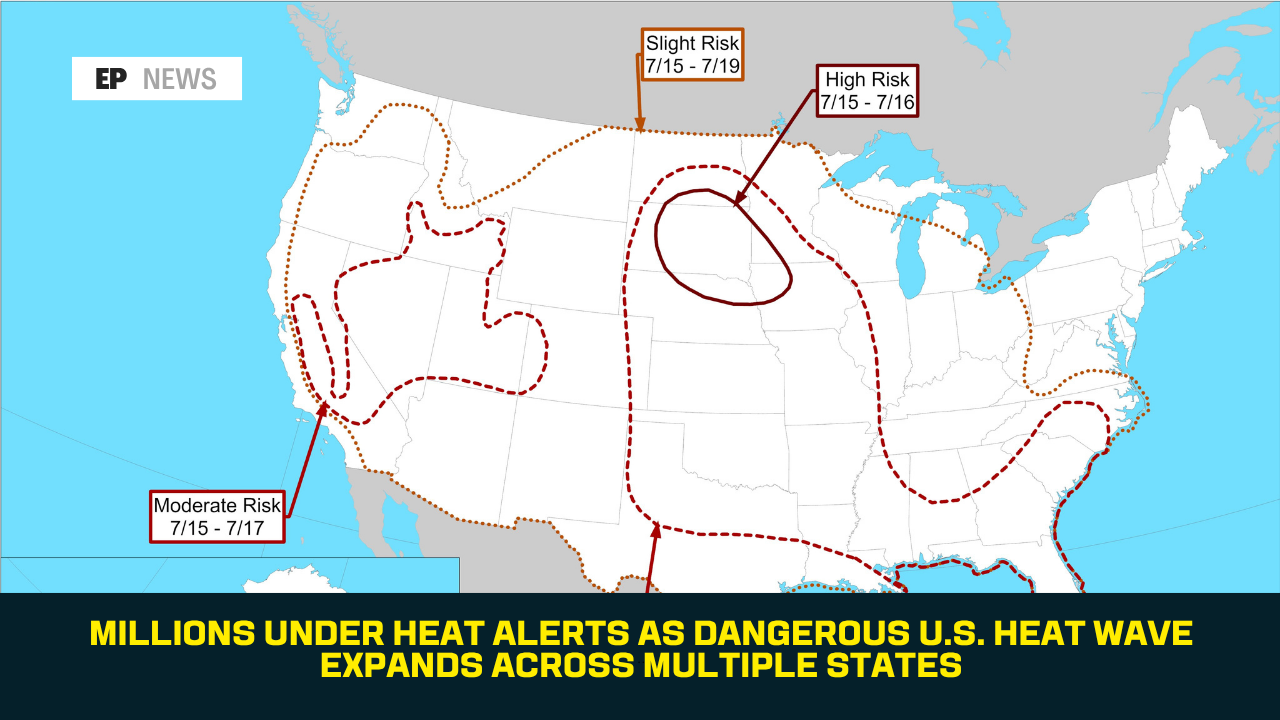
Millions Under Heat Alerts as Dangerous U.S. Heat Wave Expands Across Multiple States
Millions of Americans are facing another round of dangerous summer weather as an intense heat wave continues to spread across large parts of the United States. Meteorologists warn that soaring daytime temperatures, combined with high humidity in many regions, are increasing the risk of heat-related illnesses and placing additional strain on electrical grids. Officials are urging residents to limit outdoor activities, stay hydrated, and monitor weather advisories as the extreme conditions continue.
The latest forecasts indicate that temperatures in several areas will remain well above seasonal averages, with some communities expected to challenge daily heat records during the weekend.
Extreme Temperatures Continue
Weather experts say the current pattern is being driven by a strong high-pressure system that is trapping hot air over much of the country.
The heat is expected to affect parts of:
- The Midwest
- The Great Plains
- The South
- Portions of the Northeast
- Interior western states
Some locations are forecast to experience temperatures above 100°F (38°C), while the heat index may climb even higher because of elevated humidity.
Health Officials Urge Extra Precautions
Public health agencies continue reminding residents that prolonged exposure to extreme heat can quickly become dangerous.
Officials recommend:
- Drinking plenty of water throughout the day.
- Avoiding strenuous outdoor activities during peak afternoon hours.
- Wearing lightweight clothing.
- Spending time in air-conditioned buildings whenever possible.
- Checking on elderly neighbors, children, and people with chronic health conditions.
Medical professionals warn that symptoms such as dizziness, confusion, nausea, and rapid heartbeat may indicate heat exhaustion or heat stroke and should be treated immediately.
Power Demand Expected to Increase
As temperatures rise, electricity demand is also expected to increase significantly.
Utility companies are preparing for higher energy consumption as millions of homes and businesses rely on air conditioning systems to stay cool. Energy providers say consumers can help reduce pressure on the power grid by conserving electricity during peak demand periods.
Travel and Outdoor Events May Be Affected
The prolonged heat could also impact travel plans and outdoor activities.
Officials advise travelers to:
- Carry extra drinking water.
- Avoid leaving pets or children inside parked vehicles.
- Check vehicle cooling systems before long trips.
- Monitor local weather forecasts before attending outdoor events.
Several communities are also opening cooling centers to provide relief for residents without access to air conditioning.
Why This Heat Wave Matters
Extreme heat is consistently among the deadliest weather hazards in the United States.
Unlike hurricanes or tornadoes, heat-related illnesses can develop gradually, making public awareness especially important. Experts say prolonged periods of high temperatures can affect public health, agriculture, transportation, and energy infrastructure.
Climate researchers also note that warmer summers increase the likelihood of longer and more frequent heat events across many regions of the country.
What to Watch Next
Forecasters will continue monitoring:
- Updated heat advisories
- Potential record-breaking temperatures
- Power grid conditions
- Air quality alerts
- Any severe thunderstorms that may develop along the edges of the heat dome
Residents are encouraged to follow guidance from the National Weather Service and local emergency management officials as weather conditions evolve.
Frequently Asked Questions
Which areas are expected to experience the highest temperatures?
Forecasts indicate that parts of the Midwest, Great Plains, South, and portions of the Northeast and West will experience the most intense heat.
How can people stay safe during extreme heat?
Health experts recommend staying hydrated, avoiding strenuous outdoor activity during the hottest part of the day, using air conditioning when available, and checking on vulnerable family members and neighbors.
Why are power companies concerned?
High temperatures increase electricity demand as more households use air conditioning, placing additional pressure on regional power grids.
Conclusion
The expanding heat wave serves as another reminder of the serious risks posed by prolonged periods of extreme temperatures. With millions of Americans under heat alerts, officials continue urging residents to take precautions, remain informed, and prepare for several days of unusually hot weather. As forecasts are updated, public safety agencies will continue monitoring conditions and issuing guidance to help communities stay safe.