
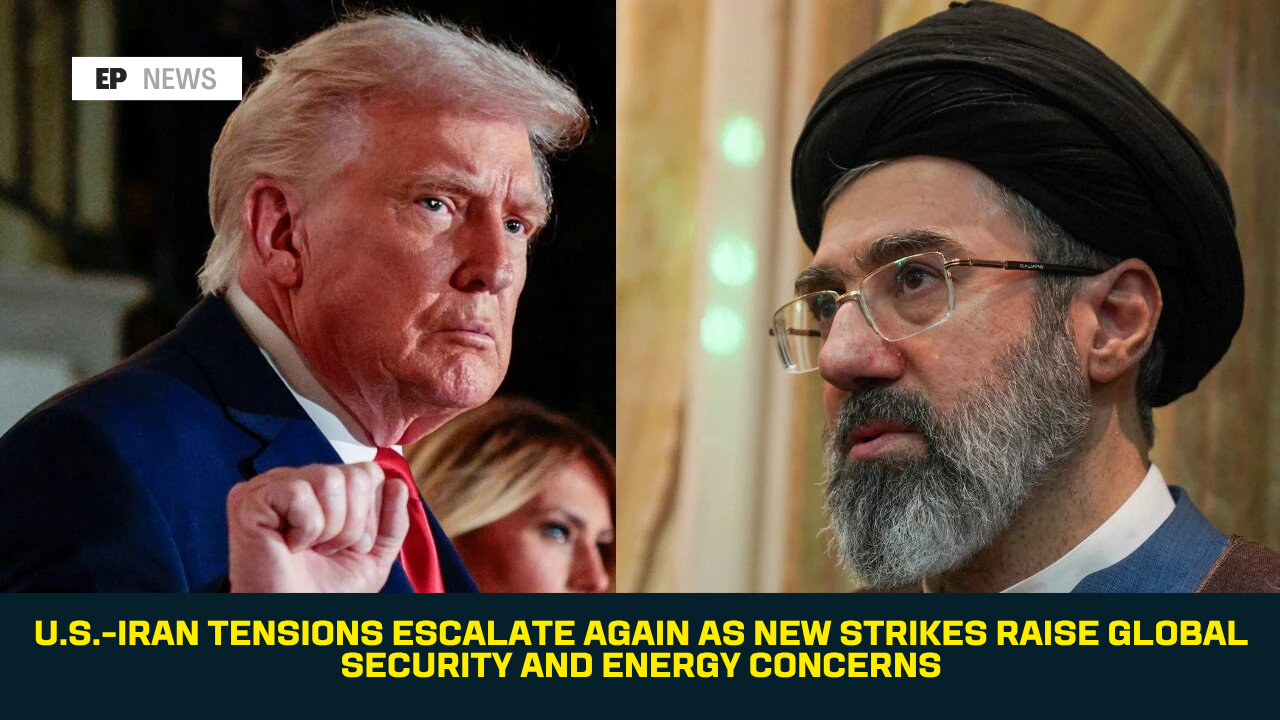
U.S.-Iran Tensions Escalate Again as New Strikes Raise Global Security and Energy Concerns
The security situation in the Middle East intensified over the weekend after the United States and Iran exchanged another round of military strikes, raising fears that the fragile diplomatic progress achieved earlier this year could collapse.
The latest developments have drawn worldwide attention because they involve one of the world’s most strategically important regions. Beyond military concerns, the renewed conflict has already influenced global energy markets, increased uncertainty for international shipping, and prompted fresh diplomatic efforts from U.S. allies and regional governments.
What Happened?
According to multiple verified reports, U.S. forces carried out additional strikes targeting Iranian military assets after renewed attacks linked to regional shipping and U.S. interests.
Iran responded by announcing retaliatory military operations against facilities associated with U.S. forces in several Gulf countries. Iranian officials also reiterated claims regarding restrictions around the Strait of Hormuz, one of the world’s most important maritime energy routes.
Although both sides have described their actions as defensive, the latest exchanges represent one of the most serious escalations since the temporary diplomatic framework reached earlier this year.
Why the Strait of Hormuz Matters
The Strait of Hormuz is one of the busiest oil transportation corridors in the world.
A significant portion of global crude oil exports passes through this narrow waterway every day. Any disruption immediately attracts attention from governments, financial markets, shipping companies, and energy traders.
Even temporary uncertainty can increase transportation costs, insurance premiums, and fuel prices worldwide.
Market analysts are closely monitoring whether commercial shipping can continue safely over the coming days.
Oil Markets React Quickly
Energy markets responded almost immediately.
Brent crude and U.S. benchmark crude prices climbed as investors priced in the possibility of additional supply disruptions.
While markets have experienced geopolitical shocks before, analysts note that continued military escalation could produce greater volatility if shipping traffic through the Gulf becomes more limited.
Investors are also watching inflation risks because higher energy prices often increase transportation and manufacturing costs throughout the global economy.
White House Response
The White House has maintained that U.S. military actions are intended to protect American personnel, commercial shipping, and regional stability.
Administration officials continue working with allies while monitoring military developments across the Middle East.
National security agencies remain focused on protecting American interests both overseas and at home.
International Reactions
Several governments have urged restraint.
Regional countries are encouraging renewed diplomacy to prevent a broader conflict that could affect international trade and civilian populations.
Diplomatic channels remain active despite growing military tensions, although officials acknowledge that recent events have complicated negotiations.
Economic Impact Beyond Oil
The consequences extend beyond energy.
Financial markets generally become more cautious during periods of geopolitical uncertainty.
Potential impacts include:
- Increased market volatility
- Higher shipping costs
- Rising airline fuel expenses
- Pressure on inflation
- Greater uncertainty for international businesses
Investors are also watching upcoming U.S. economic data, which could influence Federal Reserve policy alongside higher energy prices.
National Security Concerns
Security experts warn that continued retaliation increases the possibility of unintended escalation.
Military planners must balance deterrence with efforts to avoid a wider regional conflict.
Because multiple countries host U.S. military personnel and strategic facilities, protecting those assets remains a top priority.
What Could Happen Next?
Several possible scenarios are being closely watched:
Continued Military Exchanges
Additional strikes could occur if either side believes further retaliation is necessary.
Diplomatic Restart
International mediators may attempt to restart negotiations aimed at reducing tensions.
Economic Pressure
Additional sanctions or economic measures remain possible depending on future developments.
Shipping Security
International naval forces may increase patrols to ensure commercial vessels can continue operating safely.
Why Americans Are Paying Attention
Although the fighting is taking place overseas, Americans could still feel indirect effects.
Potential impacts include:
- Higher gasoline prices
- Increased market volatility
- National security concerns
- Possible effects on inflation
- Greater focus on foreign policy ahead of future political debates
Frequently Asked Questions
Why is the Strait of Hormuz important?
It is one of the world’s most important oil shipping routes, carrying a significant share of global petroleum exports.
Have oil prices increased?
Yes. Oil prices rose following reports of renewed military escalation and concerns about shipping security.
Is diplomacy continuing?
Despite recent military actions, diplomatic efforts have not completely stopped, although negotiations have become significantly more difficult.
Could this affect the U.S. economy?
Higher energy prices and geopolitical uncertainty could contribute to inflationary pressure and increased market volatility if tensions continue.
Conclusion
The renewed exchange of strikes between the United States and Iran marks another significant escalation in an already fragile regional situation. While both governments continue to defend their actions, global attention remains focused on whether diplomacy can prevent a wider conflict.
Beyond military developments, the situation has immediate implications for energy markets, international shipping, financial stability, and U.S. foreign policy. Over the coming days, investors, policymakers, and security experts will closely monitor whether tensions ease—or whether additional military actions further increase uncertainty across the Middle East.