
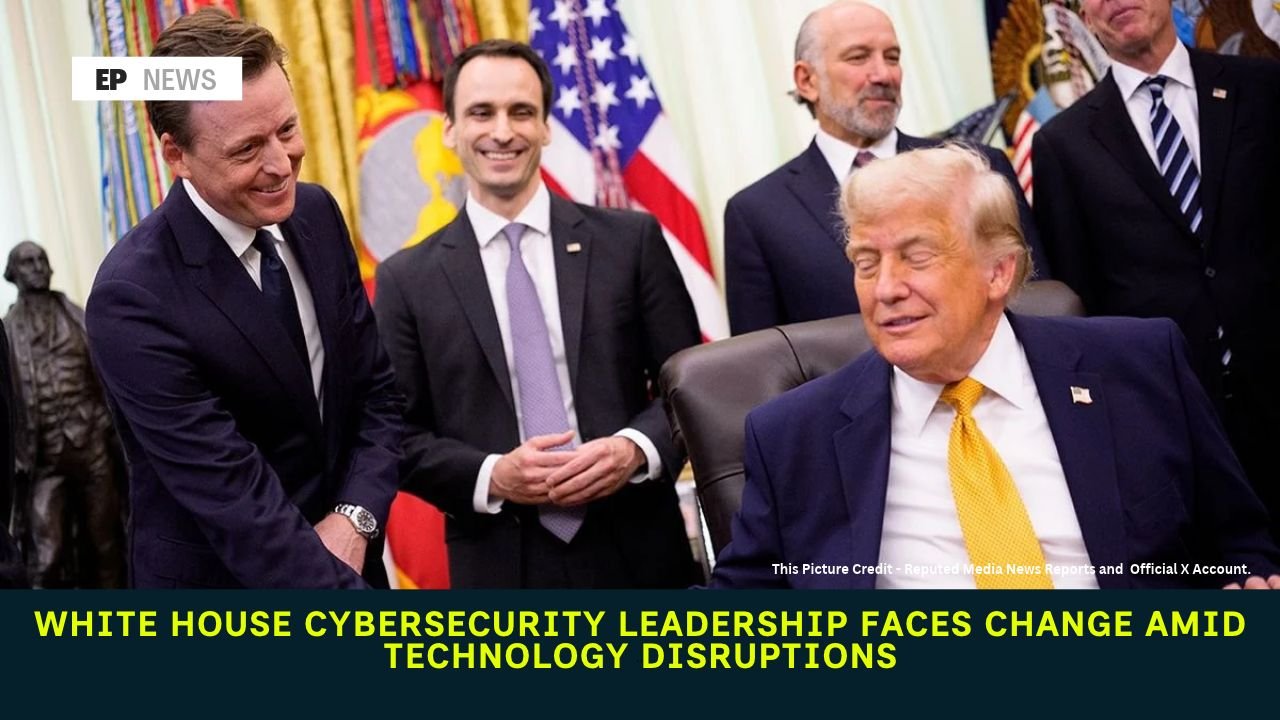
White House Cybersecurity Leadership Faces Change Amid Technology Disruptions
November 19, 2026 | U.S & White House News
The White House is preparing for a change in its cybersecurity leadership after National Cyber Director Sean Cairncross decided to leave his position, according to a White House official cited by CBS News.
The development comes during a period of heightened attention on the reliability and security of critical technology systems across the United States.
Over the preceding week, several technology disruptions reportedly affected Microsoft services, air traffic control systems, banks and the National Security Agency’s internal network.
The incidents have raised questions about the resilience of digital infrastructure and the ability of federal agencies and private companies to respond when essential systems experience problems.
Cairncross has served as the national cyber director since August 2025.
The position is important because it advises the president on cybersecurity policy and coordinates cyber strategy across the federal government.
His departure therefore represents a significant personnel change in an area that has become increasingly important to national security, financial stability and public infrastructure.
CBS News reported that the White House official confirmed Cairncross would leave. Axios had reported the development earlier.
What Does the National Cyber Director Do?
The National Cyber Director is a senior federal government official responsible for helping coordinate cybersecurity policy across the United States.
Cybersecurity is no longer limited to protecting government computers.
It includes protecting the systems that support financial transactions, transportation, electricity, communications, healthcare and national defense.
The federal government relies on thousands of digital systems to manage sensitive information and provide public services.
A disruption in one system can create problems for agencies, businesses and ordinary citizens.
The national cyber director’s role includes advising the president, coordinating policy and helping establish a consistent federal approach to cyber threats.
The position also helps connect the work of different government agencies that have cybersecurity responsibilities.
This coordination is important because cybersecurity problems frequently cross organizational boundaries.
For example, an incident affecting a private technology provider could potentially disrupt government services that depend on the same infrastructure.
Recent Technology Outages Increase Attention on Federal Cybersecurity
Cairncross’s departure comes at a time when Americans have experienced several technology disruptions.
CBS News reported that outages during the previous week affected Microsoft services, air traffic control systems, banks and the National Security Agency’s internal network.
These incidents have attracted attention because the affected systems play important roles in the daily operation of the country.
Technology outages can create different types of problems.
For financial institutions, disruptions may delay transactions or temporarily prevent customers from accessing services.
For transportation systems, technical failures can interfere with scheduling, communication and operational coordination.
For government agencies, outages can affect internal communications and the delivery of services.
However, it is important to distinguish between a technical outage and a confirmed cyberattack.
A system failure does not automatically mean hackers were responsible.
According to CBS News, Homeland Security Secretary Markwayne Mullin told lawmakers that investigators had seen nothing indicating the outages were related.
Mullin also expressed confidence that the disruptions were not the result of malicious foreign activity, while acknowledging that the number of outages within a short period was unusual.
This distinction matters because premature claims about cyberattacks can create unnecessary public concern.
Why the Government Must Investigate Technology Failures Carefully
The United States depends heavily on digital infrastructure.
Government departments, banks, airports, hospitals and businesses use interconnected networks to operate.
A failure in one part of the technology ecosystem can affect other organizations.
There are several possible explanations for technology outages.
These include:
- Software errors.
- Hardware failures.
- Network interruptions.
- Cloud service disruptions.
- Configuration problems.
- Cyberattacks.
- Failures involving third-party technology providers.
Investigators must establish the actual cause before reaching conclusions.
The government also needs to understand whether multiple incidents share a common technical vulnerability or occurred independently.
This is particularly important when critical infrastructure is involved.
Why Cybersecurity Leadership Matters to American Businesses
Cybersecurity policy affects more than federal agencies.
American businesses increasingly depend on digital systems to store customer information, process payments and communicate with suppliers.
A major cybersecurity incident can create financial and operational consequences.
For small businesses, even a short disruption may prevent customers from completing purchases or accessing services.
Large companies face additional challenges because their systems may involve multiple suppliers, international operations and cloud infrastructure.
Financial institutions also have responsibilities to protect customer information and maintain secure payment networks.
Strong federal cybersecurity coordination can help establish consistent standards and improve communication between government agencies and private organizations.
However, cybersecurity cannot depend on one government official.
It requires continuous investment, skilled personnel, updated technology and cooperation between the public and private sectors.
What Happens After Cairncross’s Departure?
The White House will need to maintain continuity in cybersecurity policy while preparing for a leadership transition.
Because the national cyber director is a Senate-confirmed position, selecting a permanent replacement involves an important confirmation process.
A leadership change can create questions about priorities, staffing and policy direction.
The administration will also need to demonstrate that federal cybersecurity coordination remains effective.
The timing is particularly significant because digital infrastructure has become a central part of national security planning.
A new director will inherit responsibility for helping coordinate federal policy at a time when technology outages and cyber risks are receiving increased attention.
What Americans Should Understand About the Situation
For ordinary Americans, the departure does not mean that the country’s digital systems have been compromised.
It also does not establish that the recent outages were connected.
However, the situation highlights why cybersecurity leadership and infrastructure resilience matter.
Consumers should continue following basic security practices, including using strong passwords, enabling multifactor authentication and keeping devices updated.
Businesses should review their backup procedures and ensure they have plans for responding to technology disruptions.
Government agencies must continue working with technology providers to improve system reliability and security.
Frequently Asked Questions
1. Who is Sean Cairncross?
Sean Cairncross is the outgoing White House National Cyber Director, a position responsible for advising the president and coordinating federal cybersecurity policy.
2. When did he become national cyber director?
CBS News reported that he had served in the position since August 2025.
3. Why is his departure significant?
The role coordinates cybersecurity strategy across federal agencies at a time when digital infrastructure and technology outages are receiving increased attention.
4. Were the recent outages confirmed cyberattacks?
No. Homeland Security Secretary Markwayne Mullin said investigators had not found evidence indicating the outages were related.
5. Does the departure mean U.S. government systems are unsafe?
No. The personnel change does not establish that government systems have been compromised.
Conclusion
Sean Cairncross’s departure marks an important leadership change for the White House cybersecurity office.
The timing is notable because the United States has recently experienced disruptions affecting several important technology systems.
Although authorities have not established that the incidents were connected or caused by malicious activity, the situation reinforces the importance of reliable digital infrastructure.
For the Trump administration, maintaining cybersecurity coordination and ensuring a smooth leadership transition will be important.
For American businesses and consumers, the broader lesson is that digital security and system reliability remain essential to the functioning of modern society.
Source: CBS News | November 19, 2026