
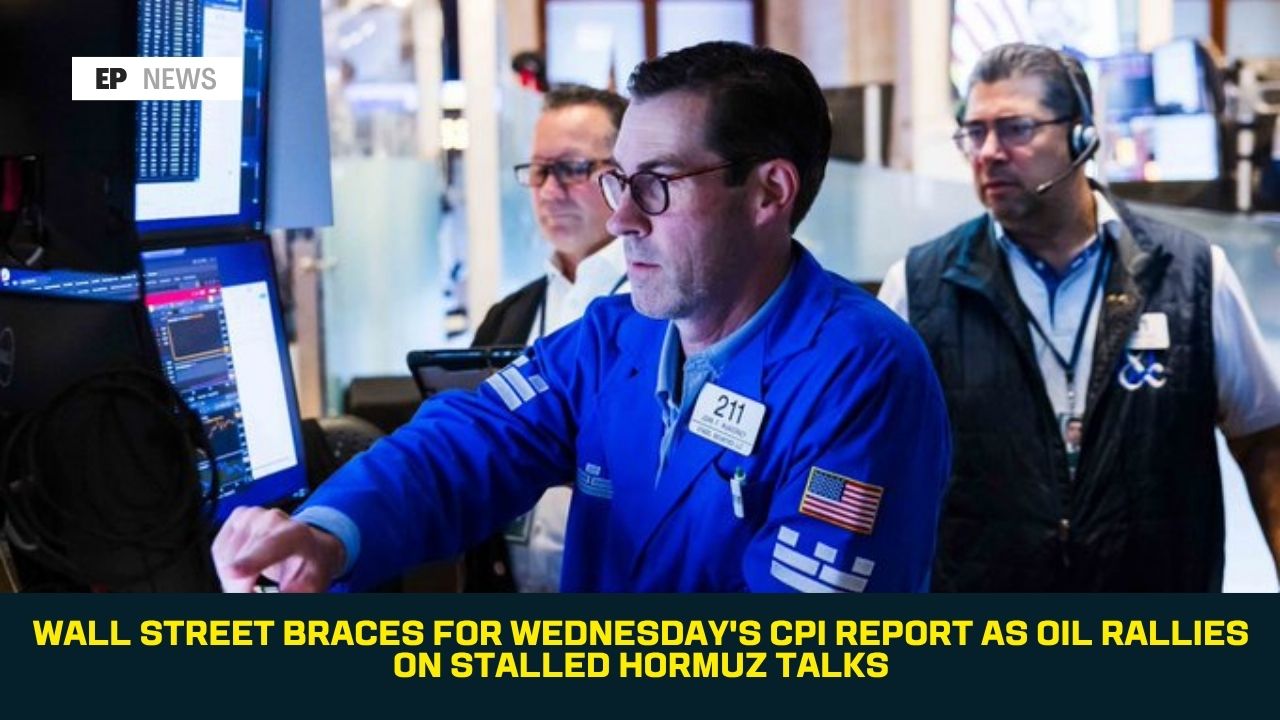
Wall Street Braces for Wednesday’s CPI Report as Oil Rallies on Stalled Hormuz Talks
Wall Street enters this week’s trading with two major forces pulling in opposite directions: a critical July inflation report due Wednesday that could tip the scales on whether the Federal Reserve raises interest rates next month, and a fresh oil rally driven by stalled weekend negotiations over reopening the Strait of Hormuz.
Why Wednesday’s CPI Report Matters So Much
The Consumer Price Index report for July, scheduled for release Wednesday, August 12, at 8:30 a.m. ET, has taken on outsized importance following last week’s unexpectedly weak jobs report. According to Kiplinger, investors, traders, and speculators are focusing this week squarely on inflation data, with Wednesday’s CPI release and Thursday’s Producer Price Index report both providing the Federal Reserve with additional evidence as it weighs the appropriate level for interest rates.
Investing.com’s analysis was even more specific about what’s actually driving market sensitivity to this particular report: the core month-over-month figure — whether it comes in at 0.1%, 0.2%, or 0.3% — will determine whether the probability of a September rate hike moves toward 30% or 60%. A jump from the prior 0.0% reading to 0.2% is already largely priced into market expectations, but a print of 0.3% or higher would signal that inflation is reaccelerating within the Fed’s preferred measurement, likely spiking rate-hike odds further.
The headline monthly figure carries its own significance. June’s CPI report showed a 0.4% monthly decline, the largest single-month drop since April 2020, driven substantially by falling energy prices, according to the Bureau of Labor Statistics’ official release. Whether July’s report continues that energy-driven relief or reverses it — particularly given oil’s recent rally — will shape how markets interpret the broader inflation trajectory.
Oil Rises as Hormuz Talks Stall
Compounding the uncertainty, oil prices have been climbing as hopes fade for a near-term deal to reopen the Strait of Hormuz. According to Bloomberg’s markets coverage, U.S. crude held steady near $82 a barrel in early Tuesday trading after gaining roughly 9% over the previous three sessions, with Asian stocks set for a muted start ahead of the week’s key U.S. inflation reports.
Charles Schwab’s market commentary described the shift directly: after crude oil fell nearly 8% the previous week and stocks hit record highs, Monday brought new challenges, as a lack of weekend progress in Middle East negotiations lifted oil back toward $80 per barrel. That reversal stands in tension with the disinflationary energy trend that had been supporting softer CPI readings in recent months — if sustained, a renewed oil rally could work against further progress on headline inflation figures in the reports still to come.
Where Stocks Stand Heading Into the Data
Despite the oil-driven uncertainty, U.S. equities have remained resilient. According to Investing.com, the S&P 500 is sitting at record highs even as the 10-year Treasury yield remains elevated at 4.675% and the Fed openly debates whether a hike is warranted — a combination the outlet describes as a week where “data beats narrative,” with position sizing and hedging strategies mattering more than directional conviction until Wednesday’s report actually lands.
The rest of the week’s economic calendar adds further texture to the picture. Thursday’s Producer Price Index report matters specifically because it serves as a leading indicator for future CPI readings — if producers are paying more today, those costs often flow through to consumers in subsequent months. A core PPI reading above 0.3% would suggest pipeline inflation pressures are building, potentially making a hot CPI print more likely next month and giving policy hawks additional justification for a rate increase.
Friday rounds out the week with July retail sales figures and the University of Michigan’s preliminary consumer sentiment reading for August, according to Kiplinger — both additional data points the Fed will weigh alongside the inflation reports as it approaches its September meeting.
Treasury Auctions Add Another Layer
Beyond the inflation data itself, this week features multiple Treasury auctions that will test investor demand for government debt amid the currently elevated yield environment. According to Investing.com, a 10-year note auction is scheduled for Wednesday at 1 p.m. ET, following the previous auction’s 4.58% yield, with a 30-year bond auction following Thursday at the same time. Strong or weak demand at these auctions can independently move yields and add to the week’s overall market volatility, separate from how the inflation data itself is received.
FAQ
When is the July CPI report released? Wednesday, August 12, 2026, at 8:30 a.m. ET.
Why does this CPI report matter more than usual? It follows a weaker-than-expected July jobs report and lands amid open disagreement among Federal Reserve policymakers about whether to raise interest rates at their September meeting, making it a key input for that decision.
What core CPI reading would markets consider concerning? A core month-over-month figure of 0.3% or higher would signal inflation reaccelerating within the Fed’s preferred measure, according to Investing.com’s analysis, likely pushing September rate-hike probabilities higher.
Why are oil prices rising again? Hopes faded over the weekend for a deal to reopen the Strait of Hormuz, reversing part of the prior week’s roughly 8% decline in crude oil prices.
What other economic data is coming this week? Thursday brings the Producer Price Index report, and Friday brings July retail sales figures and the University of Michigan’s preliminary August consumer sentiment reading.
Conclusion
This week’s trading is shaping up as a genuine test of whether disinflation trends can hold up against a renewed oil rally tied to unresolved Middle East tensions — with Wednesday’s CPI report standing as the single most consequential data point for determining the Fed’s next move. With the S&P 500 already at record highs and yields elevated, the market’s reaction to Wednesday’s numbers, followed by Thursday’s PPI report and Friday’s retail sales and consumer sentiment data, will likely set the tone for trading heading into the Fed’s September meeting.
Sources: Bloomberg, Kiplinger, Charles Schwab, Investing.com, U.S. Bureau of Labor Statistics (reporting dated August 7-11, 2026).