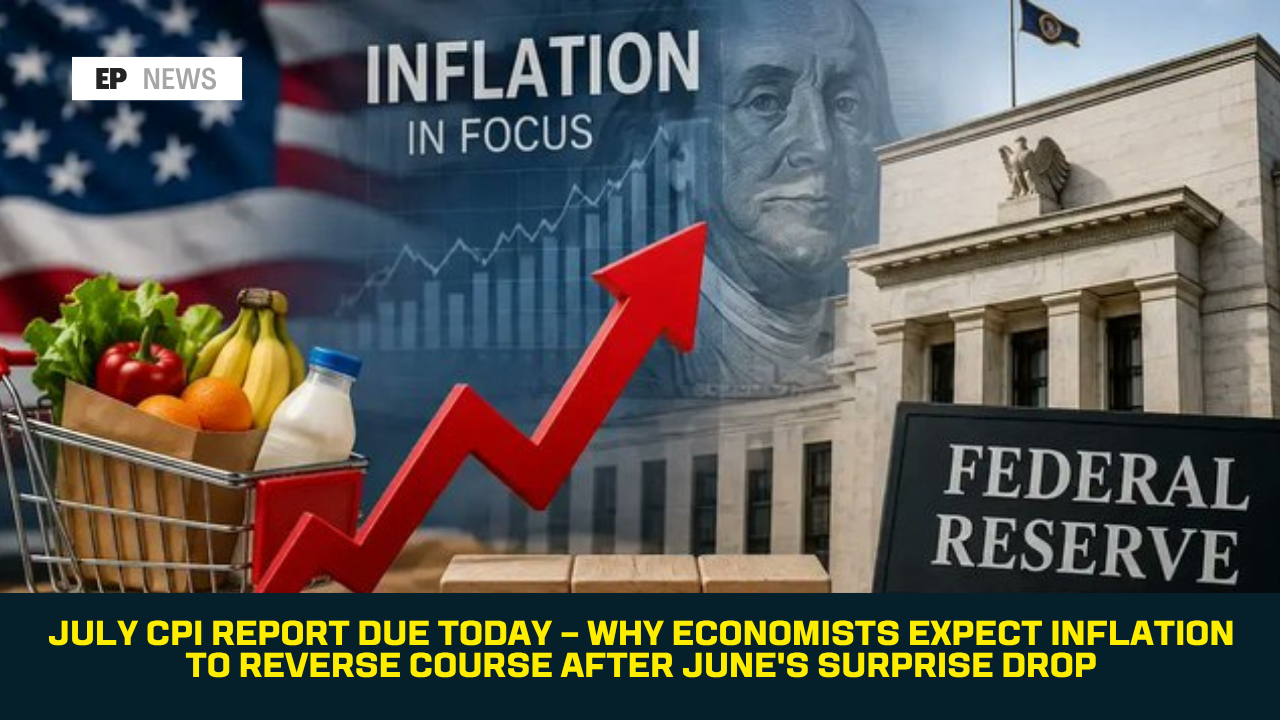
July CPI Report Due Today — Why Economists Expect Inflation to Reverse Course After June’s Surprise Drop
The Bureau of Labor Statistics releases its July Consumer Price Index report today, Wednesday, August 12, at 8:30 a.m. Eastern time — and economists widely expect it to reverse the surprisingly good inflation news from June, driven by a sharp rebound in oil prices as U.S.-Iran peace talks broke down.
What June’s Report Showed — and Why It Likely Won’t Repeat
June’s CPI report gave markets something they hadn’t seen in a while: a negative month-over-month reading. According to the BLS’s official release, the Consumer Price Index for All Urban Consumers fell 0.4% in June on a seasonally adjusted basis, the largest single-month decline since April 2020, while the 12-month inflation rate came in at 3.5%. Core inflation, which excludes volatile food and energy prices, was flat for the month and up 2.6% year-over-year.
That decline was driven substantially by falling energy prices, which came as a ceasefire between the U.S. and Iran temporarily eased pressure on global oil markets, according to Kiplinger. But that relief appears to have been short-lived. David Payne, staff economist for The Kiplinger Letter, wrote in the outlet’s inflation outlook that oil prices surged more than 20% in July as peace talks between Washington and Tehran fell apart — meaning July’s CPI report is unlikely to show the same negative monthly reading investors saw in June. “Unless a new ceasefire can be agreed upon, expect inflation to rise again,” Payne wrote, projecting the 12-month inflation rate could climb back toward 4% by year-end if the standoff isn’t resolved.
Why Core Inflation May Not Stay This Tame Either
Even the more encouraging core inflation figure from June carries a caveat about its durability. Payne cautioned that “the good news on core inflation may not last,” noting that services prices typically rise at a moderate, steady pace, meaning June’s flat reading may not repeat in subsequent months. He also pointed to a secondary channel through which higher oil prices could push core inflation upward indirectly: businesses facing higher fuel and input costs may “raise prices just to cover their costs, creating another upward push to core prices.”
Payne flagged a further risk specific to food prices heading into the back half of the year, tied directly to the ongoing Middle East conflict: roughly a third of the world’s fertilizer supply is produced in the Persian Gulf region, meaning continued regional instability could put upward pressure on food costs later in 2026.
Why This Report Matters More Than Usual
Today’s release lands at a particularly sensitive moment for both markets and Federal Reserve policy. According to Fingerlakes1.com, the report comes after an unusually volatile stretch for prices, with investors closely weighing what the latest numbers could mean for the Fed’s next interest rate decision. Evidence that inflation is genuinely cooling could help create the conditions needed for borrowing costs to eventually decline — while an unexpectedly hot reading would reinforce concerns that elevated interest rates are likely to persist longer than markets have been hoping.
That tension has been building for weeks. The Fed held its benchmark rate steady at its late-July meeting, but not without unusual public disagreement: three regional Fed bank presidents dissented, favoring a rate hike instead. Since then, several Fed officials have suggested a September hike remains on the table if inflation data doesn’t show clear signs of easing — making today’s CPI print, alongside Thursday’s Producer Price Index report, one of the most closely watched data releases the Fed will weigh before its next meeting.
What to Watch in Today’s Numbers
Based on the dynamics described by Kiplinger and other economists heading into the release, the most important elements of today’s report will likely be:
- The headline monthly figure: whether it returns to positive territory after June’s 0.4% decline, and by how much, given the sharp reversal in oil prices during July.
- Core CPI, month-over-month: whether June’s flat reading holds or reverses, since core inflation strips out the food and energy volatility currently being driven by the Iran conflict and offers a clearer read on underlying price pressure.
- Energy and food components specifically: given how directly this report is expected to reflect the oil price swings tied to the collapsed peace talks.
FAQ
When is the July CPI report released? Today, Wednesday, August 12, 2026, at 8:30 a.m. Eastern time.
What did June’s CPI report show? Consumer prices fell 0.4% month-over-month, the largest single-month decline since April 2020, with 12-month inflation at 3.5%. Core inflation was flat for the month and up 2.6% year-over-year.
Why do economists expect July’s report to look worse than June’s? Oil prices surged more than 20% in July after U.S.-Iran peace talks collapsed, reversing the energy-price relief that had driven June’s surprisingly low reading.
How high could inflation climb by the end of 2026? Kiplinger’s David Payne projects the 12-month inflation rate could return to near 4% by year-end if the U.S.-Iran standoff isn’t resolved through a new ceasefire.
Why does this report matter for interest rates? The Federal Reserve is weighing whether to raise rates at its September meeting, following a late-July decision to hold rates steady that saw unusual internal disagreement among policymakers. Today’s inflation data will factor heavily into that decision.
Conclusion
Today’s CPI report is widely expected to end the brief run of encouraging inflation news that defined June’s release, as the reversal of the Iran ceasefire and the resulting oil price surge work their way through the broader price data. With the Fed already split over whether a September rate hike is warranted, a hotter-than-expected reading today could tip that debate meaningfully — making this one of the more consequential data releases of the summer for anyone watching where borrowing costs, and the broader economy, head from here.
Sources: U.S. Bureau of Labor Statistics, Kiplinger, Fingerlakes1.com, Investing.com (reporting dated August 11-12, 2026, ahead of the official July CPI release).