
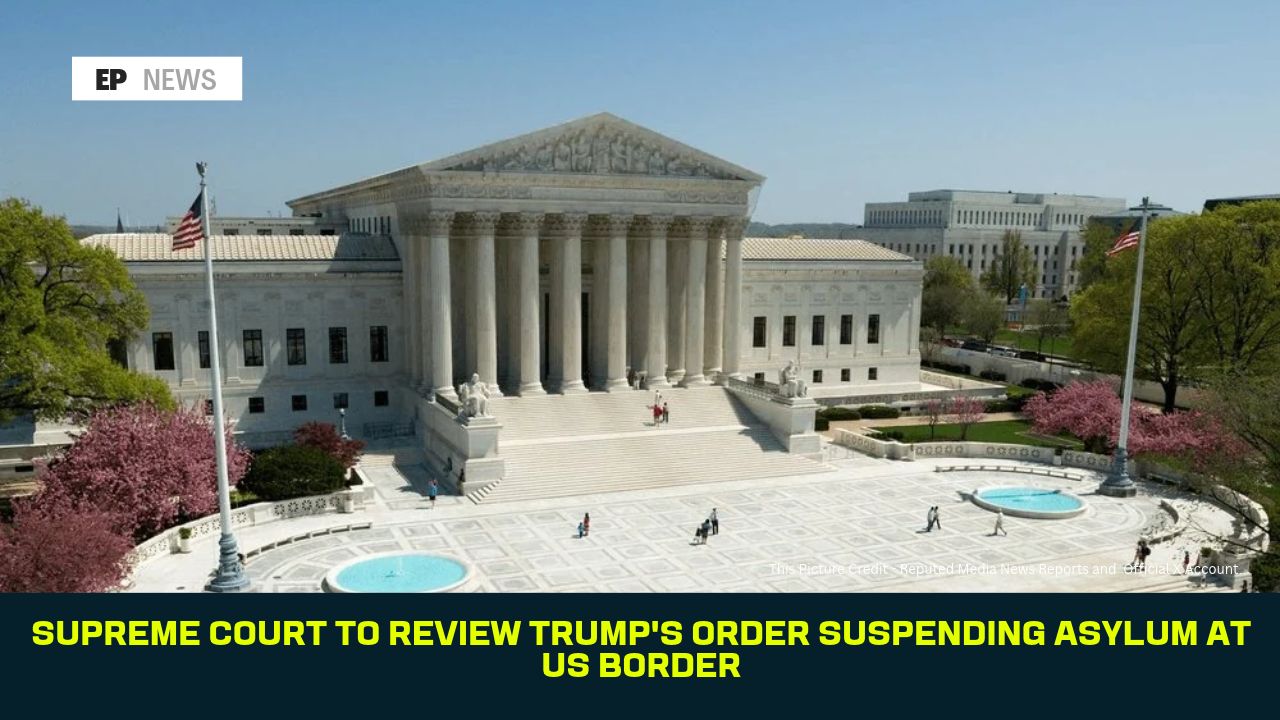
Supreme Court to Review Trump’s Order Suspending Asylum at US Border
The United States Supreme Court has agreed to review President Donald Trump’s executive order suspending access to asylum at the country’s southern border, setting up an important legal battle over presidential immigration powers and protections available to people fleeing persecution.
The development was reported by The Associated Press on November 13, 2026. The Trump administration is asking the nation’s highest court to overturn lower-court decisions that found the executive order unlawful.
The case could have major consequences for the future of the American asylum system. At its center is a fundamental legal question: Can a president use executive authority to prevent certain migrants arriving at the southern border from seeking asylum, or does federal immigration law protect their right to submit an asylum application?
The administration argues that it should have the authority to reject applications covered by the order. Immigration advocates and civil-rights organizations disagree, saying the policy bypasses protections established by Congress.
For now, the Supreme Court’s decision to hear the case does not mean the justices have approved Trump’s policy. It means the legal dispute will receive further review at the highest level of the federal judiciary.
What Happened on November 13?
On Friday, November 13, the Supreme Court agreed to consider the Trump administration’s challenge to lower-court rulings concerning the president’s asylum restrictions at the southern border.
The executive order is part of Trump’s broader immigration enforcement agenda. His administration has argued that the federal government needs stronger authority to control migration and respond to large numbers of people arriving at the border.
However, lower courts previously concluded that the order suspending asylum applications was unlawful.
The administration now wants the Supreme Court to reverse those decisions.
The Associated Press reported that the dispute concerns whether the executive branch can categorically deny asylum to migrants covered by the order without accepting applications that the government believes should be rejected.
The case is important because it involves the relationship between presidential authority and immigration protections written into federal law.
The Supreme Court has not yet issued a final ruling on the legality of the order.
What Is Trump’s Asylum Order?
Asylum is a form of protection available under U.S. law to certain people who fear persecution in their home countries.
People seeking asylum may be fleeing threats connected to factors such as their political opinions, religion, nationality, race or membership in a particular social group.
The American asylum system allows eligible individuals to request protection from the United States government. Their claims are evaluated under federal immigration law and applicable procedures.
Trump’s executive order seeks to suspend access to asylum for migrants covered by the policy at the southern border.
The administration has defended the measure as part of its effort to control migration and reduce pressure on border enforcement agencies.
The legal challenge, however, questions whether the president can use an executive order to block access to a process that Congress established through federal law.
This is why the Supreme Court’s involvement is significant. The justices will have to consider the limits of executive authority and how federal asylum protections apply to the policy.
Why Is the Trump Administration Defending the Policy?
The administration argues that the existing asylum process has contributed to problems at the southern border.
Federal attorneys have pointed to lengthy processing times and the number of migrants who were previously released into the United States while waiting for decisions on their cases.
According to the administration’s position described by AP, these delays contributed to a significant influx of migrants.
The government argues that it should not be required to accept asylum applications when it believes the individuals covered by the executive order would ultimately be denied protection.
From the administration’s perspective, stronger restrictions could help reduce pressure on immigration courts and border authorities.
The policy also reflects Trump’s wider approach to immigration enforcement, which has emphasized tighter border controls and restrictions on entry.
However, the administration’s arguments are being challenged in court. The central question is not simply whether the government can enforce immigration laws, but whether it can suspend access to asylum in the way the executive order attempts to do.
Why Are Immigration Advocates Opposing the Order?
Immigration attorneys and civil-rights organizations argue that the executive order undermines legal protections for people escaping dangerous conditions.
The American Civil Liberties Union and the National Immigrant Justice Center have challenged the administration’s position.
Their argument, as reported by AP, is that federal law provides people with the right to seek asylum if they fear persecution in their home countries, regardless of how they arrived in the United States.
They also dispute the administration’s explanation of the migration situation.
Immigration advocates have argued that border crossings were already declining before Trump returned to office.
For these organizations, the issue is about more than border management. They say people fleeing persecution must have a meaningful opportunity to present their claims under the law.
If the government can categorically block applications through an executive order, they argue, it could weaken protections that Congress intended to preserve.
The administration disagrees and maintains that its approach is necessary to address border pressures.
The Supreme Court’s review will place these competing legal arguments under national scrutiny.
What Does Federal Law Say About Asylum?
U.S. asylum law is based on federal legislation and international commitments.
Under federal law, a person who is physically present in or arrives in the United States may apply for asylum, subject to the requirements and exceptions established by law.
Applying for asylum does not automatically mean that a person will receive protection.
Applicants must satisfy legal standards, and authorities examine whether the individual qualifies under the relevant rules.
The distinction between applying for asylum and being granted asylum is important.
The Trump administration argues that it has the authority to reject certain migrants covered by the executive order without processing applications it considers destined for denial.
Opponents argue that the government cannot simply eliminate the application process for people who may qualify for protection.
The Supreme Court’s review could help clarify how these statutory protections interact with presidential authority over border enforcement.
The outcome may influence how future administrations interpret their powers when responding to migration challenges.
What Could the Supreme Court Decision Mean for Migrants?
The final ruling could affect how asylum claims are handled at the U.S.-Mexico border.
If the Supreme Court sides with the Trump administration, the policy could gain stronger legal support, potentially allowing the government to continue restricting asylum access for people covered by the order.
That outcome could significantly change the practical options available to some migrants arriving at the southern border.
If the court rules against the administration, the lower-court decisions could remain in place, limiting the government’s ability to implement the order in its current form.
Such a decision could reinforce the importance of the existing statutory asylum process.
However, the exact consequences will depend on the court’s legal reasoning and the scope of its final judgment.
The ruling may also influence future immigration disputes involving the balance between executive power and congressional authority.
It is important to note that the case does not mean every migrant will automatically qualify for asylum. Eligibility requirements and individual case assessments would remain relevant under applicable law.
Why This Case Matters for U.S. Immigration Policy
Immigration has remained one of the most debated issues in American politics.
Presidents from both major political parties have used executive authority to change border enforcement priorities. However, those actions can face legal challenges when opponents argue that an administration has exceeded the powers granted by Congress.
The latest Supreme Court case places that broader constitutional and statutory debate at the center of national attention.
For the Trump administration, the case represents an opportunity to defend a major part of its immigration strategy.
For immigration advocates, it is an opportunity to challenge what they view as an unlawful restriction on access to asylum protections.
The decision could also provide guidance for future presidents who may seek to change immigration procedures through executive action.
Because the Supreme Court is the highest court in the federal judicial system, its eventual ruling will carry nationwide legal significance.
What Happens Next in the Supreme Court Case?
The next stage will involve the legal proceedings required for the Supreme Court to consider the dispute.
The justices will examine the arguments presented by the Trump administration and the opposing side before reaching a decision.
The court’s agreement to review the case should not be confused with a final ruling.
As of November 14, 2026, the announcement confirms that the court will consider the legal challenge, but it does not establish that the asylum restrictions have been upheld.
The precise schedule for further proceedings and the eventual decision should be confirmed through official Supreme Court updates.
Until the court issues its judgment, the legal status and practical application of the policy must be understood in light of existing court orders and any subsequent government guidance.
The case is expected to remain an important subject in the national immigration debate.
How Could the Case Affect Future Presidential Powers?
Beyond immigration, the dispute raises a wider question about how far a president can go when using executive orders to change the operation of federal programs.
Presidents have substantial authority over the enforcement priorities of executive agencies. But executive authority is not unlimited.
Congress passes federal laws, and the executive branch is generally responsible for implementing them.
When a president issues an order that appears to conflict with a statute, courts may be asked to determine whether the administration has exceeded its legal authority.
The asylum dispute is an example of that conflict.
The Supreme Court’s reasoning could help define the limits of executive discretion in immigration enforcement.
It may also influence how future administrations approach other areas of federal policy where executive orders intersect with rights or procedures established by Congress.
That broader legal significance is one reason the case deserves attention beyond immigration advocates and border communities.
Frequently Asked Questions
1. Why is the Supreme Court reviewing Trump’s asylum order?
The Supreme Court agreed to review the Trump administration’s challenge to lower-court decisions that found the executive order suspending asylum access at the southern border unlawful.
2. Did the Supreme Court approve Trump’s asylum ban?
No. Agreeing to review a case does not mean the court has approved the policy. A final decision is still required.
3. What does Trump’s asylum order attempt to do?
The order seeks to suspend access to asylum for migrants covered by the policy at the southern border.
4. Why are immigration groups challenging the policy?
Organizations including the ACLU and the National Immigrant Justice Center argue that federal law protects the right of eligible people to apply for asylum and that the executive order unlawfully restricts that process.
5. Does applying for asylum guarantee approval?
No. Applying for asylum and receiving asylum are different. Applicants must meet the legal requirements, and authorities evaluate their claims.
6. Could the Supreme Court decision affect migrants nationwide?
The case concerns the southern border, but the Supreme Court’s interpretation of federal asylum law and presidential authority could have wider implications for U.S. immigration policy.
7. When will the Supreme Court issue its final decision?
As of November 14, 2026, the court had agreed to consider the case. A final decision date had not been established in the reporting cited here.
Final Thoughts
The Supreme Court’s decision to review Trump’s asylum order marks an important moment in the ongoing debate over immigration enforcement and legal protections in the United States.
The Trump administration believes stronger restrictions are necessary to manage migration and reduce pressure on the border system. Immigration advocates argue that the government cannot use executive authority to bypass protections established under federal law.
The final outcome could determine how much flexibility future presidents have to restrict access to asylum through executive action.
For now, the most important point is that the Supreme Court has agreed to hear the dispute, not that it has delivered a final judgment.
The coming legal proceedings will help determine whether the administration’s policy can stand or whether existing asylum protections limit the president’s authority.
Sources and Reporting
- Associated Press (November 13, 2026): Supreme Court to consider Trump’s order suspending asylum access at southern border
- Associated Press: Appeals court rules that Trump’s asylum ban at the border is illegal
Editorial note: This article reports the Supreme Court’s decision to review the case. It does not describe the asylum order as upheld or overturned by the Supreme Court.