July Inflation Came In Right on Target at 3.4% — But Wages Are Losing the Race
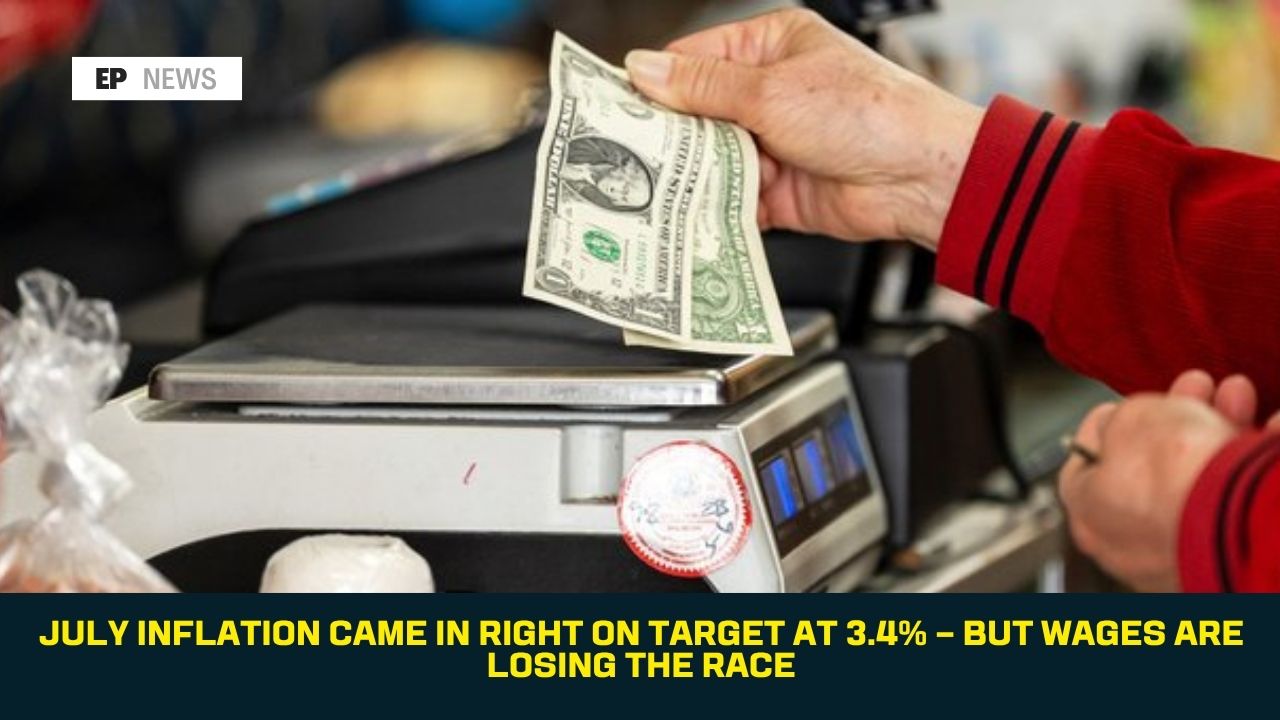
The Consumer Price Index rose just 0.1% in July, the Bureau of Labor Statistics reported Wednesday, August 12, cooling the annual inflation rate to 3.4% from June’s 3.5% — a result that landed exactly in line with Wall Street’s forecasts and eased, at least for now, the more troubling reacceleration some economists had been bracing for after oil prices surged earlier in the summer.
The Headline Numbers
July’s 0.1% monthly increase followed June’s 0.4% decline, according to the BLS’s official release. Core CPI, which excludes food and energy, rose 0.2% in July after holding flat in June, bringing the annual core rate to 2.5%, down slightly from 2.6% in June. Both the headline and core monthly figures came in exactly at the Dow Jones consensus forecast, according to CNBC.
Shelter costs accounted for roughly two-thirds of the month’s overall increase, rising 0.1%, according to Yahoo Finance/Quartz. Within that category, a measure of what property owners could get in rent if they leased their homes rose 0.3%, while a sharp 2.8% decline in lodging away from home helped keep the broader shelter index in check, according to CNBC. The food index also climbed 0.1% for the month.
Why Energy Prices Didn’t Blow Up This Report
Despite the oil price surge that had driven concerns about a hotter July reading, the energy index actually fell 1.5% for the month — even though energy prices remain 14.7% higher than a year ago, driven by a 24.6% annual surge in gasoline prices, according to Yahoo Finance/Quartz. CNBC’s own breakdown noted that meats, poultry, and fish prices declined 0.7% for the month but remain up 4.5% year-over-year, driven substantially by beef and veal, which have climbed 9.4% over the past year following a 0.8% monthly decline in July specifically.
CNBC economics correspondent framing described the combination of a soft June and a subdued July as evidence that “the energy-fueled burst earlier in the year is easing,” even though price levels remain well above the Fed’s 2% annual target.
The More Troubling Signal: Wages Falling Behind
Beneath the relatively reassuring headline numbers, NBC News highlighted a specific problem that’s persisted for months: inflation has now outpaced wage growth for four straight months. Average hourly earnings actually slipped 0.2% from a year earlier, according to the BLS, even as prices for everyday goods and services continued climbing at a 3.4% annual clip.
Heather Long, chief economist at Navy Federal Credit Union, described the practical consequences of that gap directly, according to NBC News. “For middle-income and lower-income Americans, this is the key issue,” Long wrote on social media. “There will likely be some belt-tightening ahead.” That dynamic means even a “good” inflation report, in the sense of meeting forecasts and showing signs of cooling, still leaves many households facing real, ongoing pressure on their purchasing power.
A Split Within the Fed on What to Do Next
Wednesday’s data landed amid open disagreement among Federal Reserve officials about the appropriate policy response. Cleveland Fed President Beth Hammack argued for near-term action in a LinkedIn post Tuesday, ahead of the CPI release: “Now is the time to act. The longer we wait to take action to bring inflation back to our 2 percent objective, the more challenging it will be to bring it back down and the more expensive it will be for the American people.”
Not all economists agree a hike is imminent, however. Truist head of U.S. economics Mike Skordeles offered a more measured read following the release: “Overall, this data supports our view that the Fed will remain on hold in the near term,” though he noted there’s still significant data to come — including jobs and CPI reports for August — before the Fed’s next rate decision in mid-September. Morgan Stanley’s Ellen Zentner echoed that view, according to CNBC, saying the in-line reading “will keep the ‘no need to hike rates’ narrative that took hold after last week’s jobs report intact.”
How Markets Reacted
Stock futures moved higher following the report’s release, and Treasury yields pulled back broadly, according to Yahoo Finance/Quartz — a reaction consistent with markets reading the in-line print as reducing, rather than increasing, the near-term odds of a Fed rate hike.
What’s Ahead
The Federal Open Market Committee doesn’t meet again until September, giving policymakers an additional full month of economic data — including the August jobs report and the next CPI reading — to weigh before their next rate decision. The BLS confirmed the August CPI report is scheduled for release on Friday, September 11, 2026, just days before that meeting.
FAQ
How much did prices rise in July 2026? The Consumer Price Index rose 0.1% for the month, bringing the annual inflation rate to 3.4%, down from 3.5% in June.
Did this match what economists expected? Yes. Both the headline and core monthly figures came in exactly in line with the Dow Jones consensus forecast.
Why didn’t the earlier oil price surge push inflation higher? The energy index actually fell 1.5% for the month, even though energy prices remain significantly higher than a year ago, suggesting the broader energy-driven inflation spike from earlier in 2026 may be losing momentum.
Is wage growth keeping pace with inflation? No. Average hourly earnings have fallen behind CPI inflation for four consecutive months, with earnings actually declining 0.2% on an annual basis even as prices rose 3.4%.
Will the Fed raise interest rates in September? It’s uncertain. Some officials, including Cleveland Fed President Beth Hammack, have pushed for near-term action, while others, including analysts at Truist and Morgan Stanley, say this report supports keeping rates on hold for now, with additional jobs and inflation data still to come before the September meeting.
Conclusion
July’s CPI report threads a genuinely complicated needle: inflation came in exactly as forecast and showed continued signs of cooling from earlier in the year, which should ease some pressure on the Fed to raise rates in September. But the report’s more consequential story may be the one buried beneath the headline number — four straight months of wages losing ground to inflation, a trend that matters more directly to most households’ day-to-day finances than whether the annual rate reads 3.4% or 3.5%. With a full month of additional data still to come before the Fed’s next meeting, both the rate-path debate and the wage-inflation gap are likely to remain central storylines through September.
Sources: U.S. Bureau of Labor Statistics, CNBC, NBC News, Yahoo Finance/Quartz, Fox Business (reporting dated August 12, 2026).