New Poll Finds Majority Support for Scrapping Winner-Take-All House Elections
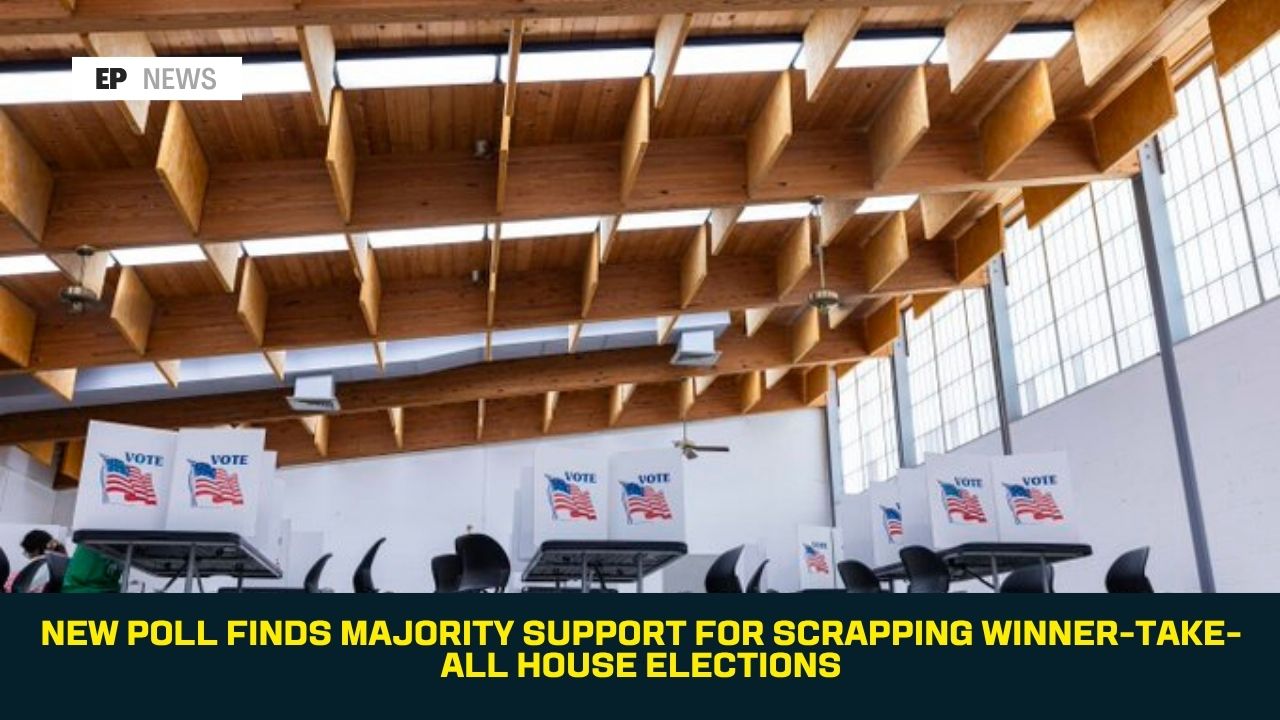
A new poll commissioned by supporters of election reform and shared with NPR finds significant support among American voters for replacing the country’s winner-take-all U.S. House elections and single-member congressional districts with proportional representation — a system that would elect multiple representatives from a single district in rough proportion to each party’s share of the vote.
What the Poll Found
According to NPR’s reporting published August 10, the poll found meaningful voter openness to upending the current single-member district system, arriving amid what pollsters describe as growing frustration with both major political parties. Jocelyn Kiley, director of political research at the Pew Research Center, characterized the broader mood behind these findings as a “prolonged period of disaffection with politics and the political system.” She noted that Pew’s own polling has found nearly 70% of respondents saying they wish, at least somewhat, there were more political parties to choose from.
Kiley cautioned, however, that detailed public knowledge of what any specific election reform would actually look like in practice remains rare, and that reforms which poll well in the abstract often encounter more resistance once people start asking how a change would specifically affect them.
Lee Drutman, a political scientist and advocate who commented on the findings to NPR, noted that when respondents were asked about the possibility that proportional representation might lead to more extreme political parties gaining seats, most weren’t especially concerned. “One thing people said is they already think the parties are pretty extreme right now,” Drutman said.
The Case Reform Advocates Are Making
Proponents of proportional representation argue the current system produces outcomes that don’t reflect how Americans actually vote. Earlier this summer, roughly 500 democracy and legal experts sent a letter to Congress urging lawmakers to consider proportional representation as a response to what they described as escalating “redistricting brinksmanship” set off by disputes over how congressional maps have been redrawn. “There should be little doubt that the single-member district system is failing to deliver fair and representative outcomes,” the experts wrote, according to NPR. “We urge Congress to adopt a proportional system of representation, solving the gerrymandering problem at its source.”
A separate analysis published in The American Prospect made a related argument: in many congressional and state legislative districts today, outcomes are effectively predetermined well before Election Day, giving voters in those districts little practical incentive to participate. Advocates argue proportional representation would give more voters — including those who are consistently in the political minority within their district — a meaningful basis for believing their vote actually matters, and that it would more accurately reflect the preferences of different groups within the electorate, including racial and ethnic minorities.
Proportional representation isn’t a new concept in American governance. According to Wikipedia’s overview of the system’s history in the U.S., several cities adopted proportional representation during the Progressive Era of the 1910s, and it was historically credited with electing Black candidates to local office during a period defined by Jim Crow-era laws — before it was largely repealed in the mid-20th century, driven in part by backlash to the racial and minority political representation it had enabled.
The Case Against — and the Practical Obstacles
Skeptics of proportional representation raise different concerns. According to Wikipedia’s summary of the ongoing debate, opponents often argue that ranked-choice or multi-winner systems like single transferable vote can be confusing to voters compared to the simplicity of traditional single-member district elections. There’s also a legitimate question of political feasibility: unlike some other countries, where electoral systems have been changed through a national referendum, that mechanism isn’t available at the federal level in the United States.
There is, however, a narrower legislative path available. According to The American Prospect, Congress could enact proportional representation for the U.S. House of Representatives through ordinary legislation, without requiring a constitutional amendment — though doing so would still require the kind of broad political consensus that has proven elusive on most major electoral reform proposals in recent decades.
Recent state-level ballot measures on related election reforms illustrate the real-world difficulty of translating polling support into enacted change. In a 2021 New York State referendum, for example, voters rejected several proposed changes to the state’s redistricting process and voting procedures despite polling that had suggested some voter interest in reform, according to Wikipedia’s summary of that election — a reminder that abstract support for “change” doesn’t always survive contact with the specifics of a concrete ballot proposal.
Where This Fits Into the Broader Redistricting Fight
This poll’s release lands amid an intensifying national fight over how congressional districts are drawn. The American Prospect’s analysis pointed to a broader structural concern driving renewed interest in proportional representation: without a check on unrestrained partisan gerrymandering, and with the Voting Rights Act facing diminished enforcement in recent years, the long-term trajectory could be toward increasingly entrenched one-party dominance in individual states, as whichever party controls a state legislature draws maps favoring its own continued control of both state and congressional seats.
What Comes Next
Drutman told NPR that this poll’s findings mark a starting point for what could become a broader national conversation about alternatives to the country’s current two-party electoral structure, rather than a signal that concrete legislative change is imminent. Given the well-documented gap between abstract public support for election reform and the political difficulty of actually enacting it — a gap illustrated by past state-level referendum results — proportional representation’s path toward implementation, if it happens at all, is likely to be a gradual and contested process rather than a swift legislative shift.
FAQ
What is proportional representation? An electoral system in which multiple representatives are elected from a single district in rough proportion to each party’s share of the vote, rather than the current U.S. system of single-member districts decided by winner-take-all elections.
Has the U.S. used proportional representation before? Yes, at the local level. Several U.S. cities adopted proportional representation during the Progressive Era in the 1910s, though most repealed it by the mid-20th century.
Could Congress adopt proportional representation without a constitutional amendment? According to legal analysis cited by The American Prospect, yes — Congress could enact proportional representation for U.S. House elections through ordinary legislation, without requiring a constitutional amendment.
What concerns do critics raise about proportional representation? Common objections include that multi-winner or ranked-choice systems can be more confusing for voters than traditional single-member district elections, and that translating voter interest in reform into actual enacted policy has historically proven difficult.
Why is this idea gaining attention now? It’s emerging amid intensifying disputes over partisan gerrymandering and redistricting, with a coalition of roughly 500 democracy and legal experts recently urging Congress to consider proportional representation as a structural solution to that broader conflict.
Conclusion
This poll captures a real, documented sense of voter frustration with the current two-party, winner-take-all system — but as both reform advocates and outside pollsters caution, abstract support for change doesn’t automatically translate into a clear, achievable path forward. With Congress holding the legal authority to enact proportional representation for House elections without a constitutional amendment, the central question going forward is less about whether the idea is legally possible and more about whether the political consensus needed to pass it can be built, particularly given how past state-level reform efforts have often fallen short once put to an actual vote.
Sources: NPR, OPB, Connecticut Public, WUFT, WPRL, The American Prospect, Pew Research Center (reporting dated August 10, 2026).