New Bill Would Give SNAP and Middle-Income Families $60 a Month for Produce — Here’s Who Would Qualify
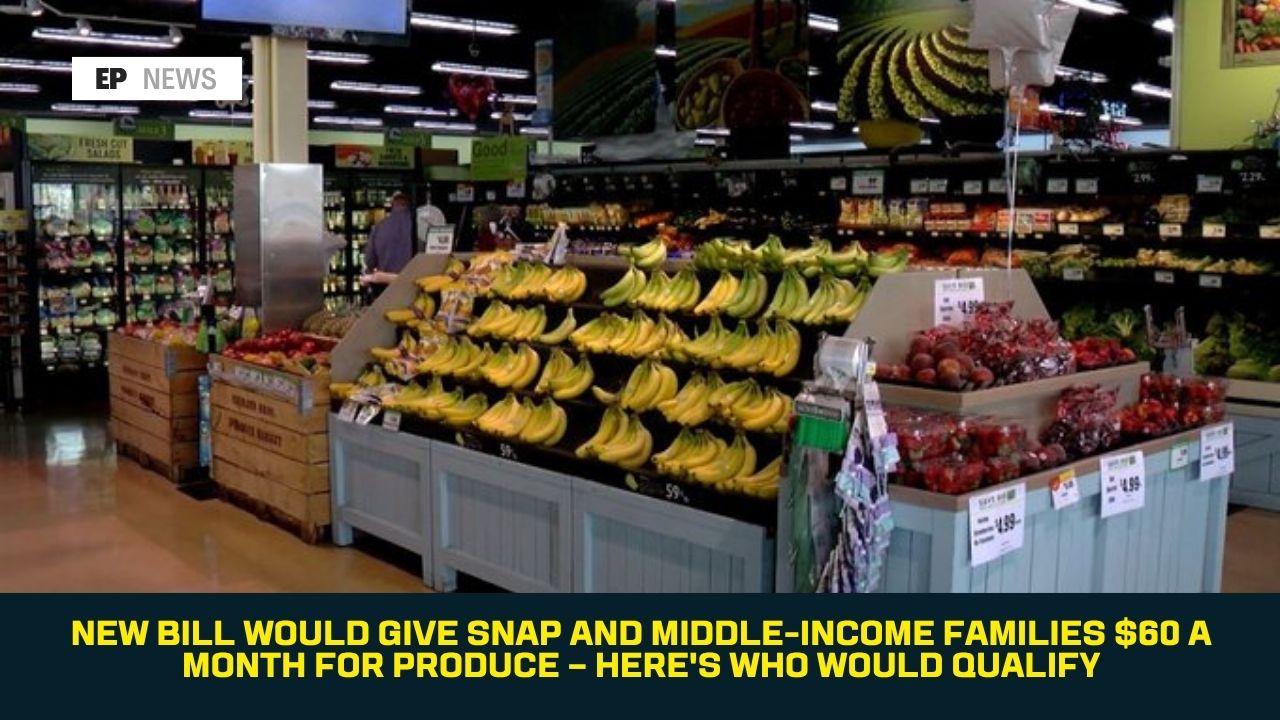
A bill introduced in Congress in July would create a new pilot program giving some households an extra $60 a month specifically to buy fruits and vegetables — extending eligibility beyond current SNAP recipients to include some moderate-income families who don’t currently receive food assistance at all.
How the Program Would Work
The “Fresh Bucks for Fresh Produce” Act would establish a grant program that funds states to distribute the additional benefit to lower-income and moderate-income households, according to reporting distributed by Nexstar Media. To qualify, households would need to earn 80% or less of their area’s median income — a threshold that extends eligibility beyond current SNAP recipients to some families who don’t currently receive any food assistance.
Existing SNAP recipients who qualify would have the extra $60 loaded directly onto their existing EBT cards each month. Households that don’t currently receive SNAP benefits but meet the income threshold could still apply and would receive a new EBT card specifically for the produce benefit if approved.
In either case, the money would come with a specific restriction: the $60 would need to be spent on fruits or vegetables, which can be fresh, frozen, or dried.
Who’s Behind the Bill
Rep. Pramila Jayapal has been a vocal advocate for the legislation, urging Congress to act quickly. “We must pass this legislation to expand the program nationwide and get families in every corner of the country healthy produce they can afford,” Jayapal said, according to Nexstar’s reporting.
As proposed, the bill would function as a pilot program rather than an immediate nationwide entitlement — it would award grants to states, meaning implementation and specific eligibility rollout would likely vary depending on which states apply for and receive the grant funding.
The Backdrop: SNAP Enrollment Is Already Shrinking
The proposal arrives at a moment when the SNAP program overall has been under significant pressure. An estimated 37 million Americans currently receive SNAP benefits, according to preliminary USDA figures cited in the reporting — but that reflects a drop of nearly 5 million people, more than 11%, compared to a year earlier.
Multiple factors have contributed to that decline. Provisions in the One Big Beautiful Bill, the administration’s major legislative package, have already affected SNAP eligibility through expanded work requirements and stricter conditions tied to immigration status, according to the same coverage.
A Separate, Larger Funding Fight Looms Over the Program
Beyond the new produce benefit proposal, SNAP faces a broader structural funding challenge that could affect far more people. Under provisions of the One Big Beautiful Bill, states with high “error rates” — the percentage of SNAP benefits paid either above or below what recipients should have received, mostly due to administrative mistakes — will be required to begin covering a share of SNAP costs themselves starting in fiscal year 2028, rather than relying entirely on federal funding.
The target error rate is under 6%, but according to the latest data released in June, more states currently have error rates above double that target than states meeting it. As of the most recent reporting, 41 states are at risk of losing partial federal funding as a result. States including Alaska, Delaware, Georgia, Illinois, New Mexico, Oregon, and Washington, D.C. have error rates high enough that they’ll be given at least one additional year to bring them down before the funding shift takes effect.
Chloe Green, assistant director for policy at the American Public Human Services Association, described the financial stakes bluntly: “There are billions of dollars that are at stake that states will have to find the money to be able to pay if they want to continue to operate a SNAP program.”
The Congressional Budget Office estimates the resulting cost shift could lead some states to reduce or eliminate SNAP benefits for roughly 300,000 people, with child nutrition program subsidies also potentially decreasing for about 96,000 children.
What This Means for the Produce Benefit’s Prospects
The timing creates an interesting tension: the Fresh Bucks for Fresh Produce Act proposes expanding food assistance spending specifically for nutrition purposes, even as the broader SNAP program faces funding pressure that could shrink benefits for hundreds of thousands of existing recipients starting in 2028. Whether the new pilot program moves forward independently of that larger funding fight, or gets caught up in the same budget pressures, remains to be seen as the bill works through the legislative process.
FAQ
Who would qualify for the new $60 produce benefit? Households earning 80% or less of their area’s median income. This includes current SNAP recipients as well as moderate-income families who don’t currently receive SNAP benefits at all.
How would the money be distributed? Current SNAP recipients would have the extra $60 loaded onto their existing EBT card each month. Households not currently on SNAP would receive a new EBT card specifically for this benefit if approved.
What can the $60 be spent on? Only fruits and vegetables, which can be fresh, frozen, or dried.
Has this bill passed into law? No. As of early August 2026, the Fresh Bucks for Fresh Produce Act had been introduced in July and would need to pass Congress before taking effect. It’s structured as a pilot program funded through state grants, not an immediate nationwide benefit.
Is SNAP funding at risk more broadly? Yes, separately from this bill. Beginning in fiscal year 2028, states with high SNAP payment error rates will be required to cover a portion of program costs themselves, which the Congressional Budget Office estimates could lead to reduced or eliminated benefits for roughly 300,000 people nationally.
Conclusion
The Fresh Bucks for Fresh Produce Act represents a targeted attempt to improve nutrition access even as the broader SNAP program contends with declining enrollment and looming state-level funding cuts tied to payment error rates. Whether this specific pilot program gains traction will likely depend on how Congress balances it against the larger, more consequential funding fight already reshaping SNAP heading into 2028 — a fight that could affect far more households than the new produce benefit would reach on its own.
Sources: Nexstar Media Wire (WOWK, WTRF, Fox 8, KLAS, WDHN, and affiliated stations), The Hill, NewsNation (reporting dated July-August 2026).