
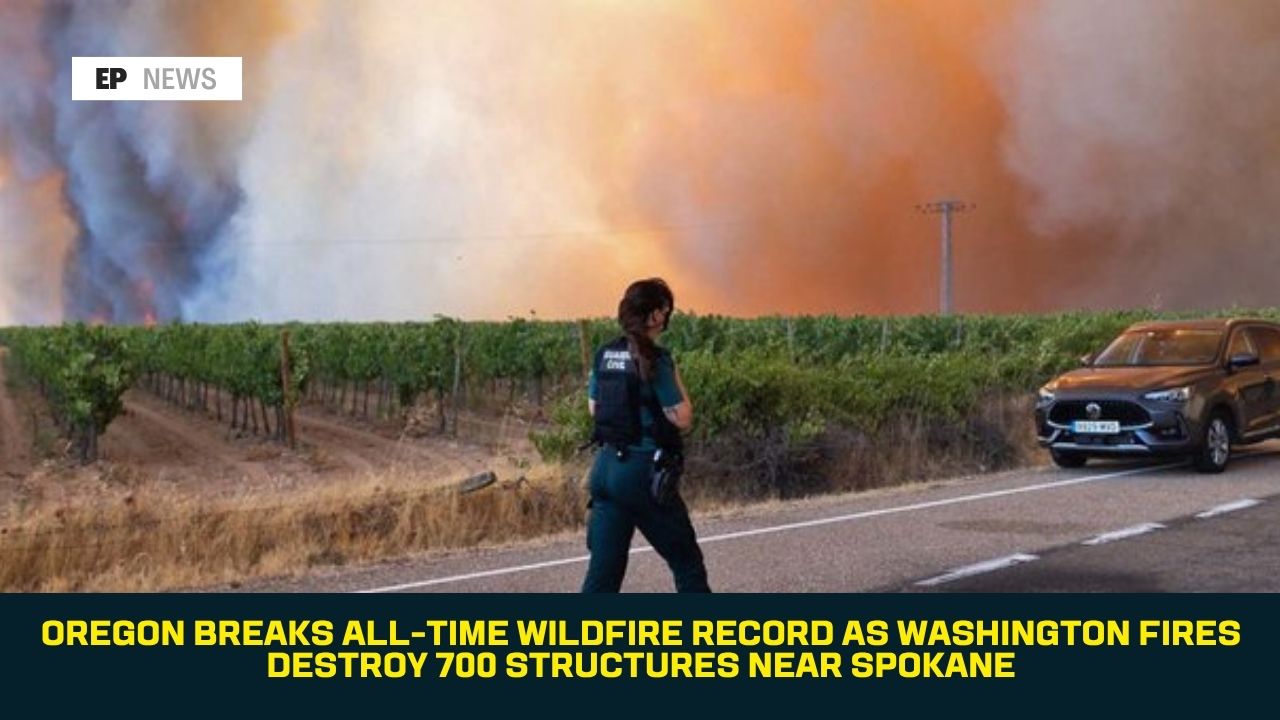
Oregon Breaks All-Time Wildfire Record as Washington Fires Destroy 700 Structures Near Spokane
Oregon has broken its all-time record for wildfire acreage burned in a single season, with nearly 2 million acres lost as of early August — surpassing the previous record set in 2024 — while a separate cluster of fires near Spokane, Washington has destroyed roughly 700 structures and forced widespread evacuations.
Oregon’s Record-Breaking Season
Oregon’s 2026 wildfire season has now surpassed the state’s previous all-time record of 1.93 million acres burned, set in 2024, according to KOIN. As of the most recent updates, wildfires have burned more than 1.8 million acres across the state this season, according to ABC News, with at least 33 large, uncontained wildfires still actively burning statewide as of Monday, August 3.
The largest single fire currently burning is the Rowe Creek Complex Fire in central Oregon, which had grown to 320,834 acres with only 53% containment, according to KOIN’s live updates. Other active fires include the Grasshopper Fire near Mt. Hood National Forest and the Bench Fire, which has continued causing damage in Warm Springs, Oregon.
Drought conditions have made the situation worse. More than two-thirds of the West is currently experiencing drought of varying intensity, according to ABC News, with more than half of Oregon facing severe drought and roughly 20% of the state in extreme drought.
Devastation Near Spokane
The most acute damage this week has come from a separate cluster of fires burning near Spokane, Washington. According to ABC News, three major fires in the Spokane area have destroyed upward of 700 structures — including homes and businesses — over a 48-hour period, though officials cautioned Monday that the overall scope of the loss remains uncertain.
Tom Clemo, the fire incident commander, described the destruction in stark terms at a Monday news conference alongside Washington Gov. Bob Ferguson. “It’s unprecedented in this community. Frankly, it’s unprecedented in many areas of this country,” Clemo said.
The fires have grown rapidly. An earlier update from ABC News on Sunday put the damage total at more than 600 structures across 7,700-plus acres; by Monday, that figure had climbed further as the fires continued to spread.
Why the Fire Danger Has Been So Extreme
The National Weather Service issued a rare Particularly Dangerous Situation Red Flag Warning on Saturday, August 1, across parts of eastern Washington and Oregon, including the Spokane and Pendleton areas — the highest fire weather alert level the agency issues. According to ABC News, the most dangerous conditions Saturday were driven primarily by persistent strong winds combined with very dry conditions across the region.
That fire danger unfolded against a backdrop of extreme heat that gripped much of the West over the same weekend, with heat alerts posted for more than 45 million Americans stretching from California to the Dakotas. While the most intense heat had eased somewhat in areas like Los Angeles by Monday, extreme heat warnings remained in effect for Phoenix, Las Vegas, and Palm Springs, where temperatures were expected to top 110 degrees through the week, and heat advisories continued across much of California into western Oregon.
Smoke Spreading Across Multiple States
The scale of the fires has created a widespread smoke and air quality problem well beyond the immediate burn areas. According to the Washington Post, smoke from roughly 50 large, uncontained wildfires across the Pacific Northwest was expected to blanket the sky again this week, with poor air quality forecast to reach major cities including Portland, Seattle, Boise, and Salt Lake City through Wednesday.
CNN’s visual analysis of the fires, relayed by ABC 17 News, described the situation as a “persistent wildfire season” in which the Pacific Northwest is bearing the brunt of dozens of massive blazes across both Oregon and Washington, forcing residents from their homes and shutting down major roadways in affected areas.
What’s Next
With dozens of large fires still uncontained across both states and drought conditions showing no signs of easing, officials have not offered a timeline for significant improvement. The combination of ongoing dry conditions, the potential for continued winds, and Oregon already having surpassed its historical wildfire record suggests the region’s fire season is likely to remain active and closely watched in the weeks ahead.
FAQ
How many acres has Oregon lost to wildfires this year? More than 1.8 million acres as of early August, with the state having broken its all-time wildfire record of 1.93 million acres, set in 2024.
How many structures have been destroyed near Spokane? Officials estimated roughly 700 structures — including homes and businesses — had been destroyed across three major fires burning near Spokane, Washington, as of Monday, August 3, though the full scope of the damage remained uncertain.
Which cities are affected by wildfire smoke? Poor air quality from Pacific Northwest wildfire smoke was forecast to reach Portland, Seattle, Boise, and Salt Lake City through Wednesday, according to the Washington Post.
What triggered the Red Flag Warning in Washington and Oregon? The National Weather Service issued a Particularly Dangerous Situation Red Flag Warning — its highest fire weather alert — on August 1 for parts of eastern Washington and Oregon, citing persistent strong winds combined with very dry conditions.
Is the extreme heat connected to the wildfires? Yes. Extreme heat affecting more than 45 million Americans across the West over the same weekend contributed to the dangerous fire conditions, though the most intense heat had begun easing in some areas, like Los Angeles, by Monday.
Conclusion
Oregon’s record-breaking wildfire season and the devastating losses near Spokane reflect a Pacific Northwest fire season that has moved from concerning to historic in a matter of weeks. With more than 30 large fires still uncontained in Oregon alone, widespread drought across the West, and smoke now degrading air quality in major cities hundreds of miles from the flames, residents across the region should expect continued disruption — and officials are likely to keep close watch on wind and weather conditions that could either ease or worsen the situation in the days ahead.
Sources: ABC News, The Washington Post, KOIN, ABC 17 News/CNN (reporting dated August 1-3, 2026).