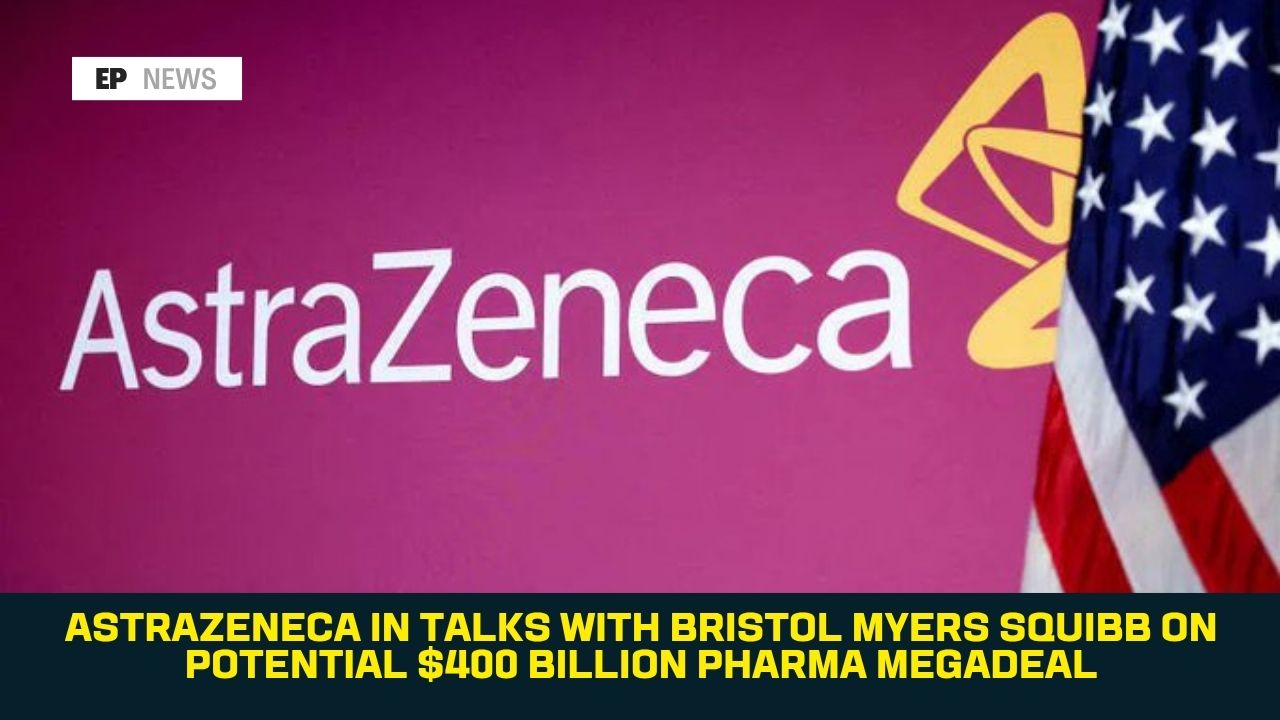
AstraZeneca in Talks With Bristol Myers Squibb on Potential $400 Billion Pharma Megadeal
British pharmaceutical giant AstraZeneca has held preliminary discussions with U.S. rival Bristol Myers Squibb about a potential merger that would create one of the largest pharmaceutical companies in the world, with a combined value approaching $400 billion, according to a Financial Times report published Sunday, August 2, and independently reported by Reuters.
What’s Known So Far
The talks between AstraZeneca and Bristol Myers Squibb have taken place over the last several months, according to sources cited by the Financial Times. Reuters, citing its own sourcing, confirmed the report the same day, though the outlet noted it could not independently verify whether the discussions are still ongoing. Neither company has confirmed the talks publicly: AstraZeneca declined to comment when contacted by Reuters, and Bristol Myers Squibb did not respond to a request for comment outside regular business hours, according to multiple outlets, including CNBC and 93.3 The Drive.
It remains genuinely uncertain whether a deal will materialize. The Financial Times report, relayed by several outlets, indicated that any agreement could come together soon, could be delayed, or could fall apart entirely — leaving the outcome of the talks an open question for now.
The Scale of a Potential Deal
If completed, the merger would rank among the largest corporate combinations in history. AstraZeneca’s market capitalization currently sits at roughly $263 billion, while Bristol Myers Squibb is valued at approximately $133 billion, according to Benzinga’s reporting — a combined figure that would approach the reported $400 billion valuation even before factoring in any acquisition premium typically paid in these kinds of deals.
The deal structure has not been finalized, but according to Benzinga, it would likely involve a combination of cash and shares. A combination of this size would also significantly exceed AstraZeneca’s largest acquisition to date, its $39 billion purchase of Alexion Pharmaceuticals in 2021, and would surpass Bristol Myers Squibb’s own record-setting $74 billion acquisition of Celgene, which had previously stood as the largest pharmaceutical M&A deal on record prior to 2019, according to TechTimes.
Why Now — and Why It’s a Reversal for AstraZeneca
The reported talks carry a notable historical twist for AstraZeneca. The company famously rejected a $118 billion hostile takeover bid from Pfizer in 2014, with then-and-current CEO Pascal Soriot telling investors at the time that AstraZeneca could generate more value as an independent company than Pfizer’s offer implied. TechTimes noted that the same Soriot is now reported to be steering the company toward a merger that would dwarf that rejected Pfizer bid more than a decade later.
AstraZeneca’s position has changed substantially in the intervening years. According to CNBC, the company’s share price has more than quadrupled during Soriot’s 14-year tenure as CEO, outperforming both the broader FTSE 100 index and its main British rival, GSK. Last year, AstraZeneca also unveiled plans for a direct U.S. stock listing, aiming to capitalize on stronger valuations in the American market while remaining listed in London — a move that reflects the company’s growing strategic focus on the U.S.
The Business Case: Overlapping Cancer Portfolios
Both companies have built substantial oncology businesses, which is central to why a combination makes strategic sense — and why it’s likely to draw regulatory scrutiny. According to Reuters reporting carried by AOL, cancer treatments accounted for about $25 billion of AstraZeneca’s 2025 sales, nearly half of the company’s total revenue, with cardiovascular, renal, and metabolism treatments contributing roughly $12 billion more. Oncology drugs made up more than 40% of Bristol Myers Squibb’s overall sales in the first half of 2026, and the two companies’ cancer immunotherapy drugs compete directly against each other.
Bristol Myers Squibb has also been actively working to offset declining sales from older medicines facing upcoming generic competition. The company raised its full-year revenue and profit forecast last week after strong sales of its blood thinner Eliquis and newer drugs pushed second-quarter results past analyst estimates, according to Reuters. Its pipeline includes an experimental blood thinner called milvexian, an anemia treatment called Reblozyl, and a heart drug called Camzyos.
Antitrust Hurdles Ahead
Given the direct overlap in cancer treatments between the two companies, any formal deal would likely face significant regulatory scrutiny in the United States. Andre Barlow, an antitrust lawyer with DBM Law Group, told Reuters he would expect the Federal Trade Commission under the Trump administration to closely scrutinize the merger, and that meaningful divestitures could be required if there are significant overlaps in current drugs or late-stage pipeline products.
Barlow pointed to precedent from Bristol Myers Squibb’s own history: when the company acquired Celgene, the FTC at the time required Celgene to sell off its psoriasis treatment Otezla in a $13.4 billion divestiture. Barlow said he expects bipartisan interest in scrutinizing pharmaceutical mergers generally, suggesting that even a Trump-era FTC would likely examine questions around product bundling and reduced future innovation, in addition to reviewing direct product overlaps between the two companies.
FAQ
Have AstraZeneca and Bristol Myers Squibb confirmed a merger? No. Both companies have declined to comment or confirm the reported talks. The Financial Times report, which Reuters independently confirmed through its own sourcing, describes preliminary discussions that may or may not result in a finalized deal.
How much would the combined company be worth? Based on current market capitalizations — roughly $263 billion for AstraZeneca and $133 billion for Bristol Myers Squibb — a combined entity would approach $400 billion in value, not including any acquisition premium.
Why would regulators scrutinize this deal? Both companies have substantial, directly competing oncology drug portfolios. Antitrust experts expect the FTC to closely examine potential overlaps and could require divestitures similar to those imposed on Bristol Myers Squibb’s 2019 acquisition of Celgene.
How would this compare to AstraZeneca’s 2014 rejection of Pfizer’s takeover bid? It would be a striking reversal. AstraZeneca rejected a $118 billion hostile bid from Pfizer in 2014 under the same CEO, Pascal Soriot, who is now reportedly steering the company toward a deal roughly three-and-a-half times larger.
When might a deal be finalized? It’s unclear. Reports indicate a deal could come together soon, be delayed, or fall apart entirely, and neither company has provided a timeline.
Conclusion
A merger of this size would reshape the global pharmaceutical industry, combining two companies with deep, overlapping strength in cancer treatment into a single entity approaching $400 billion in value. But with neither company confirming the talks, no finalized deal structure, and significant antitrust scrutiny all but guaranteed given the companies’ competing oncology portfolios, this remains very much a developing story rather than a done deal. Expect closer confirmation or denial from both companies as the reported discussions progress.
Sources: CNBC, Reuters, Benzinga, TechTimes (reporting dated August 2, 2026).