
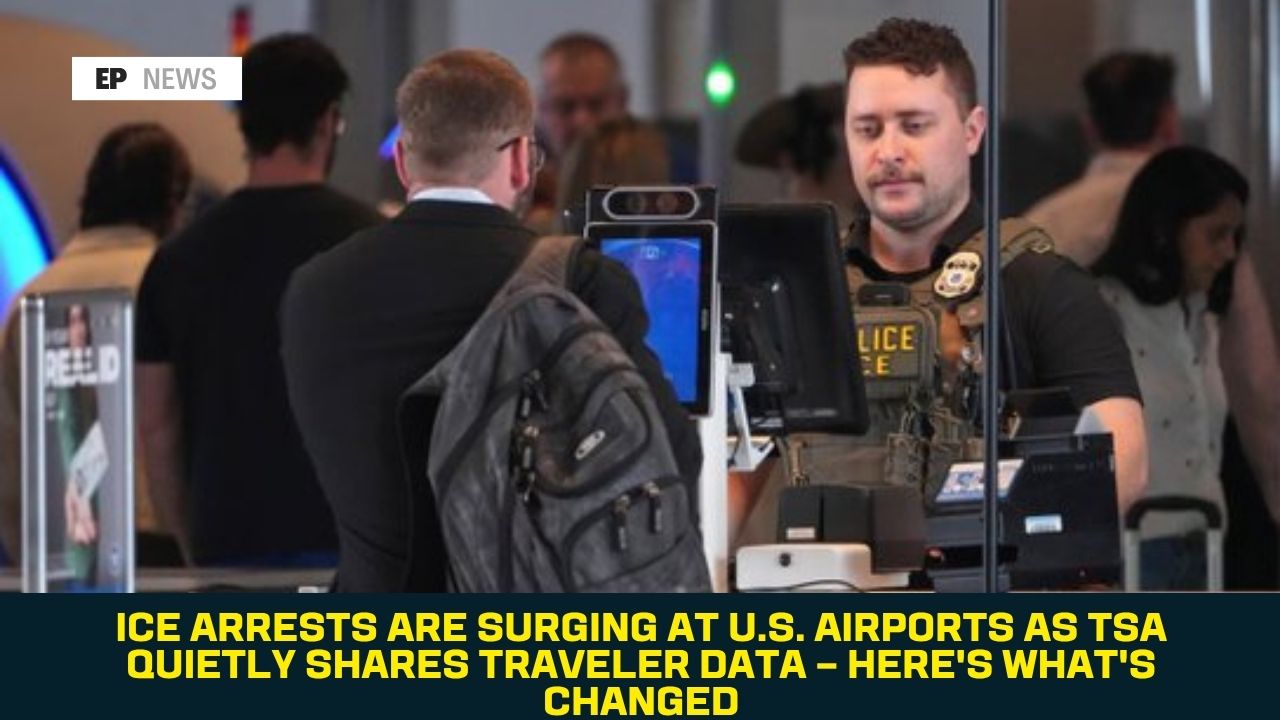
ICE Arrests Are Surging at U.S. Airports as TSA Quietly Shares Traveler Data — Here’s What’s Changed
Immigration attorneys across the country say arrests at U.S. airports are becoming noticeably more frequent, and the cause, according to sources who spoke with CBS News, isn’t just a broader immigration crackdown — it’s a specific new data-sharing arrangement between the Transportation Security Administration and Immigration and Customs Enforcement that’s turning routine domestic travel into a point of enforcement.
What Changed Between TSA and ICE
According to ICE sources who spoke with CBS News, the Transportation Security Administration has begun sharing significantly more information about noncitizen travelers with ICE — including people who have no criminal record but are suspected of civil immigration violations, such as overstaying a visa. TSA agents are increasingly passing along “tips” or “leads” that allow ICE to identify, arrest, detain, and begin deportation proceedings against individuals the federal government considers deportable.
Sources described this as a meaningful shift from how the two agencies previously worked together. Historically, TSA and ICE coordination at airports was mostly limited to lower-level security matters; the current arrangement gives ICE direct visibility into a category of travelers who previously would have passed through security without drawing federal immigration attention at all.
The Department of Homeland Security has confirmed the change publicly, though in broader terms. In a statement provided to multiple outlets, including WHYY News and CBS News, DHS said the agency had reversed what it called a “horrendous Biden-era policy that allowed aliens in our country illegally to jet around our country,” adding that under the Trump administration, “DHS will no longer tolerate this.”
How Widespread the Enforcement Has Become
According to NewsNation, ICE officers have been deployed to at least 15 airports nationwide as part of the arrangement with TSA, and ABC News has reported that the tactic has led to at least 27 arrests since the operation began. Those figures are separate from ICE’s overall enforcement pace, which reached a record average of 1,438 arrests per day in June, according to NewsNation’s reporting, with even higher totals expected for July.
The Washington Post reported that immigration lawyers have specifically flagged stepped-up enforcement at the three Washington, D.C.-area airports, including Dulles International. Separately, WHYY News reported growing concern from advocates about increased ICE presence and arrests specifically at Philadelphia International Airport.
CNN reported that attorneys describe the arrests as often abrupt, with travelers being swept up by agents while they’re simply going about ordinary domestic travel — a pattern that’s raised alarm because it departs from the more targeted, case-specific enforcement actions attorneys say they were used to seeing at airports previously.
The Case That Put a Face on the Policy
One recent case has drawn particular attention because it illustrates how far the policy’s reach now extends. Fatima Ameaka, an employee at Johns Hopkins University’s Bloomberg School of Public Health, was detained by ICE agents on July 28 while preparing to board a domestic flight at Baltimore-Washington International Thurgood Marshall Airport, according to CBS Baltimore. She was reportedly traveling for a personal trip, not international travel.
A Johns Hopkins University spokesperson confirmed Ameaka’s detention and said the university was working to support her. Her attorney told CBS News that she was released from custody Friday night, two days after her arrest.
An ICE source told CBS News that undocumented immigrants traveling through airports have become “easy targets” for agents, since they can be arrested in a secured location and agents typically have advance information about their immigration case before the person even arrives at the checkpoint.
Why This Approach Is Different From Past Enforcement
Airport-based enforcement isn’t new in the current administration, but its scale and rationale have shifted over the year. Earlier in 2026, ICE agents had also appeared at airports for a different reason: to help ease long TSA security lines during a partial government shutdown that began in February, a move framed at the time as a staffing assist rather than an immigration enforcement expansion. At the time, White House Border Czar Tom Homan told ABC News that ICE agents were primarily there to “help TSA plug the holes of security,” while President Trump said the agents would still be authorized to enforce immigration law if they encountered violations, describing airports as “fertile territory” for identifying people in the country illegally.
The current wave, by contrast, is explicitly framed by DHS as a targeted immigration enforcement policy built on formal data-sharing between the two agencies, rather than a staffing-driven byproduct of a separate crisis.
FAQ
Why are ICE arrests at airports increasing? Sources told CBS News that TSA has begun sharing significantly more traveler data with ICE, including information about noncitizens suspected of civil immigration violations like visa overstays, allowing ICE to identify and arrest people at airport checkpoints.
How many airports are affected? ICE officers have been deployed to at least 15 airports nationwide as part of the data-sharing arrangement, according to NewsNation, with attorneys specifically flagging increased enforcement at Philadelphia International Airport and the three Washington, D.C.-area airports, including Dulles.
Do the people being arrested have criminal records? Not necessarily. ICE sources told CBS News that the policy extends to noncitizens with no criminal record who are suspected of civil immigration violations, such as overstaying a visa.
What happened to the Johns Hopkins researcher who was detained? Fatima Ameaka was detained by ICE at BWI Airport on July 28 while preparing to board a domestic flight. Her attorney confirmed she was released from custody two days later, on July 31.
How does this compare to earlier ICE airport deployments this year? Earlier in 2026, ICE agents appeared at airports to help ease TSA staffing shortages during a government shutdown. The current enforcement wave is a distinct, deliberate immigration policy built on new data-sharing between TSA and ICE, not a byproduct of that staffing situation.
Conclusion
What’s changed isn’t simply that ICE is showing up at airports more often — it’s the mechanism behind it. A formal data pipeline from TSA now gives immigration agents advance knowledge of who’s traveling and what their immigration status might be, turning routine air travel into a point of enforcement even for people without criminal histories. With attorneys reporting a steady stream of new cases and DHS confirming the underlying policy shift, expect airport arrests to remain a recurring flashpoint as the broader debate over the administration’s deportation targets continues.
Sources: CBS News, CBS Baltimore, CNN, The Washington Post, WHYY News, NewsNation, ABC News (reporting dated July 25-August 1, 2026).