
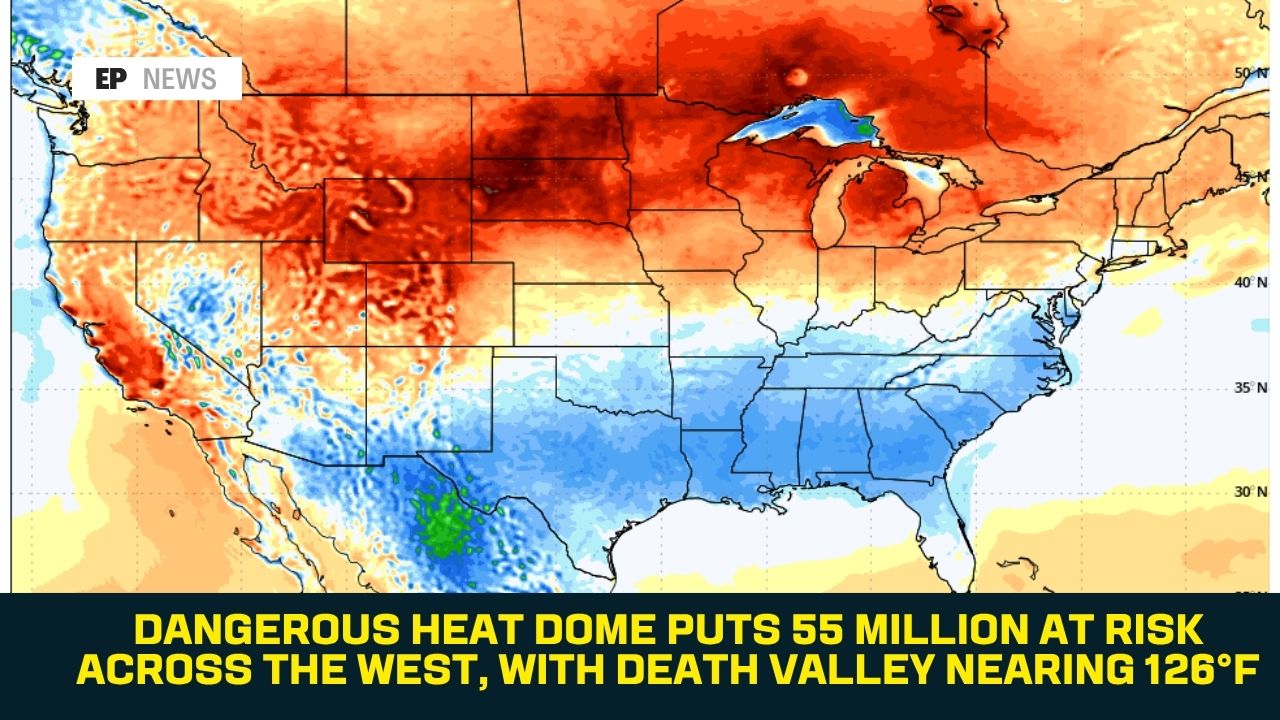
Dangerous Heat Dome Puts 55 Million at Risk Across the West, With Death Valley Nearing 126°F
An intense and slow-moving heat dome has settled over the Western United States, pushing temperatures to the highest levels of the year so far and placing roughly 55 million people under heat alerts as of this weekend. Forecasters warn the dangerous conditions will persist into next week, with another surge of extreme heat expected around August 6.
Who’s Affected and How Hot It’s Getting
The bulk of the 55 million people under heat alerts are concentrated in California, Nevada, and Arizona, though the alerts extend as far north as the Canadian border, according to CNN meteorologists. Triple-digit heat stretches from Las Vegas to Montana this weekend, with forecast highs reaching 118 degrees in Phoenix and 115 in Las Vegas. Even typically milder areas aren’t escaping the heat: downtown Los Angeles is expected to see highs in the mid-90s, roughly 10 to 15 degrees above the historical average for the area, according to AccuWeather senior meteorologist Alex Sosnowski.
Death Valley, California — already one of the hottest places on Earth — could reach 126°F, according to forecasts reported by Travel and Tour World. The National Weather Service has placed more than 12 million people under its highest Level 4 “Extreme” HeatRisk category for Saturday and Sunday, with another 12 million under a Level 3 “Major” HeatRisk designation.
Why Overnight Offers Little Relief
One of the more dangerous aspects of this heat dome is the lack of overnight cooling. CNN reported that overnight lows will remain nearly 10 degrees above normal across the West, which matters because the body needs a period of cooler temperatures to recover before facing another day of extreme heat. Without that recovery window, heat-related illness risk compounds day over day rather than resetting each morning.
Why a Heat Dome Gets This Dangerous
A heat dome forms when a large area of high pressure stalls over a region, trapping air underneath it and allowing sustained sunshine to heat the ground and atmosphere for days or even weeks at a time. The longer the dome remains in place, the more intense the resulting heat tends to become — and this one is forecast to stay anchored over the West well into next week.
The National Weather Service’s warning language reflects just how serious the risk is: forecasters describe conditions of this severity and duration, with minimal overnight relief, as capable of affecting anyone without reliable access to cooling or adequate hydration, with likely impacts on health systems and heat-sensitive infrastructure.
That warning isn’t abstract. Heat is the deadliest form of extreme weather in the United States, with a higher average annual death toll than tornadoes, hurricanes, and lightning combined, according to National Weather Service statistics cited by CNN. Emergency room visits for heat-related illness reliably spike on days classified as “major” or “extreme” risk. People over 65 face a significantly elevated risk of heat-related illness, as do people without effective air conditioning or consistent access to fluids.
A Second Danger: Extreme Wildfire Risk
The heat dome isn’t just a public health concern — it’s also fueling extreme wildfire conditions in the Pacific Northwest, where the fire season in Oregon and Washington is already running at a record pace this year. CNN reported that a rare Level 3 of 3 “extremely critical” fire danger designation was in effect for portions of Washington and Oregon on Saturday, and the National Weather Service issued a Particularly Dangerous Situation Red Flag Warning across central and eastern Washington — a designation reserved for only the most extreme fire weather conditions.
Multiple large wildfires were already burning in the region as of this weekend, and officials warned that high winds combined with drought conditions could cause existing fires, as well as any new ignitions, to spread rapidly. A fast-moving wildfire in Spokane County, Washington, forced residents to evacuate their homes Saturday afternoon as crews worked to contain the blaze. Smoke from the region’s wildfires has also begun affecting air quality in multiple states, as well as parts of Canada.
The Bigger Climate Picture
This is far from an isolated event. This summer has already produced multiple record-breaking heat waves affecting both North America and Europe simultaneously, and by August 4, roughly 10% of the continental United States is expected to record its hottest day of 2026 so far.
Climate scientists say this pattern is consistent with what’s expected as the planet warms. Human-caused climate change is making heat waves more likely to occur, and also more intense and longer-lasting when they do happen, according to research cited by CNN. Researchers are also actively studying whether particularly strong, slow-moving heat domes — like the one currently parked over the West — are becoming more frequent as global temperatures rise, though that specific question remains an active area of study rather than settled science.
What Comes Next
Forecasters expect the current heat wave to persist through early next week before another surge of extreme temperatures develops around August 6, as the heat dome remains firmly established over the Western U.S. That means residents across the affected region should expect little sustained relief in the near term.
FAQ
How many people are under heat alerts right now? Roughly 55 million people across the Western U.S. are under heat alerts, concentrated mainly in California, Nevada, and Arizona, with alerts extending north to the Canadian border.
How hot could it get? Forecast highs include 118°F in Phoenix, 115°F in Las Vegas, and up to 126°F in Death Valley. Downtown Los Angeles could see highs in the mid-90s, well above its seasonal average.
Why is this heat dome especially dangerous? Overnight lows are staying nearly 10 degrees above normal, which limits the body’s ability to recover between hot days, and the National Weather Service has placed more than 12 million people under its highest “Extreme” HeatRisk category.
Is this heat dome connected to the wildfires in the Pacific Northwest? Yes. The same weather pattern is driving extreme fire danger in Oregon and Washington, including a rare “extremely critical” fire danger designation and a Red Flag Warning across central and eastern Washington.
When will temperatures cool down? Forecasters expect the heat to persist into early next week, with another surge of extreme heat likely starting around August 6 as the heat dome remains in place over the West.
Who is most at risk during extreme heat events like this? People over 65, those without reliable air conditioning, and anyone with limited access to shade or hydration face the highest risk. Heat is the deadliest form of extreme weather in the U.S., according to National Weather Service data.
Conclusion
This heat dome stands out not just for its intensity but for its duration and reach — spanning from Death Valley to Montana, driving both a public health emergency and an extreme wildfire threat at the same time. With little overnight relief expected and another round of extreme heat forecast for early August, health officials are urging residents across the region to take the alerts seriously: stay hydrated, limit outdoor activity during peak hours, and check on older neighbors or relatives who may not have reliable access to cooling.
Sources: CNN, The Washington Post, UPI, Yahoo News, ABC17 News, The Independent/AOL (reporting dated July 30-August 1, 2026).