
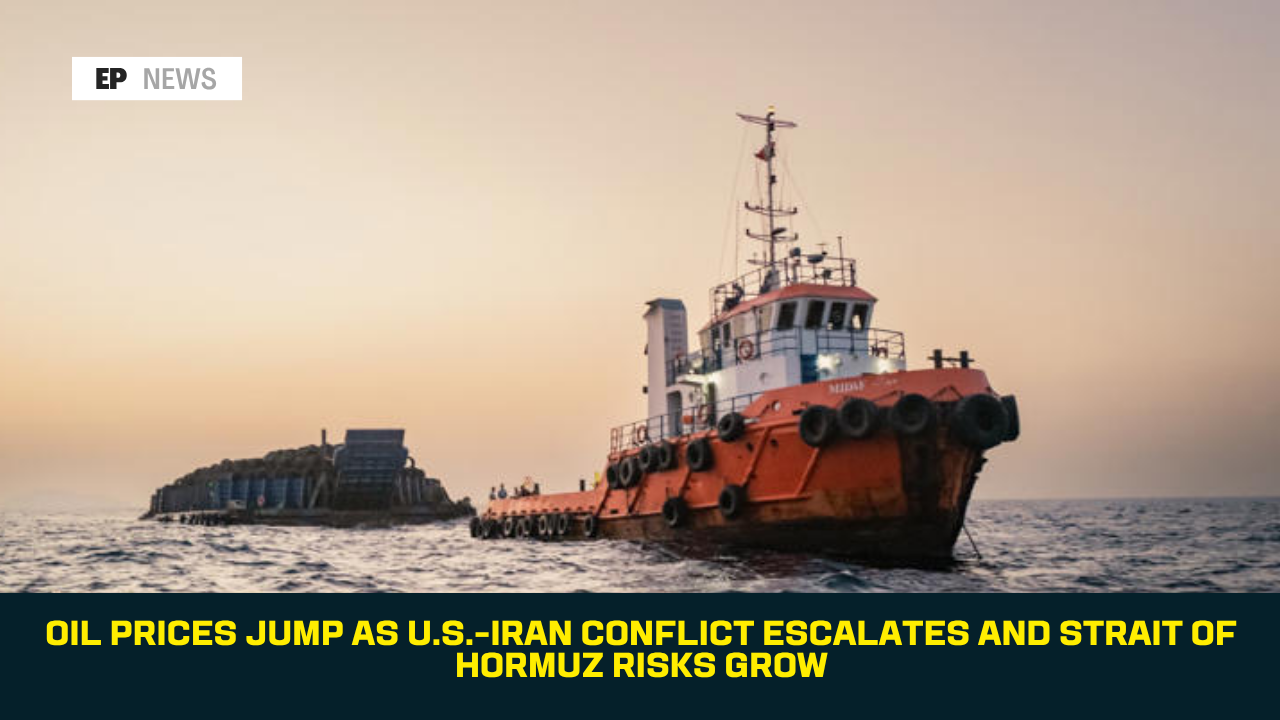
Oil Prices Jump as U.S.-Iran Conflict Escalates and Strait of Hormuz Risks Grow
Global oil markets moved sharply higher on Thursday after renewed military action between the United States and Iran intensified concerns about the security of the Strait of Hormuz, one of the world’s most important energy shipping routes. Investors reacted quickly as fears of supply disruptions pushed crude oil prices upward during early trading.
The latest price increase followed fresh U.S. airstrikes on Iranian military targets after attacks on commercial shipping in the Gulf. Iran responded with missile and drone attacks targeting U.S.-linked facilities in the region, increasing uncertainty across global financial and energy markets.
Why the Strait of Hormuz Matters
The Strait of Hormuz is considered one of the world’s most strategically important waterways because a significant share of globally traded crude oil passes through it every day.
Any military conflict in or around the region can have immediate consequences for:
- Global oil prices
- Fuel costs
- Shipping insurance
- International trade
- Inflation expectations
Analysts say even the possibility of shipping disruptions is enough to trigger strong reactions in commodity markets.
Markets React to Rising Tensions
Energy traders shifted toward safer assets as geopolitical risks increased.
Market observers noted that:
- Brent crude and U.S. benchmark oil prices both rose.
- Energy company shares gained as investors anticipated higher oil revenues.
- Airline and transportation stocks faced pressure because of concerns over rising fuel costs.
While prices remain volatile, traders are closely monitoring every development from the Gulf region.
Impact on American Consumers
If elevated oil prices continue for an extended period, U.S. consumers could eventually experience:
- Higher gasoline prices
- Increased diesel costs
- More expensive airline tickets
- Rising transportation expenses
- Higher prices for goods affected by shipping costs
Economists note that the duration of the conflict will largely determine whether these increases become long-lasting or remain temporary.
Global Leaders Call for De-escalation
Several governments and international organizations have urged both sides to reduce tensions and return to diplomatic negotiations.
Officials warn that prolonged military escalation could threaten global energy security and increase economic uncertainty at a time when many countries are already facing inflationary pressures.
What Investors Are Watching
Financial markets are closely following several key developments:
- Security conditions in the Strait of Hormuz
- Any additional U.S. or Iranian military actions
- Statements from the White House
- OPEC producer responses
- Daily movement in crude oil futures
Analysts believe oil prices may remain volatile until the geopolitical situation becomes clearer.
Conclusion
The renewed confrontation between the United States and Iran has once again placed global energy markets under pressure. With oil prices rising and concerns growing over the security of the Strait of Hormuz, investors, governments, and consumers are watching developments closely. Whether prices continue climbing will depend largely on how the geopolitical situation evolves in the coming days.