
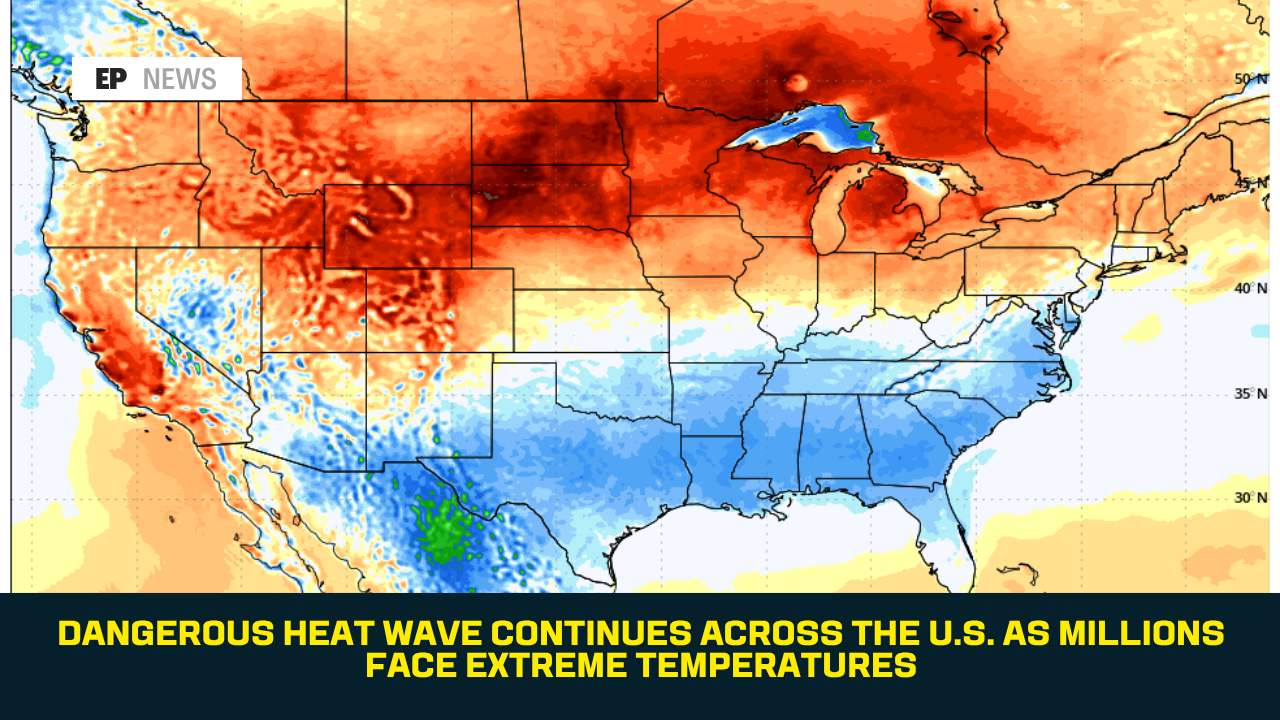
Dangerous Heat Wave Continues Across the U.S. as Millions Face Extreme Temperatures
Millions of Americans continue to experience dangerous heat as an intense summer weather pattern keeps temperatures well above seasonal averages across large parts of the United States. Weather experts warn that the combination of extreme heat and high humidity is increasing the risk of heat-related illnesses, particularly for children, older adults, and people working outdoors.
The prolonged heat has affected communities from the Midwest to the East Coast, with some areas recording temperatures above 100°F (38°C) and heat index values climbing even higher because of oppressive humidity. Officials continue urging residents to stay hydrated, avoid unnecessary outdoor activities during the hottest part of the day, and check on vulnerable neighbors.
Heat Dome Keeps Temperatures Elevated
Meteorologists say the primary cause of the ongoing heat is a strong heat dome—a large area of high atmospheric pressure that traps hot air near the ground. This weather pattern allows sunshine to continuously heat the surface while limiting the movement of cooler air into the region.
The result is several consecutive days of unusually high daytime temperatures along with warm overnight conditions, offering little relief even after sunset.
Health Officials Issue Safety Warnings
Public health agencies continue reminding residents to take heat seriously.
Experts recommend:
- Drinking plenty of water throughout the day.
- Avoiding strenuous outdoor work during afternoon hours.
- Wearing lightweight, light-colored clothing.
- Never leaving children or pets inside parked vehicles.
- Using air-conditioned buildings or community cooling centers whenever possible.
Doctors warn that symptoms such as dizziness, rapid heartbeat, nausea, confusion, or fainting could indicate heat exhaustion or heat stroke and require immediate medical attention.
Travel and Daily Life Impacted
The extreme temperatures have affected everyday life in several regions.
Communities have reported:
- Increased electricity demand due to air conditioning.
- Heat-related disruptions to outdoor events.
- Additional pressure on emergency medical services.
- Higher wildfire concerns in some dry regions.
Energy providers continue monitoring power demand as millions of households rely on cooling systems throughout the day.
Climate Experts See Growing Trend
Scientists note that while heat waves are a natural weather event, climate change is making them more frequent, longer-lasting, and more intense in many parts of the world. Recent years have seen repeated records for extreme summer temperatures across North America and Europe.
Researchers say communities will increasingly need stronger heat preparedness plans, improved infrastructure, and expanded public awareness to reduce health risks during future extreme weather events.
What to Expect Next
Forecasters expect temperatures to gradually moderate in some regions over the coming days, but heat advisories may remain in effect where dangerous conditions persist. Residents are encouraged to monitor local weather forecasts and follow guidance from emergency management officials.
Conclusion
The ongoing U.S. heat wave serves as another reminder of the growing impact of extreme summer weather. With millions of Americans still facing hazardous temperatures, officials continue urging people to take precautions, stay informed, and prioritize safety until cooler conditions return.