
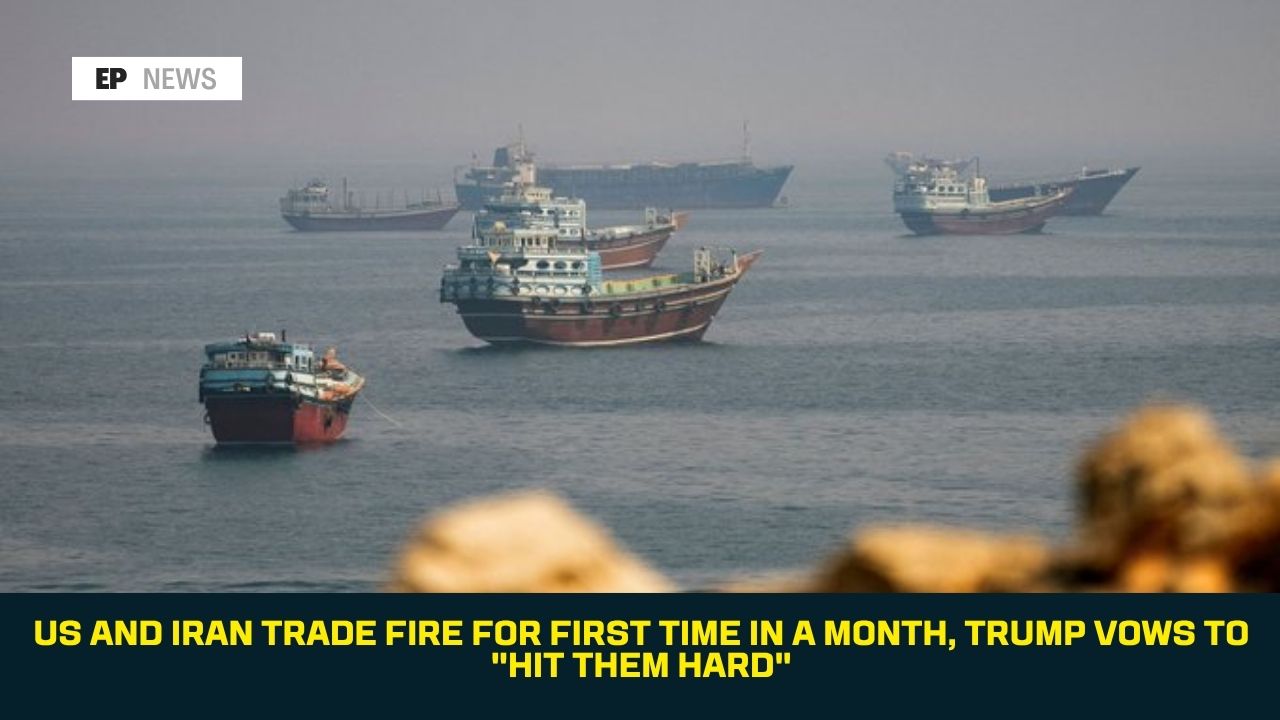
US and Iran Trade Fire for First Time in a Month, Trump Vows to “Hit Them Hard”
The United States and Iran exchanged military strikes overnight into Monday, August 31, for the first time in more than a month, reigniting a conflict that had entered a period of relative calm following weeks of diplomatic efforts around the Strait of Hormuz. President Trump threatened Monday to “hit them hard” in response.
How the Exchange Unfolded
U.S. Central Command said it took “limited, precise action” over the weekend against Iranian “minelaying forces posing an imminent threat in the Strait of Hormuz,” according to NBC News. CNN reported the U.S. strike specifically targeted Iranian rocket launchers on Larak Island that officials said were preparing to launch sea mines into the strait, the critical shipping route that carries roughly a quarter of the world’s seaborne oil trade.
Iran retaliated by firing missiles toward U.S. military targets in Jordan and the United Arab Emirates, according to CNN. The exchange marked what CNN described as “the first exchange of fire for a month in a war that has engulfed the region,” ending a stretch of comparative military calm that had coincided with ongoing Iran-Oman negotiations over managing traffic through the strait.
Trump’s Response
“We’re going to hit them hard,” Trump told Fox News, according to Fox’s chief foreign correspondent Trey Yingst, as reported by NBC News. Trump vowed there would be “a response” following Iran’s retaliatory attack on American bases in Jordan.
Associated Press reporting cited by Britannica noted that a new U.S. missile appeared to have left a wide path of death and destruction in an Iranian city following the exchange — a detail suggesting the American strike carried significant force beyond the narrower “minelaying forces” target CENTCOM initially described.
Why the Fighting Had Paused
The renewed exchange comes after roughly a month without direct military strikes between the two countries, a period during which attention had shifted toward negotiations. According to the Congressional Research Service’s ongoing tracking of the crisis, as of early August 2026, conflict along the strait had “abated amid Iran-Oman talks” specifically focused on managing shipping traffic through the waterway — talks that had offered the clearest sign of de-escalation since the war began.
That relative calm followed a period the CRS report described as unusually intense: by mid-July, the volume of both Iranian attacks on shipping and U.S. retaliatory strikes had reached its highest point since April 2026, before easing into the quieter stretch that Monday’s exchange has now interrupted.
The Broader War Timeline
Monday’s clash is the latest chapter in a conflict now well into its sixth month. According to Wikipedia’s tracking of the crisis, the war traces back to February 28, 2026, when the U.S. and Israel launched coordinated strikes on Iranian military targets, including the assassination of Iran’s Supreme Leader, Ali Khamenei. Iran responded by closing the Strait of Hormuz to shipping the same day.
Since then, the conflict has moved through several distinct phases: a U.S. aerial campaign beginning March 19 aimed at reopening the strait, a naval blockade of Iranian ports imposed April 13 after the collapse of ceasefire talks in Islamabad, and a June memorandum of understanding intended to end the war that ultimately broke down by mid-July, according to Britannica’s timeline. Since that June agreement’s conclusion, Iran has “repeatedly threatened and attacked ships passing through the Strait of Hormuz” in what Britannica describes as an effort to coerce international shipping into following Iranian-set routes and protocols, including fee collection on passing vessels.
The Human and Economic Toll So Far
The broader Strait of Hormuz crisis has already produced significant, documented casualties and disruption. According to Wikipedia’s tracking, the crisis has resulted in one tugboat sunk, at least 17 merchant ships damaged (of which seven were abandoned), two merchant ships captured, 12 seafarers killed or missing, and one port worker killed with two more wounded in Bahrain.
The economic disruption has been substantial as well. The 2026 Iran war has halted flights in and out of the Middle East and forced widespread shipping reroutes away from both the Strait of Hormuz and the Red Sea, according to Britannica, with oil prices and global markets reacting sharply to each new escalation in the conflict.
FAQ
What triggered this weekend’s exchange of fire? U.S. forces struck Iranian rocket launchers on Larak Island that officials said were preparing to launch sea mines into the Strait of Hormuz. Iran retaliated with missile attacks on U.S. military targets in Jordan and the UAE.
How long had it been since the last direct military exchange? Over a month. The strikes followed a relatively calm period that had coincided with ongoing Iran-Oman negotiations over managing shipping traffic through the strait.
What has Trump said in response? He told Fox News “we’re going to hit them hard” and vowed “a response” to Iran’s retaliatory strikes on U.S. bases.
When did the broader U.S.-Iran war begin? February 28, 2026, when the U.S. and Israel launched coordinated strikes on Iranian military targets, including the assassination of Iran’s Supreme Leader.
How much shipping disruption has the crisis caused overall? At least 17 merchant ships have been damaged, two captured, and 12 seafarers killed or missing, according to Wikipedia’s tracking, alongside broader flight cancellations and shipping reroutes across the region.
Conclusion
Monday’s exchange of fire ends what had been the war’s longest sustained period of relative calm, threatening to unravel weeks of diplomatic progress around managing the Strait of Hormuz just as Iran-Oman talks had appeared to offer a genuine off-ramp. With Trump now vowing a forceful response and reports suggesting the initial American strike caused significant damage in Iran, the coming days will likely determine whether this becomes an isolated flare-up or the start of a renewed, more intense phase of a conflict that has already run for six months.
Sources: NBC News, CNN, France 24, Congressional Research Service (Congress.gov), Britannica, Wikipedia (reporting dated August 30-31, 2026).