Trump Administration Takes $16 Billion Climate Funding Dispute to Supreme Court
November 19, 2026 | U.S News
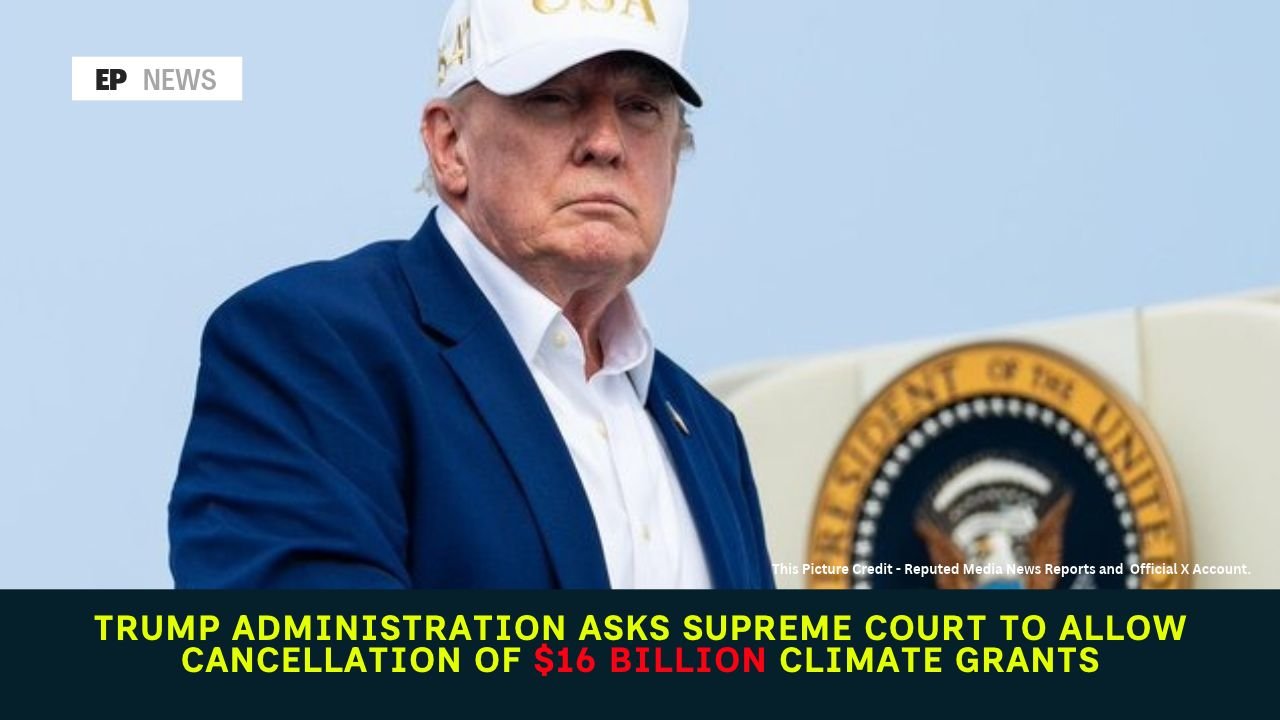
The Trump administration has asked the U.S. Supreme Court to review a major dispute involving approximately $16 billion in federal climate-related grants, creating a potentially important legal battle over presidential authority and government spending.
The case concerns the Environmental Protection Agency’s decision to cancel grants awarded under the Greenhouse Gas Reduction Fund, a program established through the 2022 Inflation Reduction Act during the Biden administration.
The funding was intended to support clean-energy projects and help expand investment in technologies designed to reduce greenhouse gas emissions.
The administration has argued that the grants were improperly managed and that the government has legal grounds to cancel the agreements.
However, nonprofit organizations involved in the program have challenged the decision, arguing that the cancellations were unlawful.
A federal appeals court previously sided with the nonprofit organizations, creating another legal obstacle for the administration.
The Supreme Court has not yet decided whether it will take up the case.
The outcome could influence how future administrations manage federal grants and whether previously approved funding can be canceled when political leadership changes.
What Is the Greenhouse Gas Reduction Fund?
The Greenhouse Gas Reduction Fund is a federal program designed to expand financing for clean-energy projects.
It was created under the Inflation Reduction Act of 2022.
The program was intended to use public funding to encourage investment in projects that could reduce pollution and support the development of cleaner energy infrastructure.
Its funding structure involved nonprofit organizations selected to operate different parts of the program.
These organizations were expected to distribute financing to eligible projects and help increase access to clean-energy investment.
The program became part of the broader federal effort to encourage private investment in environmental infrastructure.
The $16 billion dispute is significant because it concerns a substantial amount of money and raises questions about how government agencies can manage financial commitments made under federal legislation.
Why the Trump Administration Wants the Grants Cancelled
The Environmental Protection Agency canceled the grants shortly after the beginning of Trump’s second presidential term in January 2025.
EPA Administrator Lee Zeldin raised concerns about possible mismanagement and fraud involving the program.
The administration argued that the government should not be required to continue funding organizations when it believes the agreements were improperly administered.
The nonprofit organizations disputed the decision.
They argued that the administration did not provide adequate legal justification for terminating the grants.
The disagreement eventually moved into federal court.
According to AP reporting, U.S. District Judge Tanya Chutkan previously questioned the government’s allegations after the EPA failed to provide evidence of fraud when asked by the court.
The judge concluded that the administration could not terminate the agreements in violation of applicable law.
The dispute therefore extends beyond environmental policy.
It also involves questions about government contracts, administrative authority and the legal protections associated with federal funding agreements.
Why the Supreme Court’s Decision Could Be Important
The Supreme Court’s involvement could have consequences for federal funding programs across multiple sectors.
If the court agrees to review the case and ultimately supports the administration, it could strengthen arguments that federal agencies have broader authority to terminate certain grant agreements.
That could influence future disputes involving government spending.
Programs involving healthcare, education, scientific research, infrastructure and environmental projects could become part of similar legal discussions.
However, the precise implications would depend on the court’s reasoning and the legal questions it decides.
A ruling supporting the nonprofit organizations could reinforce the importance of following established legal procedures when terminating government grants.
It could also provide additional protection for organizations that receive federal funding under legislation passed by Congress.
The central issue is whether the administration can treat the dispute primarily as a contract matter or whether the cancellations violated legal and constitutional requirements.
How the Case Connects to the Inflation Reduction Act
The Inflation Reduction Act was signed into law in 2022 and included major investments in energy and climate-related programs.
The Greenhouse Gas Reduction Fund became one of the mechanisms intended to encourage clean-energy investment.
The law reflected Congress’s decision to allocate federal resources toward specific economic and environmental objectives.
The Trump administration has sought to reverse or change several policies associated with the previous administration.
That process has created disputes over the extent to which executive agencies can modify or cancel existing programs.
The climate grant case is particularly important because it concerns funding already awarded to organizations rather than simply a proposal for future spending.
This distinction could become central to the legal arguments.
What Could Happen to Clean-Energy Projects?
The legal dispute creates uncertainty for organizations and projects connected to the grant program.
Nonprofit organizations involved in the litigation have argued that the funding is necessary to carry out the projects for which the grants were awarded.
The government has taken a different position.
According to AP reporting, the federal appeals court ruled in August that the grant cancellations were improper.
The release of the money was paused while the Supreme Court had an opportunity to consider the administration’s request.
If the legal process continues for an extended period, some projects may face delays or difficulty planning their financing.
Clean-energy projects frequently require significant capital investment and long-term planning.
Developers may depend on combinations of government support, private investment and commercial financing.
Uncertainty about federal funding can therefore influence project schedules and investment decisions.
What the Supreme Court Has Not Decided
It is important to understand that the Supreme Court has not yet agreed to hear the case.
The administration has requested review, but that does not mean the justices have accepted its arguments.
The court must first determine whether it will take up the dispute.
If it does, both sides will have an opportunity to present their legal positions through the Supreme Court process.
Until a final decision is reached, the legal status of the grants remains subject to the ongoing proceedings.
It would therefore be premature to say that the Supreme Court has approved the cancellations or permanently ended the funding program.
What This Means for American Taxpayers
The dispute also raises questions about how federal taxpayer money is allocated and managed.
Supporters of the administration’s position may argue that government agencies should have sufficient authority to prevent waste and cancel improperly managed agreements.
Critics may argue that agencies must respect the spending decisions made by Congress and follow established legal procedures.
Both issues are important to responsible public finance.
Federal grants are funded through taxpayer resources, and government agencies have an obligation to ensure that money is used appropriately.
At the same time, organizations receiving grants need predictable legal rules so they can plan projects and fulfill their obligations.
The Supreme Court’s eventual treatment of this case could help clarify the relationship between those responsibilities.
Frequently Asked Questions
1. How much money is involved in the climate grant dispute?
Approximately $16 billion is at issue in the Greenhouse Gas Reduction Fund dispute.
2. Which government agency canceled the grants?
The Environmental Protection Agency canceled the grants after the start of Trump’s second presidential term.
3. What law established the program?
The Greenhouse Gas Reduction Fund was established under the 2022 Inflation Reduction Act.
4. Has the Supreme Court approved the cancellations?
No. The administration has requested Supreme Court review. The justices have not yet decided whether to take the case.
5. Why is the case important beyond climate policy?
It could influence how federal administrations cancel grant agreements and manage spending commitments made under earlier administrations.
Conclusion
The $16 billion climate grant dispute is becoming an important legal test of executive authority and federal spending rules.
The Trump administration wants the Supreme Court to review the cancellation of grants established under the Inflation Reduction Act, while nonprofit organizations argue that the cancellations violated existing legal obligations.
The case has implications beyond environmental policy because it could influence the relationship between federal agencies, Congress and organizations receiving government funding.
For American taxpayers, the key questions are whether public funds are being properly managed and whether government agencies are following the law.
The Supreme Court’s next decision will determine whether this dispute moves into a new stage of federal judicial review.
Source: AP News, November 20, 2026