
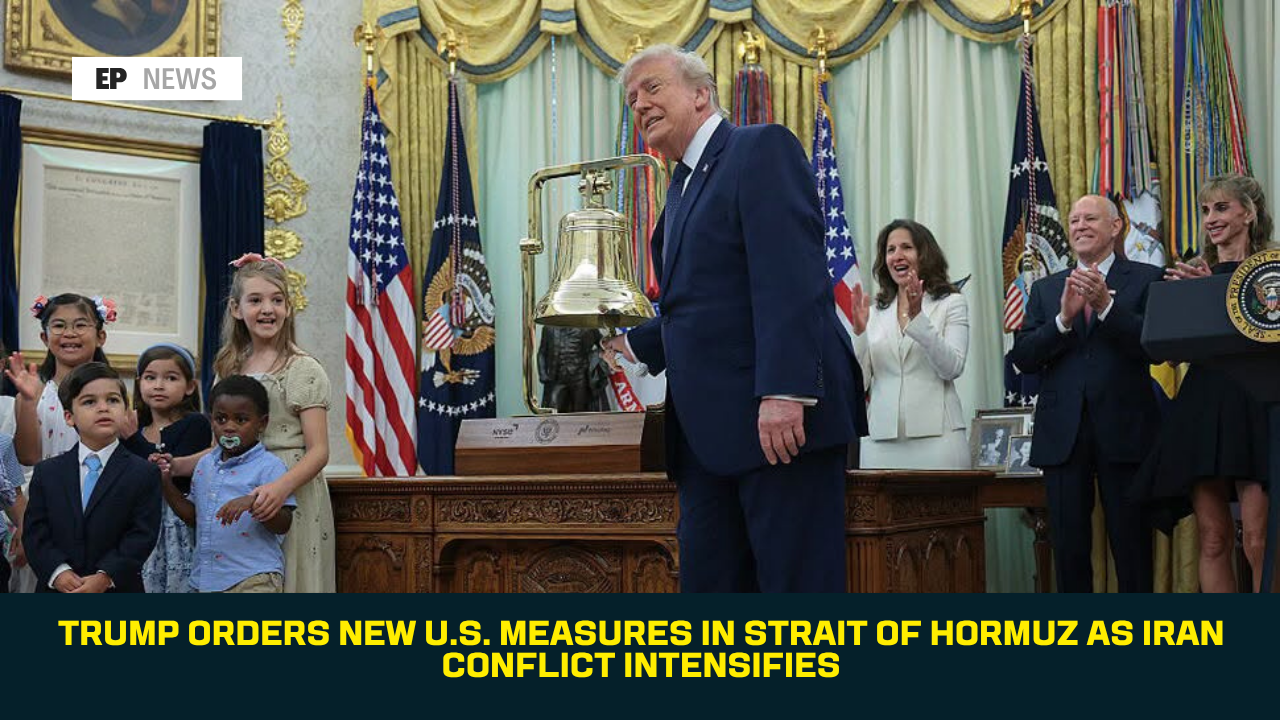
Trump Orders New U.S. Measures in Strait of Hormuz as Iran Conflict Intensifies
The United States announced a series of new measures aimed at strengthening its control over maritime security in the Strait of Hormuz, following another day of escalating military exchanges between U.S. and Iranian forces. President Donald Trump said Washington would take additional steps to protect commercial shipping and maintain freedom of navigation through one of the world’s busiest energy corridors.
The announcement came after renewed overnight military operations in the Gulf region and growing concerns that continued hostilities could threaten global energy supplies. Financial markets responded quickly, with crude oil prices rising sharply as investors assessed the possibility of prolonged disruptions to international shipping.
Why the Strait of Hormuz Matters
The Strait of Hormuz is among the world’s most strategically important waterways. A significant share of internationally traded crude oil and liquefied natural gas moves through the narrow passage connecting the Persian Gulf with the Gulf of Oman.
Any disruption in the area can have global consequences, including:
- Higher crude oil prices
- Increased gasoline and diesel costs
- Rising shipping insurance premiums
- Supply chain delays
- Greater volatility in global financial markets
Because of its importance to international trade, governments and businesses closely monitor every security development in the region.
White House Announces New Maritime Policy
Speaking on Monday, President Trump said the United States would expand its role in securing commercial shipping through the Strait of Hormuz.
According to the administration, the objective is to:
- Protect international shipping lanes.
- Deter future attacks on commercial vessels.
- Maintain the free movement of global trade.
- Support regional allies.
The administration also indicated that additional military assets remain positioned in the region to respond if new threats emerge.
Oil Prices Climb as Investors React
Global energy markets reacted immediately to the latest developments.
Brent crude and U.S. benchmark oil prices both moved higher as traders evaluated the potential impact of continued military operations on global energy supplies. Analysts say any prolonged disruption in the Strait of Hormuz could tighten global oil markets because the route remains essential for exports from several major oil-producing nations.
Higher oil prices may eventually affect:
- Fuel costs
- Airline operating expenses
- Transportation companies
- Manufacturing costs
- Consumer prices
International Calls for De-escalation
While military operations continued, several countries urged both sides to avoid further escalation.
International organizations and allied governments called for diplomatic efforts aimed at restoring stability and ensuring the continued safety of commercial shipping. Maritime officials also emphasized the importance of protecting civilian vessels operating in international waters.
Economic Impact Beyond Energy
Economists note that instability in the Gulf region extends beyond oil markets.
Potential consequences include:
- Increased shipping costs for global trade.
- Greater uncertainty in financial markets.
- Higher insurance premiums for cargo vessels.
- Supply chain disruptions affecting multiple industries.
Businesses dependent on imported energy or international shipping are expected to continue monitoring developments closely.
What Happens Next?
Market participants and policymakers will now focus on:
- Additional announcements from the White House.
- Any new military developments in the Gulf.
- Diplomatic negotiations involving regional partners.
- Oil market movements.
- Shipping activity through the Strait of Hormuz.
The coming days are expected to remain critical for both geopolitical stability and global financial markets.
Frequently Asked Questions
Why is the Strait of Hormuz important?
It is one of the world’s most important maritime routes for transporting crude oil and liquefied natural gas to international markets.
Why are oil prices rising?
Investors fear that continued military tensions could disrupt energy exports and reduce global oil supplies, leading to higher prices.
Could this affect the U.S. economy?
Yes. Sustained increases in global oil prices could contribute to higher fuel costs, transportation expenses, and inflationary pressure.
Conclusion
The latest U.S. actions in the Strait of Hormuz underscore how rapidly geopolitical events can influence global markets and international security. With military tensions still elevated and energy markets reacting to each new development, governments, businesses, and investors around the world will continue watching the situation closely. Whether the coming days bring further escalation or renewed diplomacy, developments in the Gulf are likely to remain one of the most important international stories of the week.