
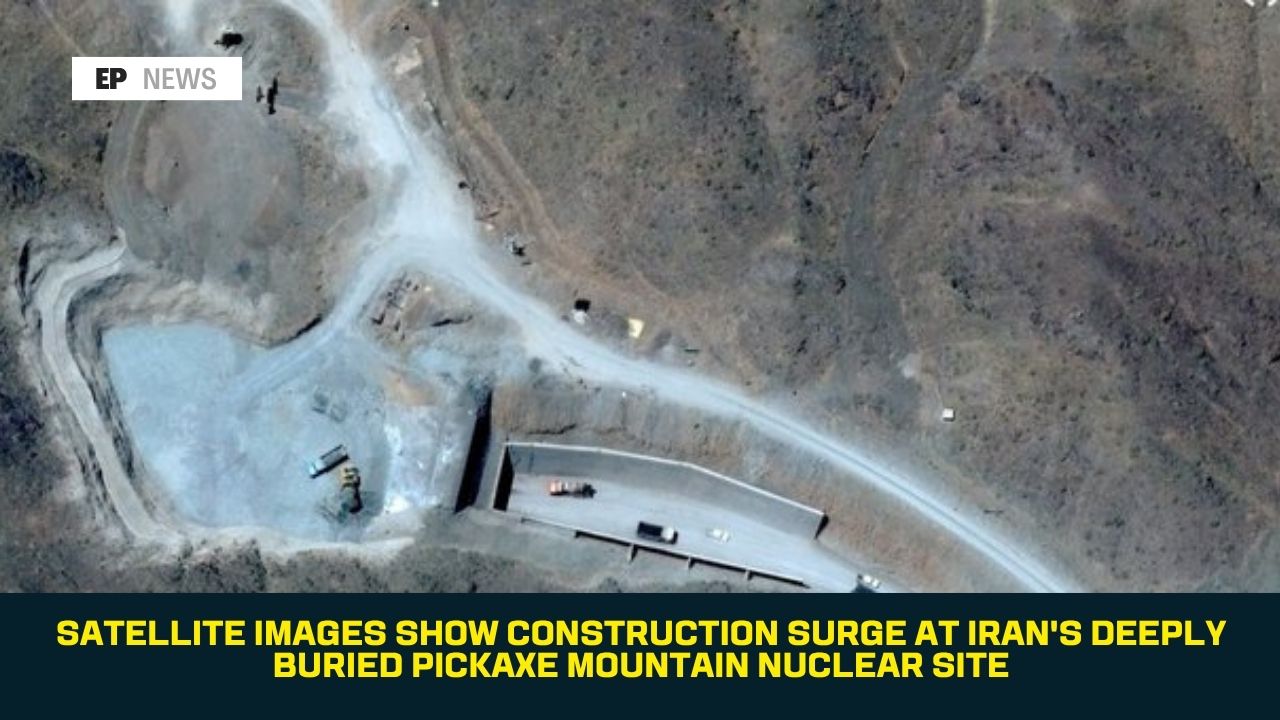
Satellite Images Show Construction Surge at Iran’s Deeply Buried Pickaxe Mountain Nuclear Site
A suspected Iranian nuclear site buried deep beneath a granite mountain has seen a marked increase in construction activity this year, according to a new satellite imagery analysis from the Center for Strategic and International Studies shared exclusively with CNN — even as the Pentagon works to develop weapons capable of penetrating deep enough underground to destroy it.
What the Satellite Imagery Shows
The site, known as Pickaxe Mountain, sits roughly 140 miles south of Tehran near Iran’s Natanz nuclear complex, and has long been viewed by intelligence agencies as a likely location for Iran to shelter its nuclear program from further strikes. CSIS analysts, reviewing six years of satellite imagery, told CNN there has been “a clear surge in construction activity” at the site this year, as the broader war between the U.S. and Iran has unfolded.
The nature of that construction has shifted over the course of the year. According to the CSIS report, activity “has shifted from active excavation toward probably internal construction and continued exterior reinforcement.” The site has seen more road activity in 2026 than ever before, along with work described as “raising and hardening of the (tunnel) portal accesses, paving of the internal road network, reinforcement around access areas, and the flattening and removal” of excavated dirt, according to KOMU’s reporting on the CSIS findings.
What Pickaxe Mountain Is Likely For
CSIS analysts assessed that the underground facility is “likely” designed for one of three purposes tied to Iran’s nuclear program, according to CNN: assembling centrifuges, enriching uranium, or serving as a broader safe haven for other weapons-relevant work, such as uranium metal conversion. Israeli intelligence has separately suggested Iran may be seeking to move centrifuges to the location specifically to continue uranium enrichment efforts away from more exposed, previously targeted facilities.
Why the Site Is So Difficult to Strike
The facility’s granite surroundings present a serious obstacle even for the most powerful conventional weapons currently in the U.S. arsenal. According to the CSIS analysis, Pickaxe Mountain would be a difficult target even for the Pentagon’s “heaviest non-nuclear” bombs — and it isn’t the only Iranian nuclear facility believed to be out of reach of existing American weapons.
That limitation has precedent from earlier in the conflict. A top U.S. general told lawmakers that during Operation Midnight Hammer in June 2025, when the U.S. struck Iranian nuclear sites, only the entrances to the deeply buried Isfahan nuclear facility were affected, because the Pentagon believed its Massive Ordnance Penetrator bombs couldn’t destroy the facility itself, according to the Jerusalem Post’s reporting on CNN’s findings.
The Pentagon’s Effort to Develop a New Weapon
The military is actively working on a successor to the Massive Ordnance Penetrator specifically capable of targeting more deeply buried facilities like Pickaxe Mountain. A prototype contract for the new weapon was awarded in September 2025, and the Air Force sought defense industry sources for the project in June 2026, according to the Jerusalem Post.
CNN also uncovered a notable piece of pre-war preparation connected to this effort: four days before the U.S. launched Operation Epic Fury — the code name for the broader military campaign against Iran that began February 28 — a program manager at the Defense Threat Reduction Agency, a Pentagon office focused on combating weapons of mass destruction, signed an emergency $1.2 million contract justification for repairs to an underground test facility at White Sands Missile Range in New Mexico. The document referenced preparations for a live-fire test of classified capabilities that needed to be completed within two to three weeks due to a “time-sensitive national security directive,” according to InvestingLive’s summary of CNN’s reporting. Three sources told CNN the planned test was connected to the Iran war and efforts to develop a way to target Iran’s deepest underground facilities — and likely to simulate U.S. strikes against specific nuclear sites.
According to the Jerusalem Post, one source described the Defense Department as having recently held a “planning sprint” specifically focused on strikes against Iranian underground facilities, including Pickaxe Mountain.
Trump’s Public Threats Against the Site
President Trump has repeatedly signaled his intention to strike Pickaxe Mountain directly. “We may hit Pickaxe very soon,” Trump told reporters, adding, “we know everybody that’s moving” at the site, according to CNN. CNN separately reported that the U.S. maintains active operational plans to strike the facility, and that Pickaxe Mountain was included in a target package under consideration earlier this summer — though it remains unclear whether existing U.S. munitions could actually penetrate deeply enough to destroy whatever Iran may have relocated there.
FAQ
What is Pickaxe Mountain? A suspected Iranian nuclear facility buried beneath a granite mountain near the Natanz nuclear complex, roughly 140 miles south of Tehran, believed to serve as a protected site for centrifuge assembly, uranium enrichment, or other nuclear program activities.
What has changed at the site this year? Satellite imagery reviewed by CSIS analysts shows a “clear surge in construction activity,” shifting from active excavation earlier in the war toward internal construction, tunnel-entrance reinforcement, and road paving.
Can current U.S. weapons destroy the facility? It’s uncertain. The site’s granite construction makes it a difficult target even for the Pentagon’s most powerful non-nuclear bombs, and the U.S. is actively developing a successor to the Massive Ordnance Penetrator specifically to address deeply buried facilities like this one.
Has the U.S. struck Iranian nuclear sites before? Yes, during Operation Midnight Hammer in June 2025, though a top U.S. general said only the entrances to the deeply buried Isfahan facility were affected, since existing bombs couldn’t destroy the facility itself.
Has Trump publicly discussed striking Pickaxe Mountain? Yes. He has told reporters “we may hit Pickaxe very soon,” and CNN reports the U.S. maintains active operational plans and previously considered the site as part of a target package.
Conclusion
The construction surge at Pickaxe Mountain illustrates a broader pattern that’s defined much of this six-month war: Iran working to harden and protect key nuclear-related infrastructure even as it comes under sustained military pressure, while the U.S. races to develop weapons capable of reaching facilities that remain, for now, beyond the reach of its existing arsenal. With Trump publicly signaling an intent to strike the site and the Pentagon reportedly conducting a “planning sprint” on exactly that question, whether this particular flashpoint becomes the war’s next major escalation may ultimately hinge on how quickly American weapons development can catch up to what satellite imagery suggests Iran has been building underground all year.
Sources: CNN (via ABC17 News, KRDO, KOMU, Yahoo News), The Jerusalem Post, InvestingLive (reporting dated September 9, 2026).