
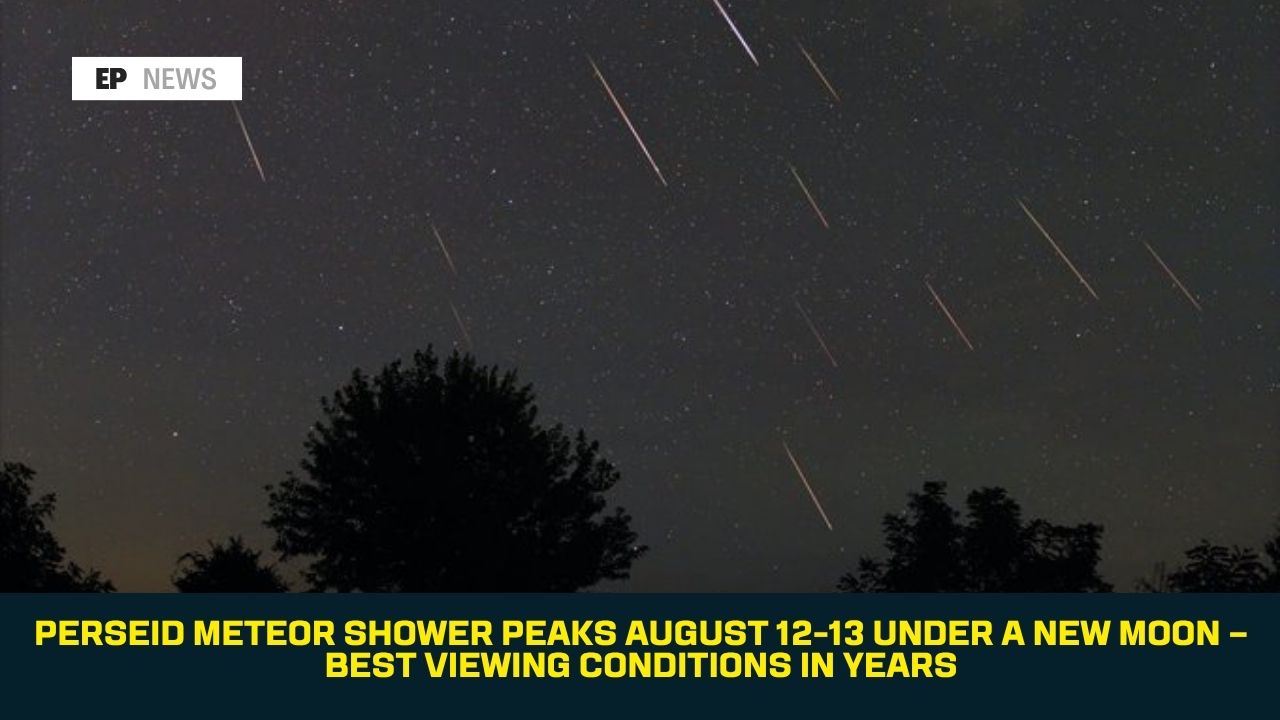
Perseid Meteor Shower Peaks August 12-13 Under a New Moon — Best Viewing Conditions in Years
The Perseid meteor shower, widely considered the best of the year, reaches its peak the night of Wednesday, August 12, into the predawn hours of Thursday, August 13 — and this year’s timing lines up almost perfectly with a new moon, giving skywatchers across the U.S. some of the darkest, most favorable viewing conditions in years.
When to Watch
The shower has been active since mid-July and remains visible through late August, but activity is expected to peak specifically overnight on August 12-13, according to EarthSky. Most guides point to the hours after midnight through dawn on both August 12 and August 13 as the prime viewing window, since Earth rotates more directly into the densest part of the meteor stream during those early morning hours.
Space.com recommends viewers begin watching around 11 p.m. local time, when meteor rates start climbing, and continue watching until dawn for the best results. According to the Old Farmer’s Almanac, the period from midnight to dawn offers the highest number of meteors, potentially 50 or more per hour under good conditions, since Earth is rotating directly into the debris stream during that window.
Why This Year’s Conditions Are Especially Good
The single biggest factor affecting any meteor shower’s visibility is moonlight, and 2026 delivers a rare, near-ideal setup. According to Telescope Advisor, the new moon falls at 1:36 p.m. EDT on August 12 — the same day as the shower’s peak — meaning there will be essentially zero moon illumination and no lunar skyglow interfering with viewing during the entire overnight window.
That timing matters enormously for how many meteors observers can actually see. A bright, well-lit moon can wash out all but the brightest meteors, cutting visible rates dramatically; Telescope Advisor notes that even a full moon at peak can reduce what should be a 100-per-hour shower down to just 20 to 30 visible meteors per hour. With the moon essentially absent this year, fainter meteors that would normally be lost to moonlight should become visible as well.
How Many Meteors to Expect
Estimates vary somewhat depending on the source and observing conditions, but most reputable outlets point to a strong show. EarthSky reports that under a dark sky with no moon, skywatchers frequently see 90 or more meteors per hour at the Perseids’ peak. The Planetary Society offers a somewhat more conservative estimate of 50 to 75 meteors per hour at a dark site, while Telescope Advisor suggests observers at a truly dark location should expect 15 to 40 visible meteors per hour under normal stream conditions, with the potential for a temporary increase around 01:00 UTC on August 13 if Earth passes through a denser dust trail.
The International Meteor Shower Calendar has also noted that overall Perseid activity may run somewhat lower in 2026 compared to some past years, before increasing again in 2027 as Earth encounters portions of the debris stream disturbed by Jupiter’s gravity — though even a below-average year for the Perseids tends to outperform most other annual meteor showers.
What the Perseids Actually Are
The Perseids are debris left behind by Comet 109P/Swift-Tuttle as it orbits the sun, burning up in Earth’s atmosphere as our planet passes through the comet’s debris trail each summer, according to timeanddate.com. The shower gets its name from the constellation Perseus, since the meteors appear to radiate outward from that part of the sky, though EarthSky notes that meteors can actually appear anywhere in the sky, not just near the constellation itself.
The Perseids are known for producing colorful, often bright meteors, and frequently leave visible “trains” — glowing trails that linger briefly after a meteor streaks past — which contributes to their reputation as one of the most rewarding showers to watch.
How to Get the Best View
No special equipment is needed to watch the Perseids, and experts specifically advise against using telescopes or binoculars. According to the Old Farmer’s Almanac, telescopes and binoculars narrow your field of view too much to be useful for meteor watching; the naked eye, paired with a wide, unobstructed view of the sky, is the best tool for the job.
The Royal Museums Greenwich recommends finding a location with minimal light pollution and checking the weather forecast in advance, since cloud cover is one of the few things that can spoil an otherwise ideal viewing setup. Giving your eyes roughly 20 to 30 minutes to adjust to the darkness before you start watching also significantly improves how many fainter meteors you’re able to spot.
A Rare Bonus: The Same Day as a Total Solar Eclipse
This year’s Perseids peak carries an unusual bonus for skywatchers in the right location. According to timeanddate.com, the same new moon driving this year’s excellent meteor-viewing conditions is also producing a total solar eclipse on August 12 — the first total solar eclipse visible from mainland Europe since 1999, crossing parts of Russia, Greenland, Iceland, and Spain. That means observers in the eclipse’s path could, in theory, experience totality during the day and then watch one of the year’s best meteor showers after dark on the very same night, though the U.S. will only see a partial solar eclipse, if any, depending on location.
FAQ
When exactly do the Perseids peak in 2026? The night of August 12 into the predawn hours of August 13, 2026, with the highest rates generally expected between midnight and dawn.
Do I need a telescope to see the Perseids? No. In fact, experts recommend against using telescopes or binoculars, since they narrow your field of view. The naked eye offers the best chance of spotting meteors across a wide area of sky.
Why are conditions especially good this year? The new moon falls on the same day as the shower’s peak, meaning there will be no moonlight to wash out fainter meteors — a combination that doesn’t happen every year.
How many meteors might I see per hour? Estimates vary by source and location, ranging from roughly 15-40 per hour at a dark site under normal conditions up to 90 or more per hour under ideal dark-sky conditions, according to different organizations’ estimates.
What causes the Perseid meteor shower? Debris left behind by Comet 109P/Swift-Tuttle, which Earth passes through every summer as it orbits the sun, producing the annual shower.
Conclusion
Between the new moon’s near-total darkness and the Perseids’ well-earned reputation as the year’s most reliable, crowd-pleasing meteor shower, August 12-13 is shaping up to be one of the better nights for stargazing in recent memory. With no special equipment required and no moonlight to compete with, the main things standing between skywatchers and a great show this year are clear skies and a bit of patience waiting for their eyes to adjust to the dark.
Sources: EarthSky, Space.com, The Old Farmer’s Almanac, The Planetary Society, timeanddate.com, Royal Museums Greenwich, Telescope Advisor (reporting current as of early August 2026).