
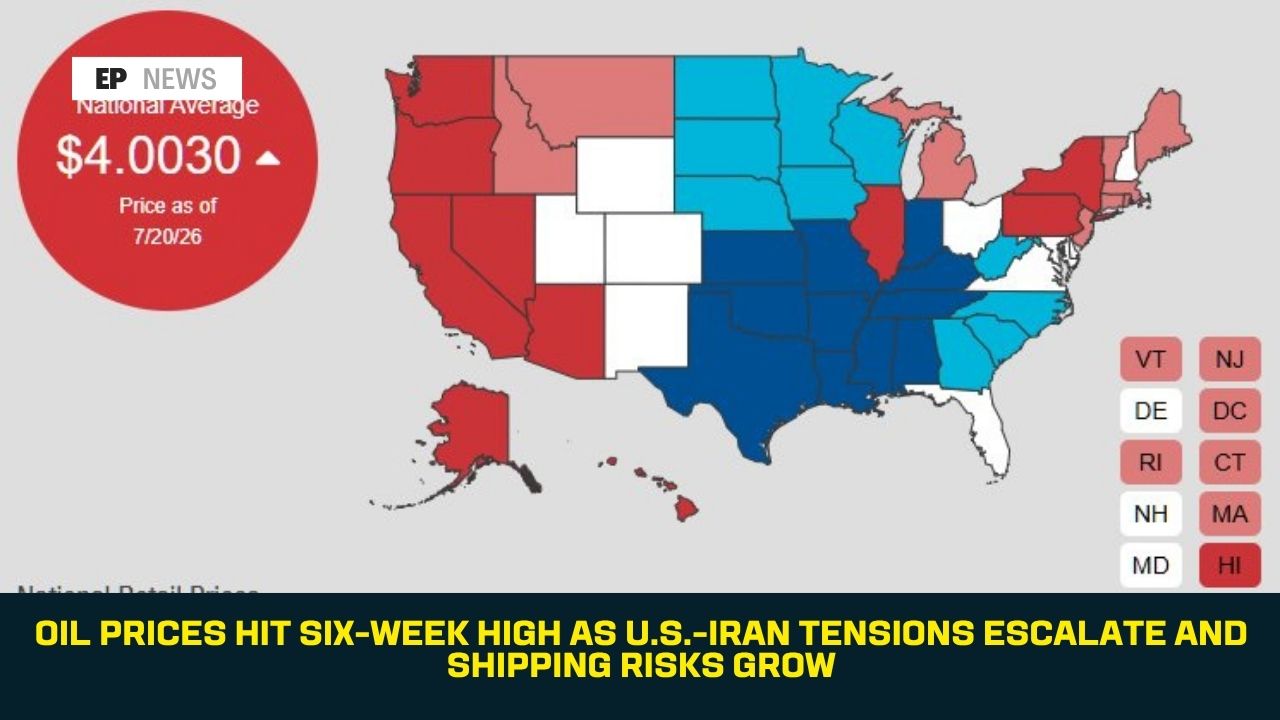
Oil Prices Hit Six-Week High as U.S.-Iran Tensions Escalate and Shipping Risks Grow
Global oil markets surged on Thursday, July 23, 2026, as escalating military tensions between the United States and Iran increased fears of disruptions to some of the world’s most important energy shipping routes. Brent crude climbed to its highest level in more than six weeks, while West Texas Intermediate (WTI) also posted strong gains as traders reacted to growing geopolitical risks.
The latest rally follows another night of U.S. military strikes targeting Iranian assets and renewed threats to commercial shipping in both the Strait of Hormuz and the Red Sea. Analysts say concerns over supply disruptions—not changes in demand—are currently driving oil prices higher.
Why Oil Prices Are Rising
Energy traders are closely watching developments in the Middle East because the region plays a central role in global oil production and exports.
Several factors contributed to Thursday’s price increase:
- Continued U.S. military operations against Iranian targets.
- Iranian threats involving the Strait of Hormuz.
- Houthi attacks on commercial oil tankers in the Red Sea.
- Growing uncertainty over global shipping routes.
- Concerns about future crude oil supplies.
Together, these developments have increased market anxiety and pushed oil prices to their highest levels since early June.
Why the Strait of Hormuz Matters
The Strait of Hormuz remains one of the world’s most strategically important waterways.
A significant portion of globally traded crude oil passes through this narrow passage every day. Any interruption can quickly affect international energy markets.
If shipping slows or becomes more dangerous, the impact could include:
- Higher gasoline prices.
- Increased transportation costs.
- More expensive airline fuel.
- Rising manufacturing expenses.
- Additional inflationary pressure worldwide.
Because of its importance, investors closely monitor every military development involving the Strait.
Red Sea Security Concerns Add Pressure
The situation has become even more complicated after Iran-backed Houthi forces claimed attacks on oil tankers traveling through the Red Sea.
According to reports, commercial vessels have altered their routes because of security concerns, increasing shipping costs and delivery times. Maritime companies continue monitoring the region while evaluating the safest routes for cargo traffic.
Impact on Financial Markets
Higher oil prices often influence financial markets beyond the energy sector.
Investors are now watching:
- Airline stocks.
- Transportation companies.
- Manufacturing firms.
- Inflation expectations.
- Federal Reserve policy.
Persistent increases in crude oil prices could make it more difficult for inflation to continue easing, potentially influencing future interest-rate decisions.
U.S. Energy Outlook
Although the United States remains one of the world’s largest oil producers, global crude prices continue to affect American consumers.
If international prices remain elevated for an extended period, Americans could eventually experience:
- Higher gasoline prices.
- Increased diesel costs.
- More expensive air travel.
- Rising freight and shipping expenses.
- Higher prices for consumer goods.
Economists say the duration of the current rally will depend largely on geopolitical developments over the coming days.
What Investors Will Watch Next
Market participants will closely monitor:
- Additional U.S. military announcements.
- Iran’s response to recent strikes.
- Shipping activity in the Strait of Hormuz.
- Red Sea security developments.
- Weekly U.S. oil inventory reports.
- Global demand forecasts.
Any signs of de-escalation could ease pressure on energy markets, while further conflict may push prices even higher.
Frequently Asked Questions
Why did oil prices rise today?
Oil prices increased because escalating tensions between the United States and Iran raised concerns about disruptions to major global shipping routes and energy supplies.
What is the Strait of Hormuz?
It is one of the world’s busiest oil shipping routes, connecting the Persian Gulf to international markets.
Could Americans pay more for gasoline?
If crude oil prices remain elevated, retail gasoline and diesel prices could gradually increase in the United States.
Conclusion
The latest surge in oil prices highlights how quickly geopolitical events can influence global financial markets. With tensions between the United States and Iran remaining elevated and shipping security concerns expanding beyond the Strait of Hormuz into the Red Sea, investors are preparing for continued volatility. Energy markets will likely remain highly sensitive to military and diplomatic developments in the days ahead, making this one of the most closely watched international stories affecting the U.S. economy.