
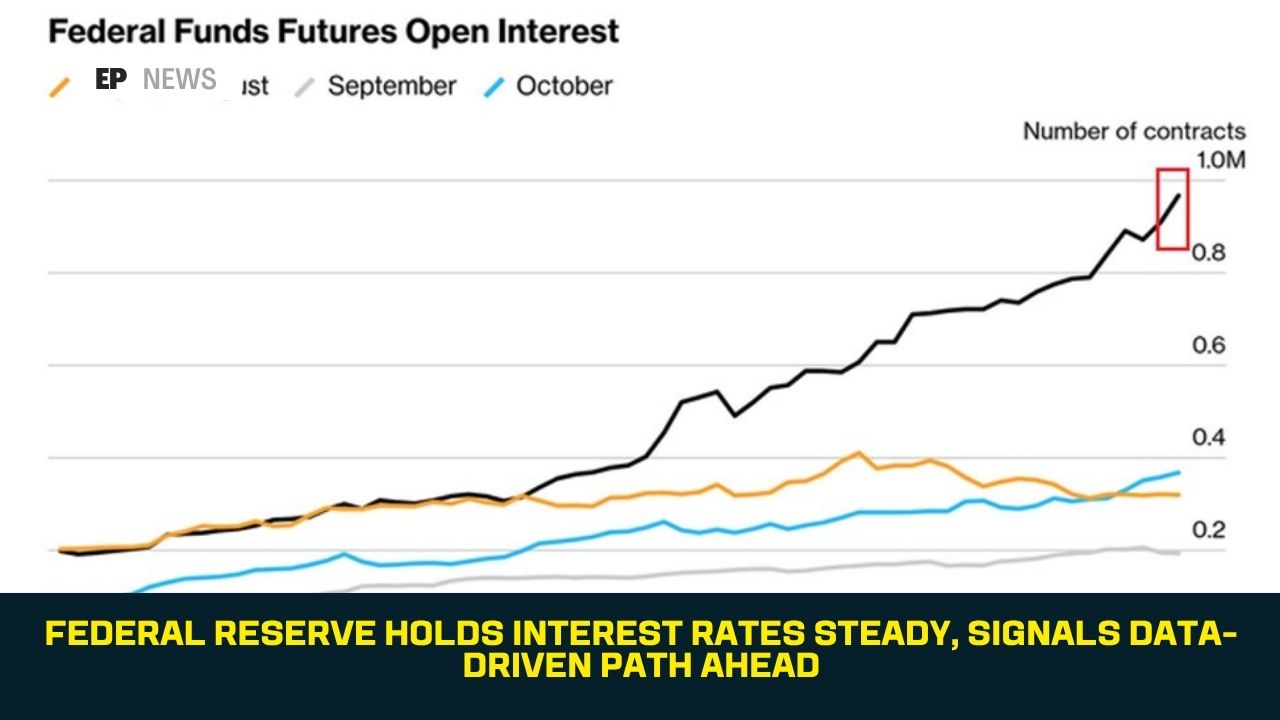
Federal Reserve Holds Interest Rates Steady, Signals Data-Driven Path Ahead
The Federal Reserve concluded its closely watched July 2026 policy meeting by leaving interest rates unchanged, a decision that financial markets had widely anticipated. Policymakers said future moves will continue to depend on incoming economic data, particularly inflation, employment, and broader growth indicators, while emphasizing that the central bank remains committed to returning inflation to its long-term target. (Reuters)
The announcement came after months of moderating inflation and a labor market that has remained resilient despite elevated borrowing costs. Investors immediately focused on the Federal Reserve’s statement and Chair Jerome Powell’s comments for clues about whether rate cuts could become more likely later this year.
Why the Fed Kept Rates Unchanged
Federal Reserve officials said recent economic data has shown continued progress on inflation, but they want additional evidence before changing policy.
The central bank is currently monitoring:
- Inflation trends
- Employment conditions
- Wage growth
- Consumer spending
- Business investment
- Financial market stability
By keeping rates steady, policymakers signaled that they believe current monetary policy remains sufficiently restrictive while they assess how the economy evolves over the coming months.
Inflation Has Continued to Moderate
Recent inflation reports have shown improvement compared with the elevated price pressures seen in earlier years.
Economists noted that:
- Consumer inflation has eased.
- Producer prices have softened in several sectors.
- Supply chain conditions have improved.
- Shelter inflation has gradually moderated.
- Goods inflation remains relatively contained.
However, Federal Reserve officials continue emphasizing that inflation has not yet fully returned to the central bank’s long-term target.
Labor Market Remains a Key Factor
One of the strongest supports for the U.S. economy has been the labor market.
Recent employment data has shown:
- Low unemployment levels.
- Steady hiring activity.
- Limited layoffs.
- Continued wage growth.
- Strong demand for workers in several industries.
A resilient labor market gives the Federal Reserve greater flexibility when deciding whether to maintain or eventually reduce interest rates.
Powell Emphasizes a Data-Driven Approach
During his post-meeting remarks, Chair Jerome Powell indicated that future policy decisions will depend on incoming economic data rather than a predetermined timetable.
Analysts said investors were listening for signals about:
- The timing of potential rate cuts.
- Inflation expectations.
- Economic growth risks.
- Labor market conditions.
- Financial stability concerns.
Powell reiterated that the Federal Reserve remains focused on achieving price stability while supporting a strong labor market.
Wall Street Reacts
Financial markets responded cautiously after the announcement.
Investors evaluated:
- Treasury yield movements.
- Stock market performance.
- Technology sector reactions.
- Bank shares.
- Interest-rate-sensitive industries.
While the decision itself was widely expected, market participants are now focusing on upcoming inflation and employment reports that could influence future Federal Reserve meetings.
What This Means for Consumers
A steady interest-rate policy can affect households in several ways.
Borrowing costs may remain relatively elevated for:
- Mortgages.
- Auto loans.
- Credit cards.
- Personal loans.
- Small-business financing.
At the same time, higher interest rates can continue providing stronger returns on savings accounts and certain fixed-income investments.
What Economists Expect Next
Many analysts believe the Federal Reserve will continue evaluating several key indicators before considering any policy change.
The most important upcoming data includes:
- Inflation reports.
- Employment numbers.
- Retail sales.
- Consumer confidence.
- Wage growth.
- Housing market activity.
These reports will help determine whether inflation is continuing to move sustainably toward the Fed’s target.
Frequently Asked Questions
What did the Federal Reserve decide?
The Federal Reserve left interest rates unchanged at its July 2026 meeting and said future decisions will depend on incoming economic data.
Why did the Fed hold rates steady?
Officials believe inflation has improved but want additional evidence that price pressures are moving sustainably toward the central bank’s long-term target.
Could rates be cut later this year?
Possibly. Economists say future decisions will depend on inflation, employment, and broader economic conditions over the coming months.
Conclusion
The Federal Reserve’s July 2026 decision to keep interest rates unchanged reinforces the central bank’s cautious, data-driven approach to monetary policy. With inflation continuing to moderate and the labor market remaining strong, policymakers are choosing patience while they evaluate additional economic data. Investors, businesses, and consumers will now watch upcoming inflation and employment reports closely, as those indicators are likely to shape the next chapter of U.S. monetary policy and the broader economic outlook for the remainder of 2026.