Fed Rate Decision Outlook Changes: What It Could Mean for Credit Cards, Loans and Savings
The Federal Reserve’s next interest-rate decision could have major implications for millions of American households.
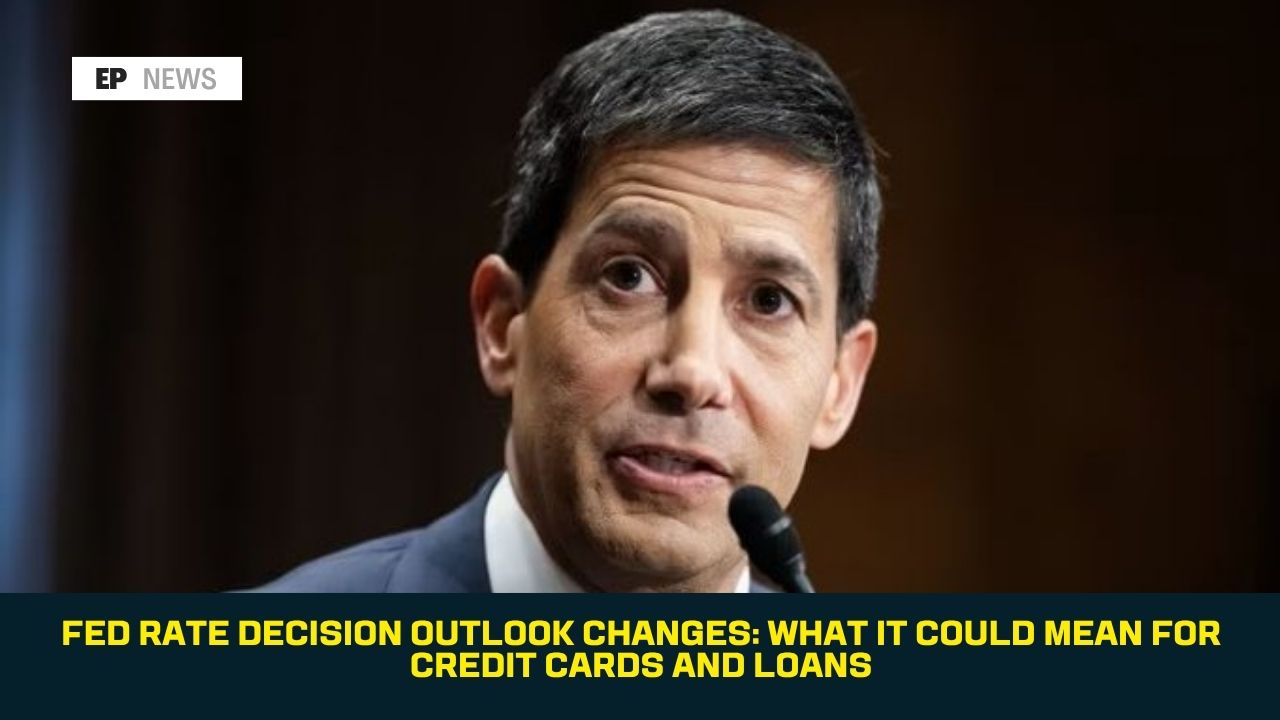
On September 3, 2026, Federal Reserve Governor Christopher Waller said he would be willing to support keeping interest rates unchanged at the upcoming September meeting if new inflation data shows continued progress toward the Fed’s 2% target.
But Waller also made clear that a different inflation report could change his position.
If inflation comes in stronger than expected, he said he would consider supporting another interest-rate increase.
That means Americans with credit-card debt, auto loans, personal loans, savings accounts and mortgages are now watching the upcoming inflation data closely.
The Federal Reserve’s benchmark policy rate currently stands in the 3.50% to 3.75% range, according to Waller’s September 3 remarks. He described current policy as only slightly restricting demand and said his decision would depend heavily on the August inflation data released before the Federal Open Market Committee meets on September 15 and 16.
For consumers, the situation is important because Federal Reserve decisions can eventually influence the cost of borrowing and the returns available on savings.
However, not every financial product responds in the same way.
Credit cards can react relatively quickly.
Mortgage rates are influenced more heavily by longer-term bond markets.
Savings rates may move differently depending on the bank.
Understanding those differences can help Americans make better financial decisions.
Why the Federal Reserve’s September Decision Matters
The Federal Reserve does not directly determine every interest rate Americans pay.
But its benchmark federal funds rate influences financial conditions throughout the economy.
When the Fed raises rates, borrowing generally becomes more expensive.
When it lowers rates, borrowing conditions can eventually become easier.
The effects can reach:
- Credit cards
- Auto loans
- Personal loans
- Home equity loans
- Savings accounts
- Certificates of deposit
- Business loans
The Fed’s goal is not simply to make borrowing cheaper or more expensive.
Its monetary policy is designed to balance two major objectives:
- Maintaining stable prices
- Supporting maximum sustainable employment
Inflation remains a major concern.
In his September 3 speech, Waller said inflation remained meaningfully above the Federal Reserve’s 2% goal, but recent data had shown signs of continued disinflation.
He said three-month core inflation had declined substantially from earlier in 2026, although it remained above the Fed’s long-term target.
The upcoming inflation report could therefore play a critical role in determining what happens next.
What Did Christopher Waller Say About Interest Rates?
Waller’s message was essentially conditional.
If inflation continues improving, he is open to holding rates steady.
If inflation unexpectedly accelerates, he could support a rate increase.
The Federal Reserve Board published Waller’s September 3 remarks, stating that continued progress toward the 2% inflation goal would make him willing to support maintaining the policy rate at its current level.
However, he also said stronger-than-expected inflation could justify tighter policy at the September 15–16 meeting.
This is important because it means the Fed’s next move is not predetermined.
The upcoming economic data will matter.
The key reports include:
- Inflation data
- Employment information
- Wage trends
- Consumer spending
- Broader economic conditions
For consumers, this uncertainty means it may be wise to prepare for the possibility that borrowing costs could remain elevated for longer.
What Could This Mean for Credit Card Interest Rates?
Credit-card holders are among the consumers most directly affected by Federal Reserve policy.
Most credit cards have variable interest rates.
That means the annual percentage rate, or APR, can change over time.
If the Federal Reserve raises its benchmark rate, credit-card interest rates may also increase.
If the Fed eventually lowers rates, card APRs may decline—but consumers should not expect every lender to move immediately or by the exact same amount.
For Americans carrying large credit-card balances, the impact can be significant.
Imagine a consumer with:
- A large outstanding balance
- A high APR
- Only minimum monthly payments
Even a relatively small increase in the interest rate can make it more difficult to pay down the balance.
The most important personal-finance strategy is generally to avoid carrying high-interest credit-card debt whenever possible.
Consumers may consider:
- Paying more than the minimum
- Prioritizing high-interest balances
- Reviewing balance-transfer options carefully
- Avoiding new unnecessary debt
A potential future change in Fed policy should not be the only reason someone delays paying down expensive credit-card debt.
Auto Loans Could Remain Expensive
Americans shopping for cars are also affected by the broader interest-rate environment.
Auto loan rates depend on several factors:
- Federal Reserve policy
- Market interest rates
- Borrower credit scores
- Loan length
- Vehicle type
- Lender competition
Even if the Federal Reserve holds rates unchanged, auto loans could remain expensive.
A decision to keep rates steady does not mean borrowing costs suddenly become cheap.
Consumers shopping for a vehicle should compare:
- The interest rate
- The APR
- The total loan cost
- The monthly payment
- The length of the loan
One major mistake is focusing only on the monthly payment.
A longer loan term may reduce the monthly payment while increasing the total interest paid over time.
For example, extending a car loan from five years to seven years may make the payment appear more affordable, but the borrower could remain in debt longer.
What About Mortgage Rates?
Mortgage rates are more complicated.
The Federal Reserve does not directly set 30-year mortgage rates.
Instead, mortgage rates are heavily influenced by:
- Treasury yields
- Mortgage-backed securities
- Inflation expectations
- Financial-market conditions
That means the Fed could hold its benchmark rate steady while mortgage rates still rise or fall.
The current mortgage environment remains challenging for homebuyers, with 30-year mortgage borrowing costs remaining elevated.
Higher Treasury yields and uncertainty about inflation can put pressure on mortgage rates even when the Fed does not change its policy rate.
For potential homebuyers, the best strategy is usually to focus on the actual mortgage offer available rather than assuming the Fed’s next decision will automatically produce a lower home-loan rate.
Savings Accounts Could Also Be Affected
Interest rates are not entirely bad news.
Higher rates can benefit savers.
High-yield savings accounts and certificates of deposit may offer better returns when interest rates are elevated.
However, banks are not required to pay the same rate.
Different financial institutions can offer dramatically different returns.
Consumers with significant savings may want to compare:
- Traditional savings accounts
- High-yield savings accounts
- Money market accounts
- Certificates of deposit
A person keeping a large amount of cash in an account earning very little interest could be missing opportunities available elsewhere.
At the same time, consumers should make sure they understand account terms and access restrictions.
Emergency savings should generally remain accessible.
Why Inflation Is the Key to the September Fed Decision
The Federal Reserve’s primary concern remains inflation.
Waller said inflation was still above the Fed’s 2% target but that recent data suggested meaningful progress.
He also noted that energy prices had risen and remained significantly higher than at the beginning of 2026, creating one of several risks the central bank is monitoring.
The August inflation report will therefore be particularly important.
If inflation continues to cool, policymakers may feel more comfortable maintaining current interest rates.
If inflation moves higher, some Fed officials could support tighter monetary policy.
This creates uncertainty for consumers.
The Fed’s next decision will not simply depend on what happened in the economy months ago.
It will depend heavily on the most recent data.
Should Americans Wait for Interest Rates to Fall?
This depends on the type of financial decision.
If You Have Credit-Card Debt
Waiting for a possible future rate decrease may not be the best strategy.
High-interest debt can be expensive every month.
Reducing the balance can provide an immediate financial benefit.
If You Are Buying a Car
Compare multiple lenders and focus on the total cost of financing.
Do not assume rates will quickly fall.
If You Are Buying a Home
Focus on affordability.
Can you comfortably afford the mortgage, property taxes, insurance and maintenance?
Trying to perfectly predict future mortgage rates is difficult.
If You Have Savings
Review your savings rate.
If your bank pays very little interest, compare other federally insured options where appropriate.
What Happens If the Fed Raises Rates Again?
A rate increase could make borrowing even more expensive.
Potential effects could include:
Credit Cards
Variable APRs could increase.
Auto Loans
New borrowers could face higher financing costs.
Personal Loans
Some loan products could become more expensive.
Savings
Some savings products could potentially offer higher yields.
Business Borrowing
Companies could face increased financing costs.
For households already carrying significant debt, another rate increase could create additional financial pressure.
This is why debt management is particularly important in an elevated-rate environment.
What Happens If the Fed Holds Rates Steady?
A decision to hold rates steady would mean no immediate increase in the Fed’s benchmark rate.
However, consumers should understand an important point:
Holding rates steady is not the same as cutting rates.
Borrowing costs could remain high.
Credit-card APRs may remain elevated.
Auto loans could remain expensive.
Mortgage rates could continue moving based on bond-market conditions.
A pause may provide stability, but it does not automatically make borrowing affordable.
Reuters reported that Waller’s comments caused investors to reduce expectations of a September rate increase, with markets responding positively to the possibility that the Fed could remain patient if inflation continues improving.
What Happens If the Fed Eventually Cuts Rates?
A future rate reduction could eventually provide relief to some borrowers.
However, the effects would vary.
Credit-card rates might decline.
Savings yields could also fall.
Mortgage rates might respond differently depending on longer-term financial markets.
For consumers, lower rates can create both opportunities and trade-offs.
Borrowers may benefit.
Savers may earn less on cash deposits.
This is why a diversified financial plan can be valuable.
Five Things Americans Should Do Before the September Fed Meeting
1. Review Your Credit-Card Debt
Calculate how much interest you are paying every month.
Prioritize high-interest balances.
2. Check Your Savings Rate
Find out exactly how much your savings account pays.
Compare available options.
3. Avoid Taking on Unnecessary Debt
Higher interest rates make borrowing more expensive.
Before financing a major purchase, calculate the total cost.
4. Improve Your Credit Profile
A stronger credit score can help consumers qualify for better borrowing terms.
5. Prepare for Continued Uncertainty
Do not build a financial plan around one prediction about the Federal Reserve.
Rates may remain elevated longer than expected.
A strong budget should be able to handle uncertainty.
What Should Investors Watch?
Investors are also paying close attention to the September meeting.
Interest-rate expectations can affect:
- Stock prices
- Bond prices
- Bank stocks
- Technology companies
- Real estate investments
Reuters reported that Wall Street’s major indexes moved higher after Waller indicated he could support holding rates steady if inflation pressures continued to cool.
However, long-term investors should be careful about making emotional portfolio decisions based on one speech or one inflation report.
Retirement investing generally requires a long-term strategy.
Short-term Federal Reserve headlines can create market volatility.
But reacting to every market movement can sometimes create more risk.
Frequently Asked Questions
When is the next Federal Reserve meeting?
The Federal Reserve’s next scheduled policy meeting is set for September 15–16, 2026, according to Governor Christopher Waller’s September 3 remarks.
Will the Fed raise interest rates in September 2026?
The decision remains uncertain. Christopher Waller said he could support holding rates steady if inflation continues improving, but he would consider a rate increase if inflation comes in stronger.
Will a Fed decision affect credit-card interest rates?
It can. Many credit cards have variable APRs that are influenced by benchmark interest rates.
Does the Federal Reserve directly set mortgage rates?
No. Mortgage rates are influenced primarily by longer-term financial markets, including Treasury yields and mortgage-backed securities.
Should I pay off credit-card debt before rates change?
High-interest credit-card debt can be expensive regardless of future Fed decisions. Paying down costly balances can reduce interest expenses.
Conclusion: Americans Should Prepare for Rates to Stay Uncertain
The Federal Reserve’s September 2026 decision is becoming increasingly important for American households.
Federal Reserve Governor Christopher Waller’s latest comments suggest that policymakers are watching inflation closely and that the next move could depend heavily on incoming data.
If inflation continues cooling, Waller is open to holding rates steady.
If inflation accelerates, another increase remains possible.
For consumers, the most important lesson is not to wait for the Fed to solve every personal-finance problem.
Americans can take action now by reducing expensive debt, improving credit, comparing loan offers and making sure their savings are earning a competitive return.
Interest rates may change.
Markets may change.
The Federal Reserve’s outlook may also change as new economic data arrives.
But households that maintain a strong budget and prepare for different economic scenarios will generally be better positioned—whether rates rise, remain steady or eventually fall.
Editorial Disclaimer: This article is for informational and educational purposes only and does not constitute personalized financial, investment, lending or legal advice. Interest rates and financial products vary by lender and individual circumstances.
Source of Media: Federal Reserve / Reuters / Associated Press