
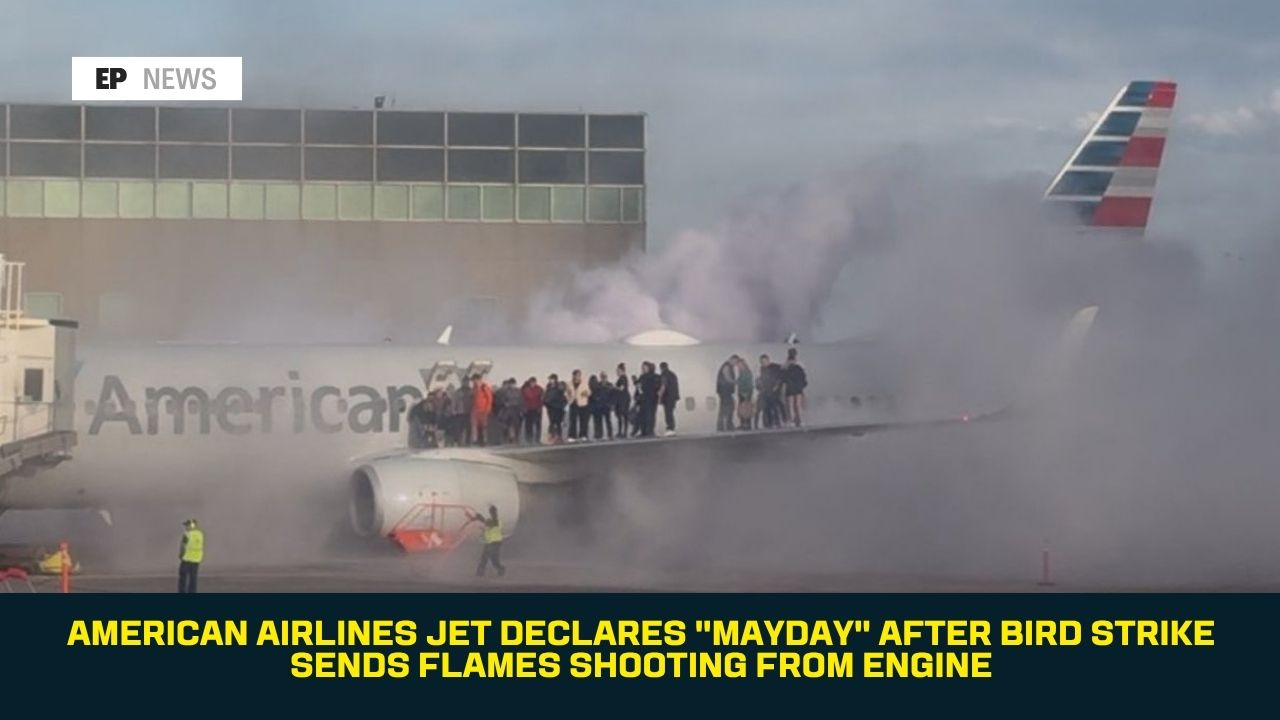
American Airlines Jet Declares “Mayday” After Bird Strike Sends Flames Shooting From Engine
An American Airlines Boeing 737 bound for Charlotte, North Carolina, was forced into a dramatic emergency landing back at Myrtle Beach International Airport on Monday, August 10, after striking a flock of birds on takeoff, sending flames and loud popping sounds from the aircraft’s left engine. All 181 people aboard were unharmed.
What Happened
American Airlines Flight 1760 had just departed Myrtle Beach around 8 a.m. when the left engine ingested several birds, according to AirlineGeeks, citing CBS News. Witnesses on the ground and passengers aboard reported loud popping sounds accompanied by bright orange flashes and smoke from the left wing, according to airlive.net’s incident report.
One of the pilots declared an emergency directly to air traffic control: “Mayday, mayday, mayday. We’ve got an engine problem here,” according to audio cited by AirlineGeeks. The flight crew safely executed a turn and returned the aircraft to Myrtle Beach International Airport, landing roughly 30 minutes after departure, according to Cuba en Miami’s reporting citing ABC News. The Boeing 737-800 taxied to the gate under its own power, and all passengers deplaned normally with no injuries reported.
What Witnesses Saw
Passenger Patrick Gotwalt captured video showing flames and orange flashes streaming from the engine as the jet climbed over the water, according to Lifezette’s coverage of the incident. Nearby beachgoer Lindsey Mackey told CNN that loud popping noises preceded the bright flashes visible beneath the wing. A video shared with Fox News shows flames shooting from the engine, though the engine itself did not appear to be fully on fire, according to AirlineGeeks.
What Came Next
The Federal Aviation Administration confirmed the flight crew reported striking a bird during takeoff, according to AirlineGeeks. Emergency response teams assembled on the tarmac following the landing, while airport operations workers cleared bird debris and feathers from the runway, according to airlive.net.
American Airlines confirmed the aircraft landed safely and was taken out of service to undergo thorough maintenance inspections. The airline worked to rebook the affected passengers on alternative flights to Charlotte.
Why Bird Strikes Pose a Serious Risk
Bird strikes are a well-documented hazard in commercial aviation, particularly during the takeoff and initial climb phases of a flight, when aircraft are at lower altitudes where birds are more commonly present. When birds are ingested into a jet engine, they can damage internal components, sometimes causing visible flames or smoke as debris burns off — the exact dynamic witnesses described seeing during Monday’s incident. While the vast majority of bird strikes don’t result in serious damage or injury, modern aircraft engines and pilot training are specifically designed to handle these events safely, as reflected in how quickly Monday’s crew was able to declare the emergency, execute a return, and land without incident.
FAQ
What caused the emergency landing? The aircraft’s left engine ingested a flock of birds shortly after takeoff from Myrtle Beach, causing flames, smoke, and loud popping sounds.
Was anyone injured? No. All 181 people aboard deplaned normally with no injuries reported.
Where was the flight headed? Charlotte, North Carolina. It returned safely to Myrtle Beach International Airport instead.
What kind of aircraft was involved? A Boeing 737-800, operating as American Airlines Flight 1760.
What happened to the plane after landing? It was taken out of service for thorough maintenance inspections, and American Airlines worked to rebook affected passengers on other flights to Charlotte.
Conclusion
Monday’s incident, while visually alarming for passengers and onlookers alike, ended exactly as aviation safety systems are designed to handle a bird strike: a swift pilot response, a safe return to the departure airport, and no injuries among those aboard. With the FAA confirming the bird strike and the aircraft now grounded for inspection, the incident serves as a vivid reminder of a relatively common but well-managed hazard in commercial air travel.
Sources: AirlineGeeks/CBS News, airlive.net, Lifezette, RVM News, Cuba en Miami/ABC News (reporting dated August 11, 2026).