
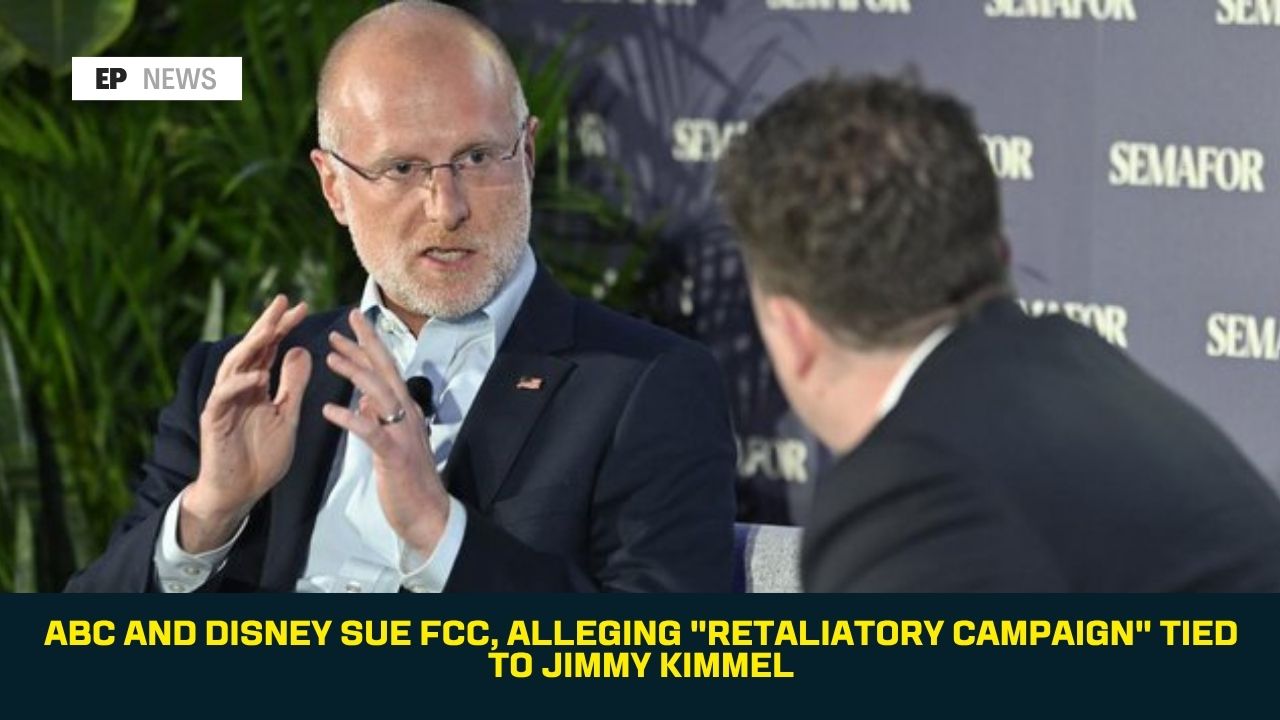
ABC and Disney Sue FCC, Alleging “Retaliatory Campaign” Tied to Jimmy Kimmel
ABC and its parent company, The Walt Disney Company, sued the Federal Communications Commission on Tuesday, August 18, alleging the agency’s decision to force early review of ABC’s broadcast licenses is unconstitutional retaliation for the network’s news coverage and its handling of late-night host Jimmy Kimmel — an unusual step of a major broadcaster suing its own federal regulator directly on First Amendment grounds.
What the Lawsuit Alleges
The lawsuit, filed in U.S. District Court in Washington, D.C., asks the court to halt an FCC proceeding that forced ABC’s eight owned-and-operated local stations into early license renewal review, years ahead of their scheduled expiration, according to Deadline. “Acting through the Federal Communications Commission, the Administration has waged a retaliatory campaign against ABC for a single reason: it disapproves of what ABC broadcasts,” the lawsuit states, according to Deadline’s reporting.
ABC’s legal team described the stakes in stark terms, according to the Boston Globe: “Facing this existential threat, Plaintiffs have no choice but to seek redress from the judicial branch for the Administration’s blatant retaliation for their First Amendment speech.” The lawsuit adds that ABC had “no alternative means to eliminate these ongoing and immediate threats other than total capitulation to the Administration’s demands.”
The Timeline Behind the Dispute
The conflict traces back to comments Kimmel made in September 2025 about the killing of conservative activist Charlie Kirk, which drew criticism from the Trump administration. According to the AP/Yahoo News account, FCC Chairman Brendan Carr warned on a podcast that ABC’s stations could face consequences unless action was taken: “These companies can find ways to take action on Kimmel, or there is going to be additional work for the FCC ahead,” Carr said, according to Deadline’s reporting on the lawsuit’s citations. Within hours of those comments, ABC suspended “Jimmy Kimmel Live!”
President Trump publicly celebrated the suspension on Truth Social, writing “Congratulations to ABC for finally having the courage to do what had to be done,” according to Deadline. ABC’s lawyers noted in the lawsuit that Carr also responded to the suspension with an animated celebratory image referencing the sitcom “The Office,” according to Deadline.
ABC returned Kimmel to the air roughly a week later, a decision its lawyers wrote in the lawsuit the network made “with full awareness that doing so was likely to invite further reprisal from the Administration,” according to Deadline. The lawsuit alleges that reprisal followed: the FCC’s demand for early license review.
Why the Early License Review Is Significant
The FCC’s demand for early review affects licenses that were not set to expire until 2028 at the earliest, according to Yahoo News/AP, and the agency had not required this kind of early review in more than 50 years. Broadcast licenses are typically issued for eight-year periods, according to the Boston Globe, and the FCC initially ordered the review in April, citing the network’s diversity, equity, and inclusion practices — though ABC’s lawsuit notes the timing came shortly after Kimmel’s Kirk-related comments had already drawn the administration’s attention.
NPR/OPB reported that ABC’s eight affected local stations include outlets in six of the largest media markets in the country, representing a significant share of the network’s overall business, since those stations require federal licenses specifically because they broadcast over public airwaves.
The Broader Pattern ABC Alleges
ABC’s lawsuit doesn’t limit its claims to the license review alone. It also references the FCC’s separate investigation into ABC’s daytime talk show “The View,” which began after Democratic Senate candidate James Talarico appeared on the program in February, according to Variety, with the FCC citing “equal-time” election law requirements for political candidates. The lawsuit frames these actions collectively as part of a sustained pattern the network says amounts to government censorship. “Government censorship is deeply un-American,” the lawsuit states, according to AOL’s coverage. “Again and again, the administration has attacked ABC’s speech — the stories its journalists report and the viewpoints its network programs air.”
The FCC’s Response
The FCC pushed back directly on the lawsuit’s characterization. A spokesperson told Deadline: “All broadcasters have a legal obligation to operate in the public interest—even Disney. The FCC has been examining claims that Disney engaged in illegal DEI discrimination for over a year. Disney is obviously very concerned about the FCC’s proceeding, as evidenced by their ongoing campaign of disinformation as well as their decision to ask a court to stop the FCC from further pursuing matters.”
In a separate interview with NPR Tuesday evening, Carr addressed the broader dispute, according to NPR/OPB’s reporting, though the network characterized the agency’s overall posture as inconsistent with its historically more independent role — NPR noted the FCC has traditionally operated with some distance from the presidential administration in power, with commission seats split between the president’s party and the opposition, even though Trump has publicly said he views the agency as an extension of the executive branch.
Disney’s Broader Posture Toward the Administration
The lawsuit reflects an increasingly assertive stance from Disney’s newer leadership. Disney CEO Josh D’Amaro, who took over from Bob Iger in March, told CNBC’s Julia Boorstin the week before the lawsuit was filed: “We’re very principled on this. We’re going to stand up to what we believe is journalistic integrity, and we’re not going to be told how to run that side of our business,” according to NPR/OPB.
FAQ
What is ABC and Disney’s lawsuit asking the court to do? To halt the FCC’s early license renewal review proceeding for ABC’s eight owned-and-operated local stations, which the network argues is unconstitutional retaliation for its news coverage and programming decisions.
Why did the FCC order an early license review? The agency has cited an ongoing investigation into Disney’s diversity, equity, and inclusion practices, though the timing came shortly after Jimmy Kimmel’s comments about Charlie Kirk’s killing drew criticism from the administration.
What happened to Jimmy Kimmel’s show? It was suspended by ABC in September 2025 following FCC Chairman Brendan Carr’s public warnings about potential consequences, then returned to the air about a week later.
How has the FCC responded to the lawsuit? The agency defended its DEI investigation as a legitimate, more-than-year-long inquiry, and accused Disney of running “an ongoing campaign of disinformation.”
Is this the first time a major network has sued the FCC over these kinds of issues? The Washington Post and other outlets described it as an unprecedented and rare step for a broadcaster to take this kind of direct First Amendment legal action against its own federal regulator.
Conclusion
ABC and Disney’s lawsuit marks a significant escalation in a monthslong standoff that began with a single late-night monologue and has since expanded into a broader legal fight over the boundaries between federal broadcast regulation and editorial independence. With the FCC defending its DEI investigation as legitimate oversight and ABC framing the same actions as coordinated retaliation, the case now moves to federal court for a definitive answer — one that legal observers say could have implications well beyond Disney and ABC for how the FCC’s regulatory authority over broadcast licenses can be used in relation to a network’s news and entertainment programming.
Sources: The Washington Post, Yahoo News/Associated Press, Rolling Stone, Variety, Deadline, Boston Globe, AOL, NPR/OPB, Federal Communications Commission (reporting dated August 18, 2026).