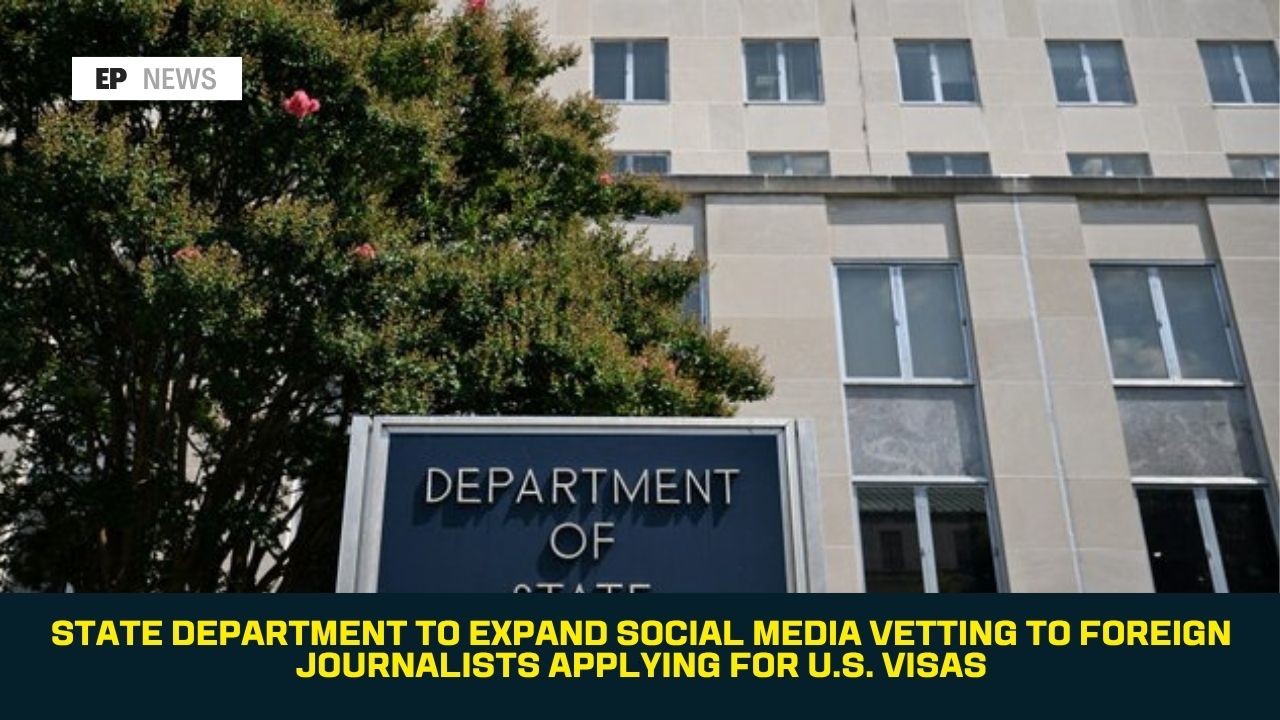
State Department to Expand Social Media Vetting to Foreign Journalists Applying for U.S. Visas
The U.S. State Department plans to expand its social media vetting requirements to cover foreign journalists applying for visas to work in the United States, along with certain visa applicants from Canada and Mexico, according to an internal memo first reported Thursday, August 6, by the conservative outlet The Daily Signal and confirmed through subsequent reporting by Reuters.
What the Reported Policy Would Do
The expansion builds on an existing Trump administration initiative that requires applicants for many visa categories to make their social media accounts public for government screening. According to Reuters, the memo indicates this requirement will now extend to foreign media representatives — meaning journalists seeking to work in the U.S. — as well as applicants for a visa category used by certain workers from Canada and Mexico.
The Daily Signal reported that the internal memo it obtained would specifically require visa applicants to change the privacy settings on their social media accounts to “public” or “open,” according to Vanguard News’s coverage of the report.
How the State Department Responded
Notably, both the White House and the State Department’s official accounts on X shared a link to The Daily Signal’s original article, an unusual step that suggests at least tacit confirmation of the report’s substance even as the department avoided formally verifying its specifics. When asked directly by Reuters and AFP to confirm the report, a State Department spokesperson declined to address the specifics, citing a standing policy of not commenting on “purported internal documents.”
The spokesperson did offer a general defense of the department’s vetting approach. “The Department of State is screening and vetting to the maximum extent possible every foreign national seeking admission to the United States to ensure they will respect U.S. law including the terms of their admission and do not pose a threat to U.S. security, public safety or national interests,” the spokesperson said, according to Reuters. In a separate statement to AFP, a State Department spokesperson added: “Online presence vetting is about applicants demonstrating their eligibility to receive a visa under US law and ensuring that no individual poses a risk to the safety and security of the United States.”
It remains unclear when the reported new policy would formally take effect, according to Reuters.
How This Fits a Broader Pattern
This isn’t the administration’s first expansion of social media vetting requirements. According to background from Yale’s Office of International Students and Scholars, the State Department first introduced comprehensive social media vetting for F, M, and J nonimmigrant visa applicants — covering international students and exchange visitors — in June 2025, requiring those applicants to set their social media profiles to “public” specifically so consular officers could review them for what the department’s guidance described as “hostile attitudes” toward the United States.
The reported expansion to foreign journalists comes on the heels of other recent restrictions specifically targeting that group. According to reporting relayed by KELO-AM, the Department of Homeland Security tightened rules last month around how long foreign journalists working in the United States, along with other visa holders including foreign students, could remain in the country.
The administration has taken additional visa-related actions this year that illustrate the broader enforcement posture. According to a summary from Headtopics Philippines, the administration has canceled the visas of foreign students who engaged in pro-Palestinian activism and revoked the visas of six foreign nationals over comments related to the assassination of conservative activist Charlie Kirk.
The Administration’s Stated Rationale
Secretary of State Marco Rubio has been a consistent public voice defending the administration’s broader visa enforcement approach. “A visa is a privilege, not a right,” Rubio has said, according to Vanguard News — a framing the administration has used repeatedly to justify expanded discretion in visa issuance and revocation decisions.
More broadly, this fits within the Trump administration’s stated approach to what it has called “extreme vetting” of foreign nationals. According to a Reuters report on an earlier, separate expansion of social media data collection requirements, the administration had previously proposed requiring most immigrant and non-immigrant visa applicants to list all social media identities used over the preceding five years — a change that would affect an estimated 14.7 million people annually if fully implemented across all visa categories.
Why This Specifically Affects Journalists
The inclusion of foreign media representatives in this expanded screening category is likely to draw particular attention given the traditional role journalists play in covering government activity, including immigration enforcement itself. Requiring foreign journalists to make their social media accounts fully public for government review — rather than allowing private settings — could affect how those journalists communicate professionally and personally before and during any assignment in the United States, since private messages, personal opinions, and professional sourcing conversations conducted on public platforms would become visible to reviewing consular officers.
FAQ
Has the State Department officially confirmed this policy? Not in full detail. The department declined to confirm the specifics of the internal memo, citing its policy against commenting on “purported internal documents,” though both the White House and State Department shared the original report on social media.
Who would be affected by the expanded vetting? Foreign journalists (media representatives) applying for U.S. work visas, along with applicants for a specific visa category used by certain workers from Canada and Mexico.
What would applicants be required to do? According to the reported memo, applicants would need to change their social media account privacy settings to “public” or “open” to allow government review.
Is this the first time the State Department has required public social media accounts for visa applicants? No. The department first implemented similar requirements for F, M, and J nonimmigrant visa applicants (covering international students and exchange visitors) in June 2025.
When would this expanded policy take effect? It remains unclear. Reuters reported that the timing of implementation was not specified in available reporting.
Conclusion
While the State Department has stopped short of formally confirming every detail of the reported memo, its decision to amplify the original report rather than deny it suggests the expansion is likely accurate, if not yet fully finalized. Combined with last month’s DHS rule changes affecting how long foreign journalists can remain in the U.S., this reported policy represents a further tightening of the visa landscape specifically for international media workers — a group whose ability to report freely and communicate with sources could be directly affected by a requirement to make their social media presence fully visible to U.S. government reviewers.
Sources: Reuters, Vanguard News, Free Malaysia Today, KELO-AM and affiliated radio stations, Headtopics Philippines, Yale OISS (reporting dated August 6-7, 2026).