Judge Signals Trump Administration Still Lacks Evidence to Justify Anthropic “Supply Chain Risk” Ban
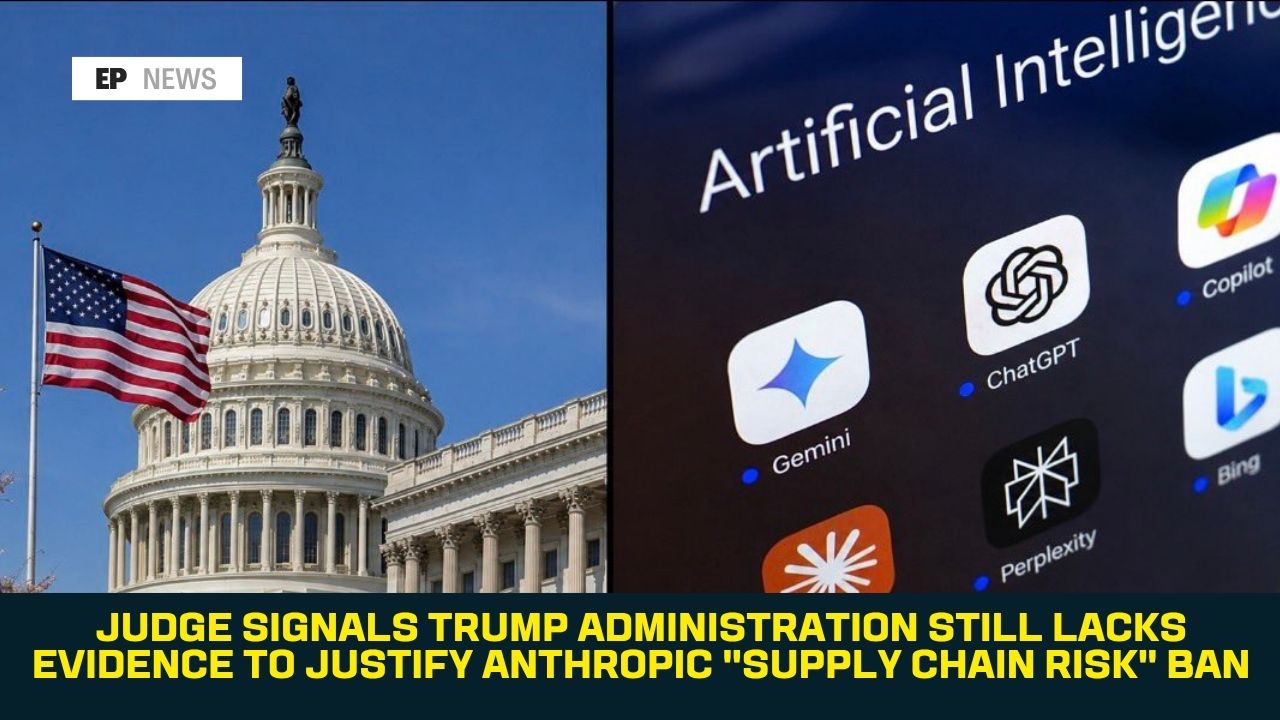
A federal judge indicated Thursday, July 30, that the Trump administration still hasn’t presented enough evidence to justify labeling AI company Anthropic a national security “supply chain risk” — the latest setback for a Pentagon designation that has already been blocked once in court and is now the subject of a fight over whether that block should become permanent.
How the Dispute Started
The conflict traces back to stalled contract negotiations between Anthropic and the Department of Defense. According to reporting from TechCrunch, Anthropic said it didn’t want its AI technology used for mass surveillance of Americans or for targeting and firing decisions involving lethal weapons, arguing the technology wasn’t ready for that kind of use. The Pentagon pushed back, arguing that a private company shouldn’t get to dictate how the military uses the technologies it acquires, and said it would use the tools within legal bounds.
In early March 2026, the Department of Defense formally designated Anthropic a supply chain risk — a label typically reserved for foreign companies considered national security threats — and President Trump directed federal agencies to stop using the company’s technology altogether. Anthropic responded by filing two separate lawsuits challenging the designation and the broader ban, one in California and one in Washington, D.C.
The Court Fight So Far
U.S. District Judge Rita Lin, based in San Francisco, has been at the center of the California case. In late March, she granted Anthropic a preliminary injunction blocking both the supply chain risk designation and Trump’s directive ordering agencies to cut ties with the company. In her 43-page ruling at the time, Lin wrote that the government’s broad measures didn’t appear to be aimed at its stated national security concerns, and suggested that if the real issue were protecting the military’s chain of command, the Pentagon could simply stop using Claude rather than pursue a sweeping ban. She called the administration’s actions an apparent attempt to “punish” the company.
The Trump administration appealed. A federal appeals court in Washington, D.C. denied Anthropic’s request for a stay in the related case in April, allowing the Pentagon’s designation to remain in place while that separate lawsuit played out, even though the same court acknowledged Anthropic would likely suffer some irreparable harm without a stay.
What Happened This Week
Thursday’s hearing in the California case centered on whether Lin’s preliminary block should become permanent. According to Bloomberg and Axios, which first reported on the hearing, Lin said the government still hasn’t provided sufficient evidence to support the supply chain risk label.
Part of the government’s case has rested on the argument that Anthropic’s public criticism of the Defense Department justified the ban — a rationale Lin reportedly called “really troubling,” warning that accepting it could set a precedent for retaliating against federal contractors simply for disagreeing with the administration.
The Pentagon separately argued that Anthropic could potentially disable or alter its AI models during active military operations, a claim TechCrunch reported that outside experts say lacks supporting evidence. Lin appeared to agree, saying she saw no proof that Anthropic could alter a model already delivered to the government or, as she put it, “flip some kind of kill switch.”
Why the Case Matters Beyond Anthropic
The dispute has drawn attention well beyond the two companies involved. According to FedScoop, Microsoft, employees at Google and OpenAI, and the American Federation of Government Employees all filed amicus briefs supporting Anthropic’s challenge earlier in the case. Anthropic has also disclosed that Amazon Web Services and Google have financial interests in the litigation’s outcome, given their investments in the company.
The practical fallout has already been significant. A legal declaration from Anthropic’s head of public sector said the company was aware of at least six federal agencies that had terminated contracts or use of its technology since the ban was announced, with contracts at roughly ten more agencies potentially at risk depending on how the case resolves.
Emil Michael, the Defense Department’s under secretary for research and engineering, has publicly criticized the earlier ruling as a “disgrace,” arguing on social media that it improperly interferes with the president’s role as commander in chief and the department’s ability to choose its own technology partners.
FAQ
What is a “supply chain risk” designation? It’s a federal designation typically used to flag foreign companies considered national security threats. Applying it to a domestic company like Anthropic is unusual and central to the legal dispute.
Why did the Pentagon designate Anthropic a supply chain risk? The designation followed stalled contract talks after Anthropic said it wouldn’t allow its AI to be used for mass surveillance of Americans or for weapons targeting and firing decisions, arguing the technology wasn’t ready for those uses.
Has a court already ruled on this? Yes, partially. A federal judge issued a preliminary injunction in March 2026 blocking the designation and the broader ban. That injunction remains in effect while the court considers whether to make it permanent, following Thursday’s hearing.
Did Anthropic win its case this week? Not yet officially. Judge Lin signaled skepticism toward the government’s evidence during the hearing, but no final ruling on making the injunction permanent has been issued.
How has the ban affected Anthropic’s government business? According to a company legal filing, at least six federal agencies had terminated contracts or usage since the ban was announced, with additional agency relationships potentially affected depending on the case’s outcome.
Conclusion
Thursday’s hearing didn’t produce a final ruling, but it reinforced a pattern that’s held since March: the judge overseeing this case has repeatedly found the government’s justification for targeting Anthropic unpersuasive. With a decision on making the injunction permanent still pending, and a parallel case still active in Washington, D.C., the broader question of whether a private AI company’s public disagreements with a federal agency can justify a national-security-style ban remains unresolved — and will likely keep drawing attention from the wider tech industry regardless of how it’s decided.
Sources: TechCrunch, Bloomberg, Axios, FedScoop, CNN Business, Courthouse News Service (reporting dated July 30-August 1, 2026).