
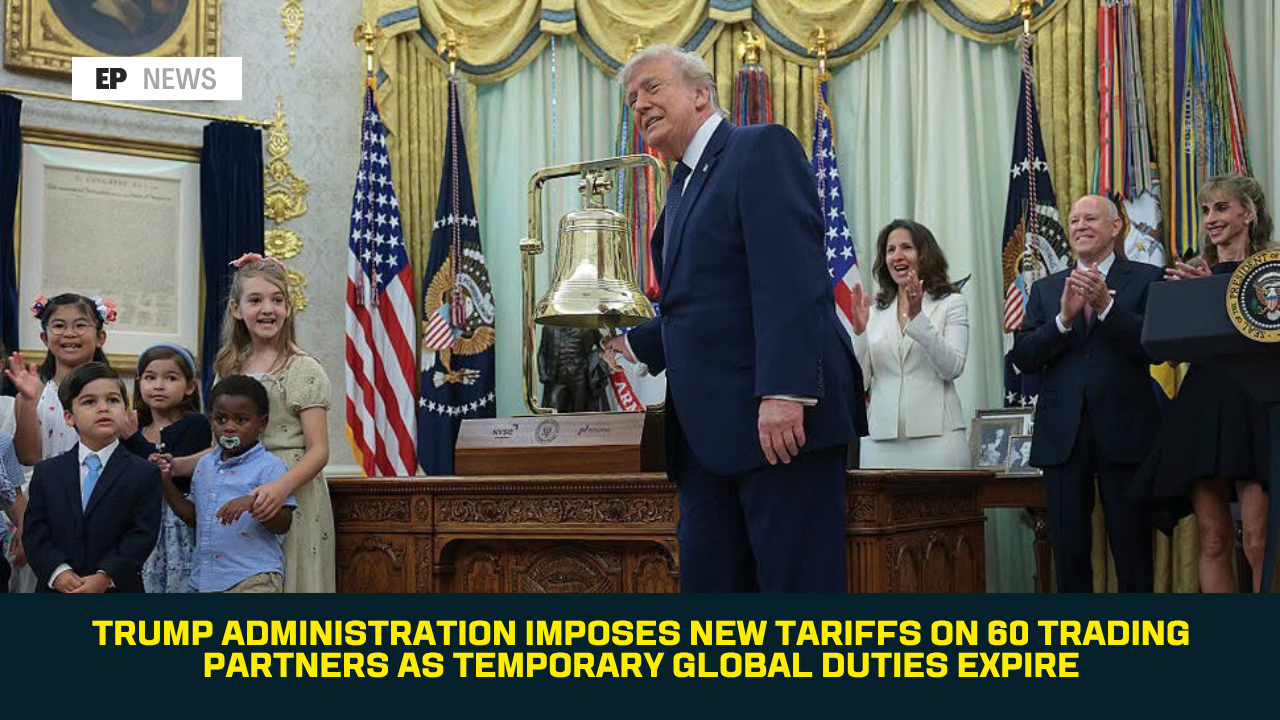
Trump Administration Imposes New Tariffs on 60 Trading Partners as Temporary Global Duties Expire
The Trump administration has introduced a new round of import tariffs affecting 60 trading partners, marking one of the most significant U.S. trade policy changes of 2026. The measures took effect as a temporary 10% global tariff expired, replacing it with new duties that the administration says are intended to strengthen enforcement against goods linked to forced labor.
The revised tariff policy applies to imports from a wide range of countries, including the European Union and China. While some products remain exempt, the move expands the administration’s use of trade measures under Section 301 of the Trade Act of 1974.
Why the New Tariffs Were Introduced
According to the administration, the new duties are designed to encourage stronger enforcement against forced labor within international supply chains.
Officials argue the policy will:
- Strengthen fair trade practices.
- Protect U.S. manufacturers.
- Encourage compliance with labor standards.
- Reduce imports linked to forced labor concerns.
The White House also says the revised framework follows legal changes after earlier tariff policies faced court challenges.
Which Countries Are Affected?
The tariffs cover imports from dozens of trading partners.
Among those affected are:
- European Union member states.
- China.
- Several Asian economies.
- Multiple Latin American countries.
- Other major U.S. trading partners.
Some categories—including certain energy products, fertilizer, and selected food items—remain exempt under the announced policy.
Business and Market Reaction
Economists say the immediate market reaction has been relatively restrained, although businesses are evaluating how the tariffs could affect supply chains.
Industries likely to monitor the changes include:
- Manufacturing.
- Consumer goods.
- Electronics.
- Industrial equipment.
- Retail.
Some importers may face higher costs depending on the products they source internationally.
International Response
Several trading partners have expressed concern over the new measures and questioned the administration’s legal and economic justification.
Trade experts expect discussions to continue through diplomatic and international trade channels as affected governments assess the impact on exports to the United States.
Potential Impact on Consumers
The long-term effect on American consumers remains uncertain.
Possible outcomes include:
- Higher costs for some imported goods.
- Supply-chain adjustments by businesses.
- Changes in sourcing strategies.
- Increased domestic manufacturing in certain industries.
Economists note that the overall impact will depend on how companies respond and whether additional trade negotiations take place.
What Happens Next?
Businesses and investors will closely monitor:
- Implementation of the new tariff schedule.
- Responses from major trading partners.
- Possible legal challenges.
- Future trade negotiations.
- Inflation and consumer price trends.
Trade policy is expected to remain an important issue for financial markets throughout the second half of 2026.
Frequently Asked Questions
Why did the United States introduce new tariffs?
The administration says the new duties are intended to strengthen enforcement against imports associated with forced labor and update U.S. trade policy.
Which countries are affected?
The tariffs apply to imports from 60 trading partners, including the European Union and China.
Will prices increase?
The effect on consumer prices will depend on how businesses absorb or pass on higher import costs and whether supply chains adjust over time.
Conclusion
The Trump administration’s latest tariff announcement represents another major shift in U.S. trade policy. By replacing temporary global duties with a broader framework targeting imports from 60 trading partners, the administration aims to reinforce labor standards while reshaping international trade relationships. As businesses, consumers, and foreign governments evaluate the changes, the new policy is expected to remain a closely watched issue for both the U.S. economy and global markets.