
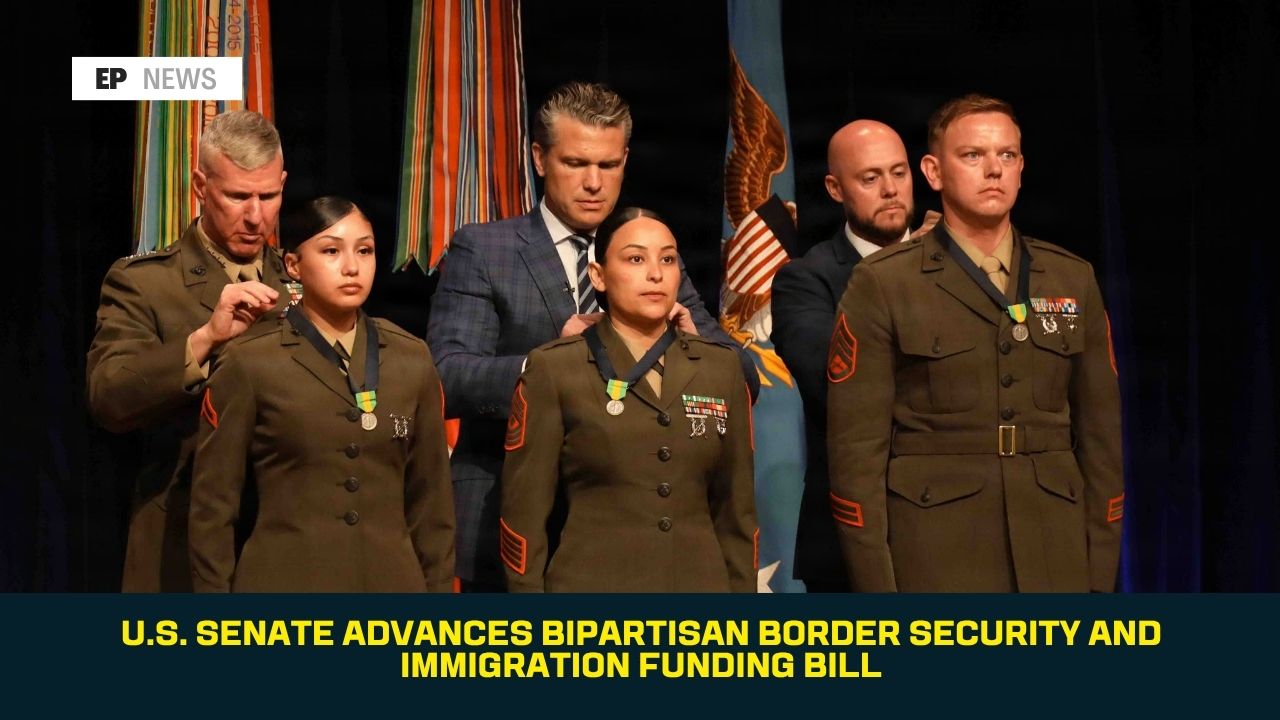
U.S. Senate Advances Bipartisan Border Security and Immigration Funding Bill
The U.S. Senate has advanced a bipartisan border security and immigration funding bill, marking a significant step in one of the most closely watched policy debates in Washington. The legislation would provide additional resources for border enforcement, asylum processing, immigration courts, and technology upgrades at ports of entry, while lawmakers continue negotiating broader immigration reforms.
The measure comes amid ongoing concerns about border management, migrant processing capacity, and staffing shortages within federal immigration agencies. Supporters argue that the proposal focuses on operational improvements and enforcement resources, while critics say it does not go far enough to address the underlying causes of migration.
What the Bill Includes
According to congressional summaries, the legislation would increase funding across several immigration and border-related programs.
Major provisions include:
- Additional Border Patrol personnel.
- Expanded asylum processing resources.
- More immigration judges and court staff.
- Upgraded surveillance and border technology.
- Improvements at ports of entry.
- Support for local communities affected by migration.
Lawmakers from both parties say the bill is designed to improve processing efficiency while strengthening border security operations.
Why Border Security Remains a Major Issue
Immigration continues to be one of the most important political issues in the United States.
Congress has been debating:
- Border enforcement funding.
- Asylum procedures.
- Immigration court backlogs.
- Humanitarian assistance.
- Visa processing reforms.
- Cooperation with neighboring countries.
The latest proposal focuses primarily on funding and operational capacity rather than comprehensive immigration reform.
Bipartisan Negotiations Continue
Senate leaders described the measure as a product of bipartisan negotiations that attempted to balance security concerns with administrative reforms.
Supporters say the bill could:
- Reduce processing delays.
- Improve border management.
- Increase staffing.
- Strengthen enforcement capabilities.
- Modernize outdated infrastructure.
Several lawmakers emphasized that additional legislation may still be needed to address long-term immigration policy questions.
Impact on Federal Agencies
If enacted, the funding would primarily affect agencies involved in border management and immigration processing.
These include:
- U.S. Customs and Border Protection.
- U.S. Citizenship and Immigration Services.
- Immigration courts.
- Department of Homeland Security operations.
Officials say additional personnel and technology could help reduce existing backlogs and improve case processing efficiency.
Political Debate Intensifies
Despite bipartisan support, the proposal continues to generate debate on Capitol Hill.
Some lawmakers argue that:
- Border enforcement should be strengthened further.
- Asylum rules require additional changes.
- More resources are needed for local communities.
- Long-term immigration reform remains unresolved.
Others view the bill as a practical step that addresses immediate operational needs while broader policy discussions continue.
What Happens Next?
The legislation will continue moving through the Senate process before any final vote.
Lawmakers are expected to negotiate:
- Funding levels.
- Enforcement provisions.
- Processing reforms.
- Technology investments.
- Implementation timelines.
If approved by both chambers of Congress, the measure would then be sent to the president for consideration.
Frequently Asked Questions
What is the Senate border security bill?
It is a bipartisan funding proposal that would provide additional resources for border enforcement, asylum processing, immigration courts, and technology improvements.
Is this comprehensive immigration reform?
No. The legislation focuses primarily on funding and operational improvements rather than a complete overhaul of U.S. immigration law.
Which agencies would receive funding?
The proposal would affect agencies involved in border security and immigration processing, including Customs and Border Protection and immigration court operations.
Conclusion
The Senate’s bipartisan border security and immigration funding bill represents another significant chapter in the ongoing national debate over immigration policy. By increasing resources for enforcement, processing, and court operations, lawmakers hope to improve the federal government’s ability to manage border activity more efficiently. As negotiations continue in Congress, the legislation will remain a closely watched issue for policymakers, border communities, and voters across the United States.