
U.S. Jobless Claims Fall Again as Labor Market Shows Continued Strength
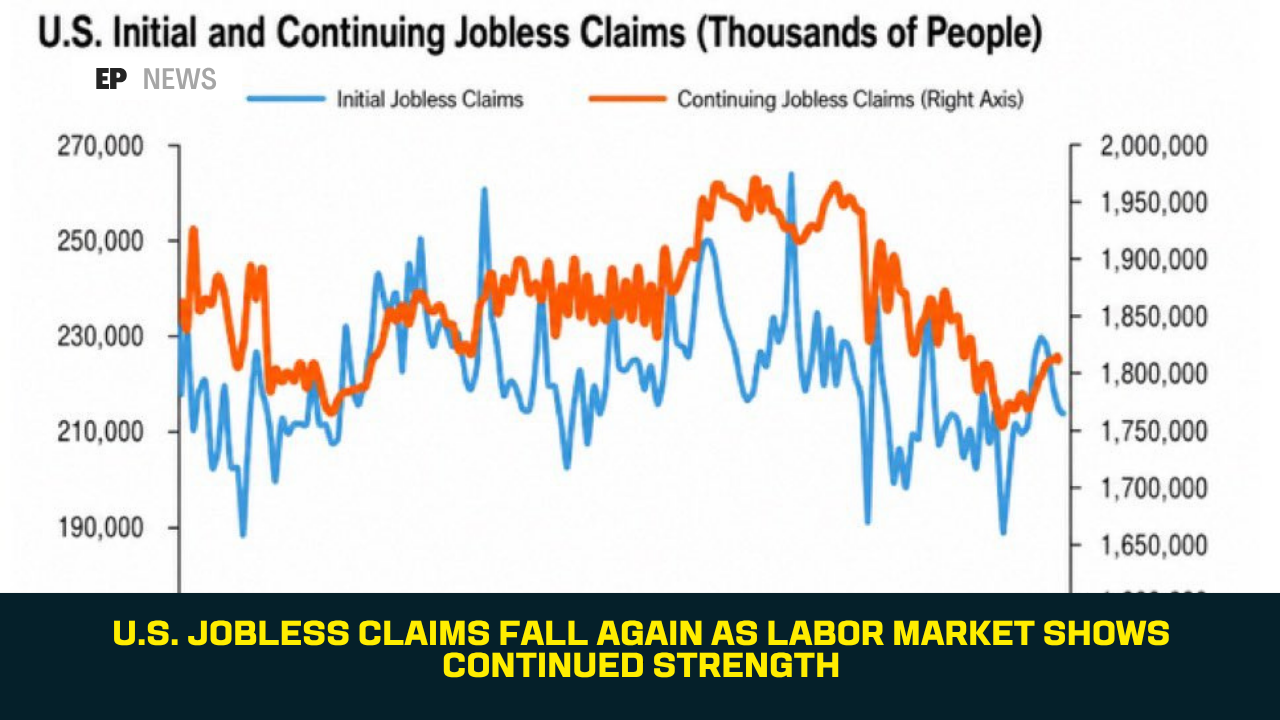
The U.S. labor market continued to demonstrate resilience as the latest government data showed that initial unemployment claims fell to 215,000 last week. The decline suggests that employers are still holding on to workers despite persistent inflation concerns, elevated interest rates, and uncertainty surrounding global markets.
Economists closely watch weekly jobless claims because they provide one of the earliest indicators of changes in employment conditions. A lower-than-expected number of claims generally signals that layoffs remain limited and that businesses continue to have confidence in economic conditions.
Labor Market Remains Resilient
Although economic growth has slowed from its rapid post-pandemic pace, the latest employment data indicates that the U.S. job market remains relatively healthy.
Several factors continue to support employment:
- Strong demand in healthcare and professional services
- Continued hiring in technology-related industries
- Stable consumer spending
- Low levels of large-scale layoffs
Analysts say the latest figures reinforce the view that the labor market remains one of the strongest parts of the U.S. economy.
What Jobless Claims Tell Investors
Initial jobless claims measure the number of people filing for unemployment benefits for the first time.
Investors monitor this report because it can provide early signals about:
- Business confidence
- Hiring trends
- Consumer spending
- Economic growth
- Future Federal Reserve decisions
When claims remain low, it generally suggests that employers are reluctant to reduce their workforce, even during periods of slower economic activity.
Federal Reserve Still in Focus
The latest labor data arrives as investors continue evaluating the Federal Reserve’s next policy move.
A strong labor market can complicate the Fed’s efforts to reduce inflation because continued hiring may support consumer spending and wage growth. At the same time, policymakers are balancing the need to control inflation without slowing the economy too aggressively.
Financial markets are expected to remain sensitive to upcoming inflation reports, employment data, and comments from Federal Reserve officials.
Wall Street Reaction
Markets responded positively to the latest employment figures, with investors viewing the report as another sign that the U.S. economy continues to avoid a sharp slowdown.
Technology shares helped lift major stock indexes, while investors also monitored geopolitical developments and energy prices for their potential impact on inflation and corporate earnings.
What Economists Are Watching Next
Attention is now turning toward several key economic reports expected in the coming weeks, including:
- Monthly employment data
- Inflation readings
- Retail sales
- Consumer confidence
- Corporate earnings
These reports will provide additional insight into whether the U.S. economy can maintain steady growth during the second half of 2026.
Why This Matters
A healthy labor market supports household income, consumer spending, and overall economic stability. While challenges such as inflation and geopolitical uncertainty remain, continued strength in employment provides an encouraging signal for businesses, investors, and policymakers.
If hiring remains steady over the coming months, economists believe the United States could continue to avoid a significant economic slowdown while supporting broader market confidence.
Conclusion
The latest decline in U.S. jobless claims highlights the continued resilience of the American labor market. Although investors remain focused on inflation, interest rates, and global events, stable employment remains an important pillar of economic growth. Upcoming labor and inflation reports will likely play a key role in shaping expectations for the Federal Reserve and financial markets during the remainder of 2026.