
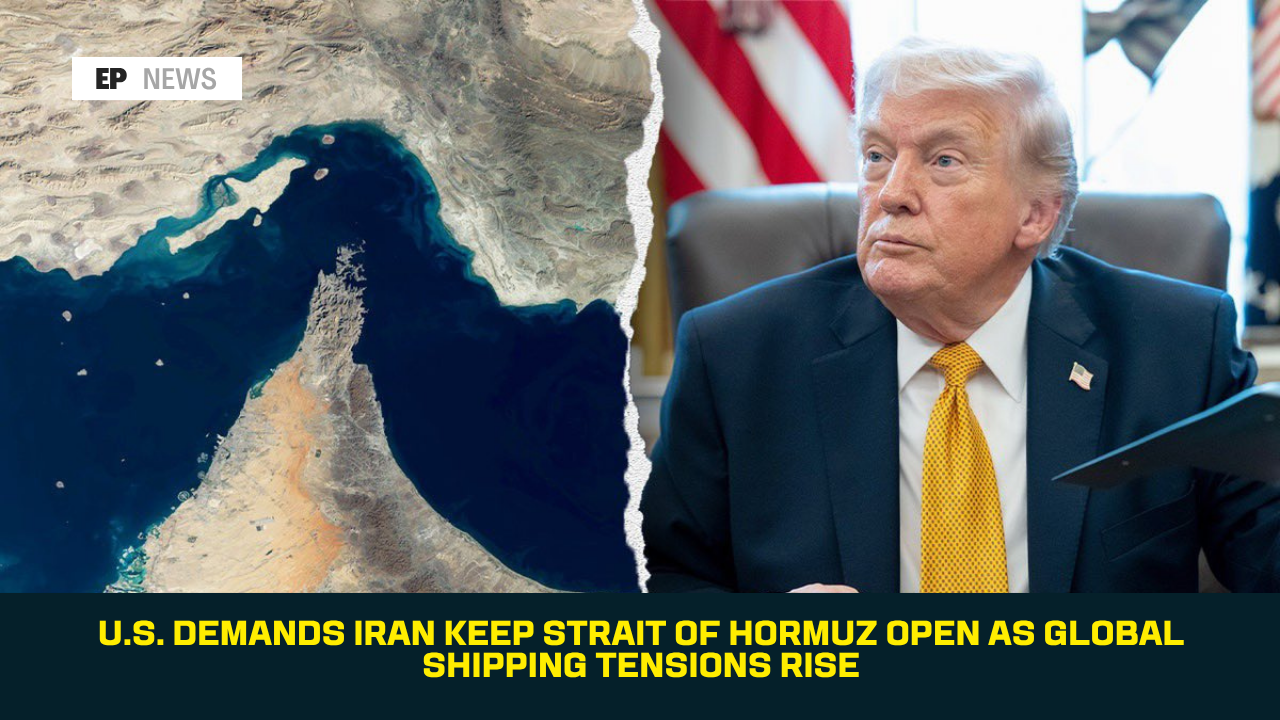
U.S. Demands Iran Keep Strait of Hormuz Open as Global Shipping Tensions Rise
The United States has called on Iran to publicly guarantee that the Strait of Hormuz will remain open and secure for international shipping, following renewed attacks on commercial vessels and heightened tensions in the Gulf. U.S. officials say uninterrupted access to the strategic waterway is essential for global trade and energy security.
The Strait of Hormuz is one of the world’s busiest maritime routes, with a significant share of globally traded crude oil and liquefied natural gas passing through it each day. Any disruption in this narrow passage can quickly affect oil prices, shipping costs, and financial markets worldwide.
Why the Strait of Hormuz Is So Important
The Strait of Hormuz connects the Persian Gulf to the Gulf of Oman and the Arabian Sea. It serves as a vital route for energy exports from several Middle Eastern countries.
If shipping is disrupted, the consequences may include:
- Higher global oil prices
- Increased fuel costs
- Delays in international trade
- Higher transportation expenses
- Greater volatility in financial markets
Because of its strategic importance, the waterway has long been a focal point during periods of geopolitical tension.
U.S. Position
Senior U.S. officials have stated that Iran must ensure the safety of international shipping and prevent further attacks by armed groups operating in the region. Washington has also continued diplomatic discussions while maintaining that military options remain available if necessary.
The administration says freedom of navigation is a fundamental principle of international commerce and that commercial vessels should be able to pass through the Strait without fear of attack.
Market Reaction
Global investors reacted cautiously to the latest developments.
Analysts noted that:
- Energy markets remain highly sensitive to Middle East tensions.
- Oil prices can move sharply whenever shipping risks increase.
- Investors are closely monitoring diplomatic negotiations.
- Transportation and logistics companies are watching developments carefully.
Financial markets are expected to remain volatile until the security situation becomes clearer.
Diplomatic Efforts Continue
Despite the tensions, diplomatic contacts between the United States and Iran have not completely stopped. Officials continue discussing possible ways to reduce tensions and avoid a broader regional conflict.
Several countries have also encouraged both sides to pursue negotiations instead of further military escalation, emphasizing the importance of protecting international trade routes.
What Happens Next?
In the coming days, investors and policymakers will closely watch:
- Any new developments in the Strait of Hormuz.
- Statements from U.S. and Iranian officials.
- Changes in global oil prices.
- International diplomatic initiatives.
- Regional security updates.
These developments could influence both global markets and international relations.
Frequently Asked Questions
Why is the Strait of Hormuz important?
It is one of the world’s most critical shipping routes for crude oil and natural gas exports.
Why is the United States involved?
The U.S. says it is working to protect international shipping and maintain freedom of navigation through the waterway.
Could this affect consumers?
Yes. If shipping disruptions continue, they could contribute to higher fuel and transportation costs around the world.
Conclusion
The Strait of Hormuz remains one of the most strategically important waterways on the planet, making every development in the region significant for governments, businesses, and consumers alike. As the United States presses Iran to guarantee safe passage for commercial shipping, the international community will continue watching closely for signs of either diplomatic progress or further escalation. The outcome could have lasting implications for global energy markets, regional stability, and the broader world economy.