
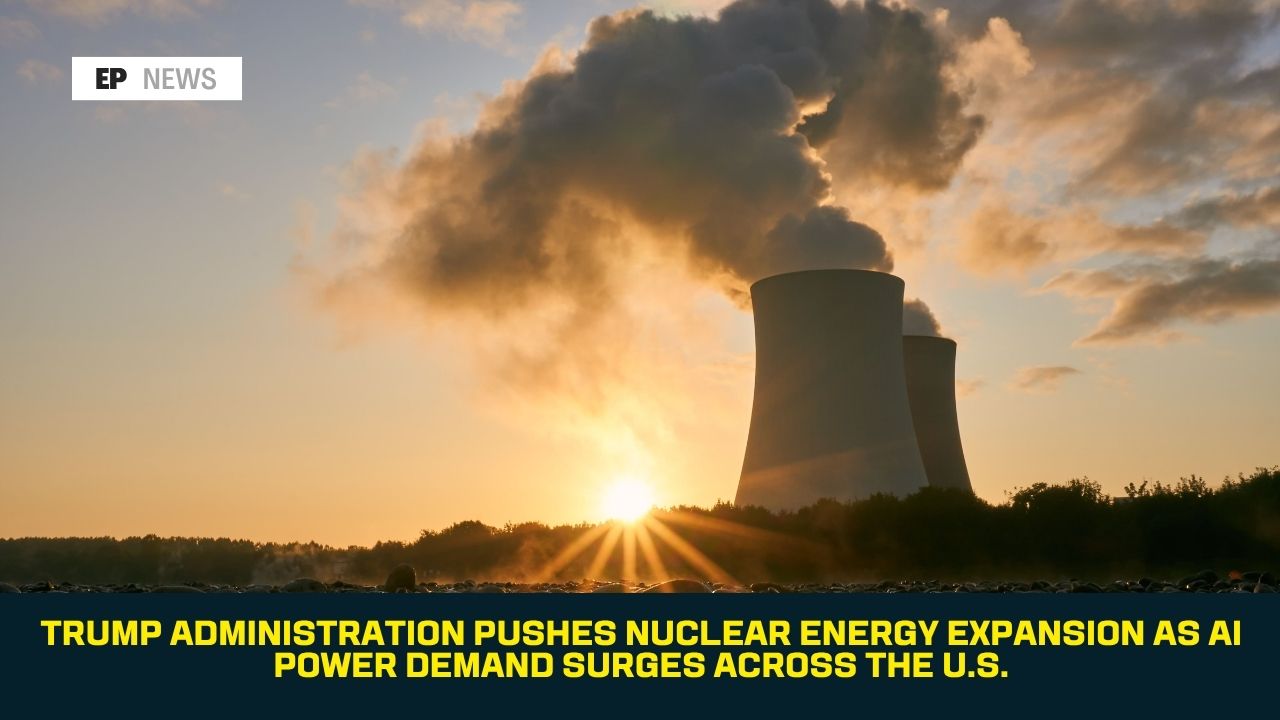
Trump Administration Accelerates Nuclear Energy Plans as AI Drives Record Power Demand
The Trump administration is placing renewed emphasis on expanding America’s nuclear energy industry as electricity demand continues to rise rapidly, fueled by artificial intelligence (AI), cloud computing, advanced manufacturing, and the expansion of large-scale data centers.
During a White House announcement, President Donald Trump said strengthening the nation’s nuclear industry is critical to maintaining U.S. technological leadership and ensuring reliable electricity for future economic growth. The administration believes advanced nuclear reactors will play a key role in supporting the next generation of AI infrastructure while improving long-term energy security.
The announcement comes at a time when energy experts warn that U.S. electricity consumption is increasing faster than expected, largely because AI systems require enormous computing capacity and around-the-clock power.
Why AI Is Creating Massive Electricity Demand
Artificial intelligence has become one of the fastest-growing users of electricity worldwide.
Modern AI models require thousands of specialized computer processors operating continuously inside large data centers. These facilities consume significantly more electricity than traditional office buildings.
Industry analysts say demand is being driven by:
- AI model training
- Cloud computing services
- Large enterprise data centers
- Semiconductor manufacturing
- High-performance computing
As companies continue investing billions of dollars in AI infrastructure, utilities are preparing for one of the largest increases in electricity demand in decades.
Why Nuclear Energy Is Back in Focus
Unlike solar and wind power, nuclear plants generate electricity continuously, making them attractive for industries that require stable power 24 hours a day.
The administration argues that expanding nuclear energy could help:
Improve Grid Reliability
Reliable baseload power reduces pressure on the electric grid during periods of high demand.
Support AI Growth
AI companies require uninterrupted electricity to operate large computing facilities.
Strengthen Energy Independence
Increasing domestic electricity production may reduce reliance on imported energy resources.
Reduce Long-Term Infrastructure Risks
Officials say a more diversified energy mix improves resilience during extreme weather and periods of high electricity demand.
Administration’s Nuclear Priorities
The White House outlined several priorities aimed at accelerating America’s nuclear sector.
Advanced Reactor Development
Federal agencies are expected to support faster development of small modular reactors and other advanced nuclear technologies.
Domestic Manufacturing
Officials want more nuclear equipment manufactured within the United States to strengthen supply chains.
Private Investment
The administration hopes regulatory reforms will encourage additional private investment into nuclear projects.
Workforce Development
Training engineers, technicians, and skilled workers remains another major objective as future projects expand.
Economic Benefits Could Be Significant
Supporters believe expanded nuclear investment could create thousands of new jobs across multiple industries.
Potential beneficiaries include:
- Engineering firms
- Construction companies
- Equipment manufacturers
- Technology suppliers
- Research institutions
- Utility companies
Communities hosting future nuclear facilities may also benefit from increased local investment and tax revenue.
Challenges Still Remain
Despite growing political support, expanding nuclear power remains a complex process.
Major challenges include:
High Construction Costs
Building commercial nuclear plants requires substantial long-term investment.
Regulatory Reviews
Every new reactor must complete extensive federal licensing and safety evaluations.
Construction Timelines
Large nuclear facilities often require several years before becoming operational.
Public Acceptance
Some communities continue expressing concerns regarding nuclear safety and waste management.
Energy analysts say overcoming these challenges will be essential for meeting future electricity demand.
Why This Matters for American Consumers
Although today’s announcement primarily affects the energy sector, the long-term impact could reach nearly every household.
A stronger electric grid may help:
- Improve energy reliability
- Support future AI innovation
- Reduce risks of electricity shortages
- Encourage domestic manufacturing
- Create high-paying technical jobs
However, experts note that any direct consumer benefits will likely develop gradually as projects move from planning to construction.
Industry Response
Many utility companies and technology firms have welcomed renewed attention to advanced nuclear technology, particularly as electricity demand continues climbing.
Several major technology companies have already announced partnerships exploring nuclear energy as a long-term solution for powering future AI data centers.
Industry observers expect additional investment announcements during the second half of 2026.
What Happens Next?
Federal agencies are expected to release additional details regarding:
- Nuclear licensing reforms
- Investment incentives
- Public-private partnerships
- Advanced reactor deployment
- Manufacturing initiatives
Energy companies, investors, and state governments will closely monitor future policy announcements as implementation moves forward.
Frequently Asked Questions (FAQ)
Why is the Trump administration expanding nuclear energy?
The administration says nuclear power is needed to support rising electricity demand, strengthen energy security, and maintain U.S. technological leadership.
How does artificial intelligence affect electricity demand?
AI data centers require enormous computing power, leading to rapidly increasing electricity consumption across the United States.
Will new nuclear plants be built immediately?
No. Future projects must still complete regulatory approvals, financing, and construction before becoming operational.
Which industries could benefit?
Engineering, construction, manufacturing, utilities, technology companies, and AI infrastructure providers could all benefit from expanded nuclear investment.
Conclusion
As artificial intelligence transforms the U.S. economy, reliable electricity has become a strategic priority. The Trump administration’s renewed focus on nuclear energy reflects a broader effort to prepare the nation’s power grid for the next generation of AI, advanced manufacturing, and digital infrastructure. While significant financial and regulatory challenges remain, the initiative signals that nuclear energy is likely to play an increasingly important role in America’s long-term economic and energy strategy.