
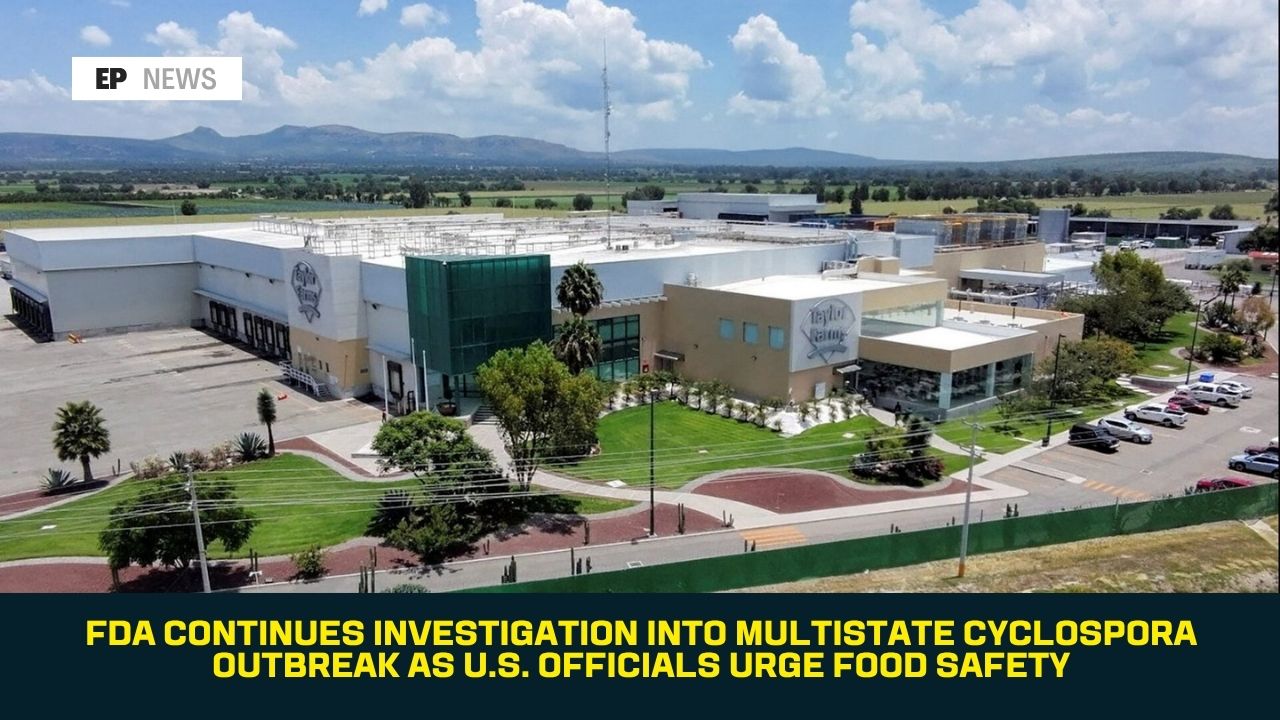
FDA Continues Multistate Cyclospora Investigation as Health Officials Urge Caution
Federal health officials are continuing their investigation into a multistate Cyclospora outbreak that has sickened people across the United States. The U.S. Food and Drug Administration (FDA) and the Centers for Disease Control and Prevention (CDC) are working together to identify the exact source of the foodborne illness and prevent additional cases.
The White House has also confirmed that it is closely monitoring the situation, saying federal agencies are coordinating with state and local health departments to trace the outbreak and provide public guidance.
What Is Cyclospora?
Cyclospora is a microscopic parasite that can contaminate fresh fruits and vegetables. People usually become infected after consuming contaminated produce that has not been properly washed or handled.
Unlike many bacterial foodborne illnesses, Cyclospora infections often require specific laboratory testing to confirm the diagnosis.
Common symptoms include:
- Persistent watery diarrhea
- Loss of appetite
- Stomach cramps
- Nausea
- Fatigue
- Weight loss
- Low-grade fever in some cases
Symptoms may appear several days after exposure and can last for weeks if left untreated.
Federal Investigation Remains Active
According to federal officials, investigators continue tracing the outbreak to determine exactly where the contamination occurred.
The White House says the administration is providing resources to the CDC and FDA while investigators work to identify the original source of the outbreak. Officials emphasized that protecting public health remains a priority as laboratory testing and supply-chain tracing continue.
Health agencies have also increased surveillance efforts to detect additional cases reported by hospitals and state health departments.
FDA and CDC Advice for Consumers
Until investigators complete their work, health officials recommend several precautions:
Wash Fresh Produce Thoroughly
Although washing may not eliminate every parasite, it helps reduce contamination from dirt and other harmful organisms.
Practice Good Food Hygiene
Wash hands before preparing meals and after handling raw fruits or vegetables.
Refrigerate Perishable Foods
Proper storage helps reduce the growth of many foodborne pathogens.
Seek Medical Care if Symptoms Persist
Anyone experiencing prolonged diarrhea or severe dehydration should contact a healthcare provider promptly.
Why This Outbreak Is Receiving National Attention
Foodborne illness investigations often require weeks of detailed laboratory analysis because investigators must connect patients from different states to a common food source.
Cyclospora outbreaks can be particularly challenging because:
- Symptoms may not appear immediately.
- Patients often cannot remember exactly what they ate days earlier.
- Fresh produce typically has a short shelf life.
- Products may have been distributed across multiple states.
These factors make identifying the exact source more complex than many other food safety investigations.
Public Health Response
Federal and state agencies continue sharing information through disease surveillance systems to identify new infections quickly.
The investigation includes:
- Laboratory testing
- Patient interviews
- Food distribution tracking
- Coordination with growers and distributors
- Ongoing public health updates
Officials stress that the investigation is continuing and that recommendations may change if additional evidence becomes available.
FDA’s Broader Food Safety Efforts
Alongside the outbreak investigation, the FDA continues implementing broader food safety initiatives, including improvements in food monitoring, manufacturing oversight, and public health communication.
The agency has also announced several other public health initiatives during July 2026 aimed at strengthening food and medical product safety.
What Happens Next?
The FDA and CDC will continue collecting samples, reviewing laboratory results, and tracing food distribution networks.
If investigators identify a specific contaminated product, officials could announce additional recalls or public health recommendations.
Consumers are encouraged to monitor updates from federal and state health agencies while following routine food safety practices.
Frequently Asked Questions (FAQ)
What is Cyclospora?
Cyclospora is a parasite that can cause intestinal illness after people consume contaminated food or water.
What are the symptoms?
Common symptoms include diarrhea, stomach cramps, nausea, fatigue, reduced appetite, and weight loss.
Is the FDA still investigating?
Yes. Federal health officials continue working with the CDC and state agencies to identify the exact source of the outbreak.
Should people stop eating fresh produce?
Federal officials have not advised consumers to avoid all fresh produce. Instead, they recommend proper washing, safe food handling, and paying attention to any future recall announcements.
Conclusion
The ongoing Cyclospora investigation highlights the importance of rapid public health coordination and food safety monitoring in the United States. While investigators continue working to determine the precise source of the outbreak, consumers can reduce their risk by following recommended food hygiene practices and staying informed through official FDA and CDC updates. As additional laboratory findings become available, health authorities are expected to provide further guidance to help protect the public.