
Corporate Finance Analysis: How Tech Infrastructure and AI Spending Are Shaping Market Valuations
The Era of Capital-Intensive Enterprise Innovation
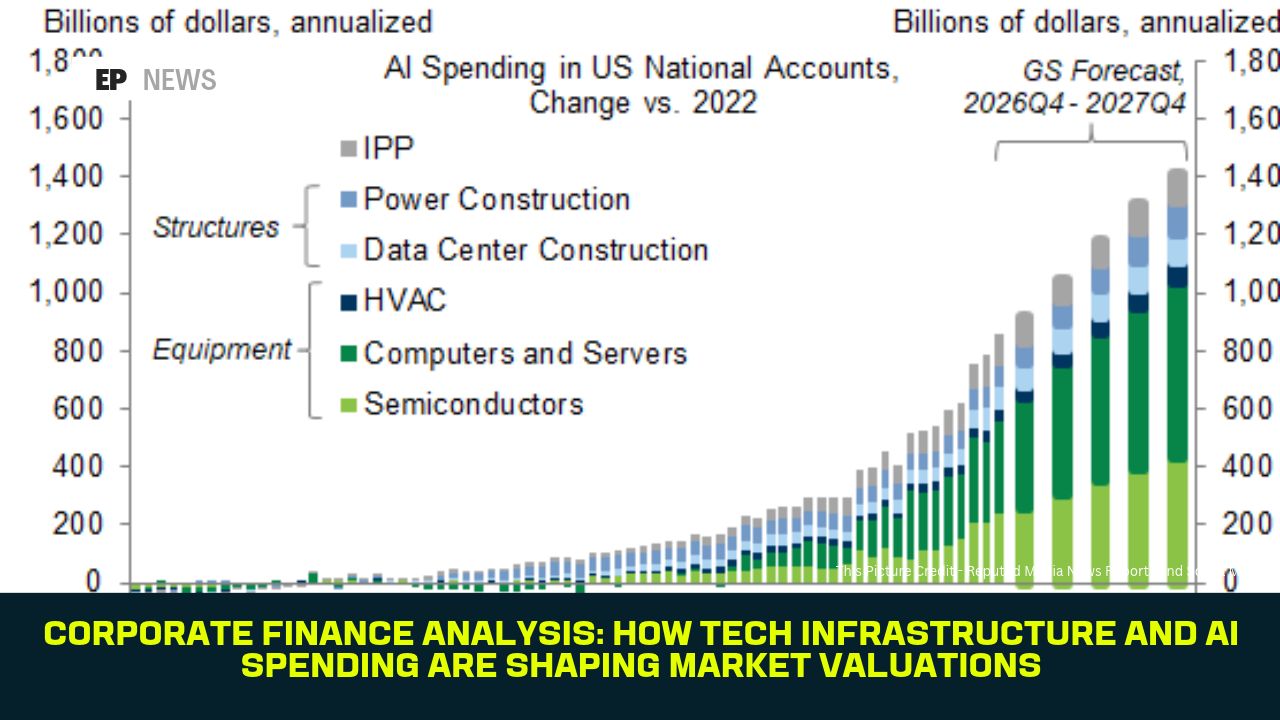
Corporate finance dynamics have entered a highly capital-intensive phase, dominated by unprecedented investments in artificial intelligence (AI) infrastructure, semiconductor fabrication, and cloud computing architecture. Financial institutions and institutional research desks continue to release aggressive forecasts regarding enterprise spending trajectories. For instance, recent industry projections indicate that annualized spending on AI-related hardware and intellectual property will climb toward multi-trillion-dollar valuations, absorbing a significant percentage of broader economic output.
Evaluating Corporate Balance Sheets and Capital Allocation
As corporations pivot their capital expenditure (CapEx) budgets toward digital transformation, corporate finance analysts must closely monitor balance sheet health, debt loads, and free cash flow generation.
- CapEx vs. Shareholder Returns: Companies must balance aggressive research and development (R&D) outlays with reliable dividend payouts and share repurchase programs.
- Debt Financing and Liquidity: Rising interest rate cycles mean that debt-funded expansion carries higher servicing costs, making organic cash flow generation paramount.
- Return on Invested Capital (ROIC): Investors increasingly demand clear proof that massive capital deployment into AI hardware yields tangible operational efficiencies and revenue growth.
Macroeconomic Impact and Market Confidence
The interplay between mega-cap technology balance sheets and broader economic indicators dictates market sentiment. While equity indexes experience periodic volatility tied to debt concerns or valuation corrections among high-growth tech firms, strong enterprise earnings reports consistently ease systemic fears.
Strategic Lessons for Individual Investors
Individual investors analyzing corporate balance sheets can apply institutional evaluation methods to their own portfolios:
- Scrutinize Debt Structures: Prioritize companies with manageable debt maturities and robust cash reserves capable of weathering high-rate environments.
- Examine Cash Conversion Cycles: Look past headline net income figures to verify that reported earnings convert reliably into actual cash inflows.
- Diversify Across Sectors: Balance high-growth technology allocations with stable, dividend-paying entities in consumer staples and healthcare.
Frequently Asked Questions (FAQs)
- Why is AI infrastructure spending impacting corporate finance? Building data centers, specialized chips, and power grids requires massive upfront capital outlays, shifting corporate priorities toward heavy long-term investment.
- How do interest rates affect corporate capital expenditures? Higher interest rates increase the cost of borrowing capital, forcing corporations to rely more heavily on internal cash flows rather than debt financing for expansion projects.
Conclusion
The current corporate finance environment highlights the tension between aggressive innovation and disciplined capital allocation. By tracking how enterprises manage debt, cash flow, and technological investments, investors can better navigate market shifts and build resilient portfolios.