
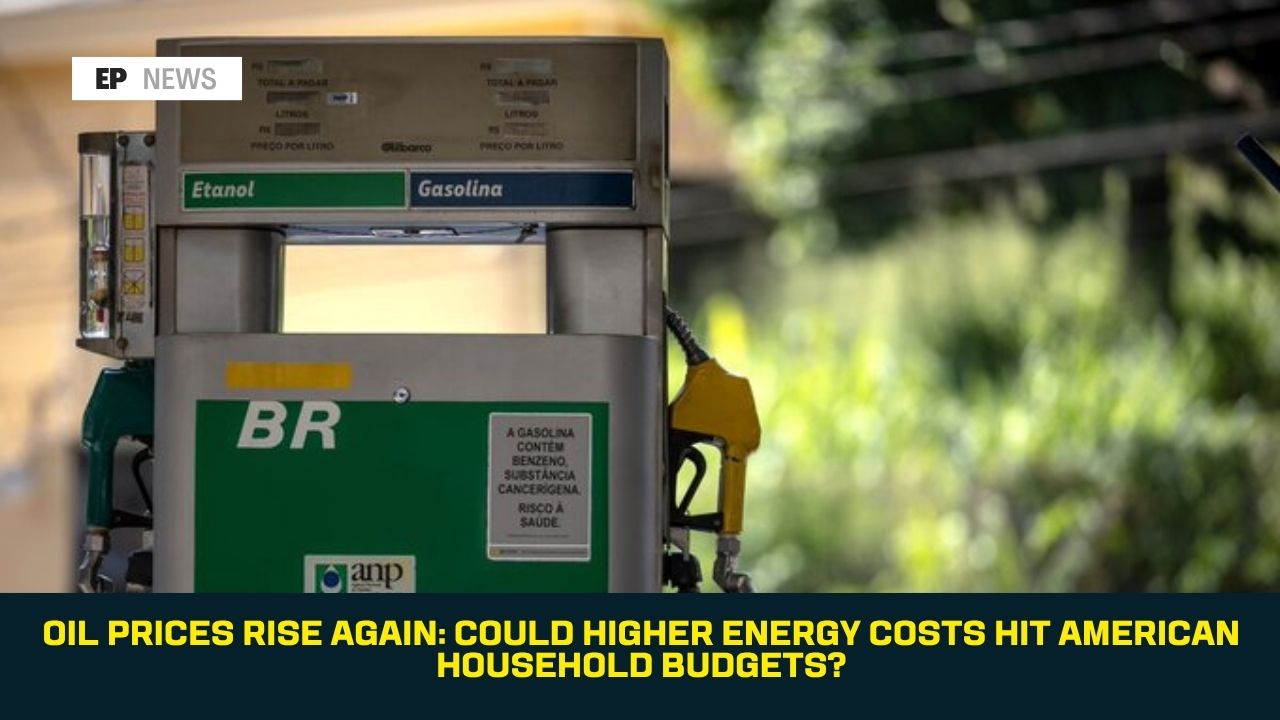
Oil Prices Rise Again: Could Higher Energy Costs Hit American Household Budgets?
Rising oil prices are once again becoming a major concern for American consumers.
On September 3, 2026, oil markets experienced another volatile trading session as renewed tensions in the Middle East increased concerns about potential disruptions to global energy supplies.
Reuters reported that Brent crude rose to around $96.22 per barrel, while U.S. West Texas Intermediate crude traded near $91.79 per barrel during Thursday’s trading. Both major benchmarks had risen for several consecutive days and reached their highest levels in roughly six weeks earlier in the session.
The Associated Press also reported that oil prices continued climbing as renewed fighting and uncertainty surrounding the Middle East raised concerns about energy supplies. U.S. crude and Brent crude both moved higher during the day.
For American families, the price of crude oil matters for a simple reason:
Higher oil prices can eventually affect much more than what drivers pay at the gas pump.
Energy costs can influence transportation, shipping, airline tickets, food distribution and the broader inflation picture.
That does not mean every increase in crude oil prices will immediately result in higher gasoline prices across the United States. Gas prices depend on many factors, including refinery capacity, regional supply, taxes and seasonal demand.
But if elevated oil prices persist, consumers could begin to feel additional pressure on household budgets.
Why Are Oil Prices Rising?
The latest increase in oil prices is closely connected to renewed geopolitical uncertainty in the Middle East.
Reuters reported that concerns about possible supply disruptions intensified following renewed military developments involving the United States and Iran. The Strait of Hormuz remains particularly important to global energy markets because it is a critical shipping route for oil supplies.
Markets tend to react quickly when there is a risk that oil production or transportation could be disrupted.
Even before an actual supply shortage occurs, traders may respond to uncertainty by increasing prices.
This is why oil prices can move sharply based on:
- Military developments
- Shipping disruptions
- Production cuts
- Supply concerns
- Changes in global demand
- Weather events
- Refinery outages
- Government policy
The latest developments have increased uncertainty about the future movement of oil supplies through the Middle East.
For consumers, the key question is whether the increase becomes temporary—or whether higher prices remain in place long enough to affect gasoline and other household costs.
How Higher Oil Prices Can Affect Gas Prices
Most Americans notice energy inflation first when they visit a gas station.
However, crude oil prices are only one part of the final price consumers pay for gasoline.
The price at the pump can include:
- Crude oil costs
- Refining costs
- Distribution and transportation expenses
- Federal and state taxes
- Retail costs
- Regional supply conditions
That means gasoline prices do not always move immediately with crude oil.
Still, crude oil remains one of the most important components of gasoline pricing.
If oil prices remain elevated for an extended period, refiners and distributors may eventually face higher costs.
Those costs can then influence retail gasoline prices.
The Associated Press reported that rising oil prices were occurring alongside broader concerns about inflation, even as other financial markets responded positively to easing Treasury yields.
For households that drive frequently, even a relatively small increase in gasoline prices can add up quickly.
Why Higher Gas Prices Matter to American Families
Imagine a household with two vehicles.
One family member drives to work every day.
Another drives children to school, activities and appointments.
The family may also depend on their vehicles for grocery shopping and other essential travel.
If gasoline costs increase significantly, the household has fewer dollars available for other expenses.
That could mean reducing spending on:
- Restaurants
- Entertainment
- Travel
- Clothing
- Subscriptions
- Savings
- Other discretionary purchases
For lower-income households, the problem can be even more serious.
Energy costs are often difficult to avoid.
People still need to commute to work.
Businesses still need to transport products.
Families still need electricity and transportation.
As a result, rising energy costs can function like an unexpected pressure on household budgets.
The Impact Goes Beyond the Gas Pump
One of the most important personal-finance issues surrounding higher oil prices is that the effects can spread through the economy.
Oil and fuel are important for moving goods.
Trucks transport food.
Ships move products internationally.
Airlines depend heavily on jet fuel.
Delivery companies use fuel to bring packages to consumers.
If transportation costs rise substantially, companies may eventually attempt to pass some of those expenses on to customers.
This can potentially affect the prices of:
- Groceries
- Online purchases
- Airline tickets
- Consumer goods
- Delivery services
The timing and size of these effects can vary.
A temporary increase in oil prices may have little lasting impact.
A prolonged period of higher energy prices, however, can contribute to broader inflation pressure.
Could Rising Oil Prices Make Inflation Worse?
This is one of the biggest concerns for financial markets.
Inflation affects household purchasing power.
When prices rise faster than incomes, consumers can afford less with the same amount of money.
Energy prices can be particularly important because they affect both consumers directly and businesses indirectly.
Federal Reserve Governor Christopher Waller said that future inflation data would be important in determining his position on interest rates, while noting that persistent inflationary pressure could influence future policy decisions.
If energy prices remain elevated, policymakers may need to evaluate whether those increases are temporary or whether they are contributing to broader and more persistent inflation.
For consumers, higher inflation can create several problems at once.
They may face:
- Higher gasoline costs
- Higher grocery prices
- Higher borrowing costs
- Slower wage growth relative to expenses
This is why oil prices are closely watched not only by energy companies but also by investors, economists and households.
What Could Higher Oil Prices Mean for Credit Card and Loan Costs?
Oil prices do not directly determine credit card interest rates.
However, the relationship can become important through inflation and Federal Reserve policy.
If inflation remains high, the Federal Reserve may be less likely to reduce interest rates.
In some circumstances, persistent inflation could even create pressure for tighter monetary policy.
Higher interest rates can affect consumers with:
- Credit card balances
- Auto loans
- Personal loans
- Variable-rate debt
The current financial environment is particularly challenging because households may face rising costs in several areas simultaneously.
A family could potentially pay more for gasoline while also dealing with expensive borrowing costs.
That combination can make debt management increasingly important.
How Much Could Rising Oil Prices Affect Your Monthly Budget?
The impact varies from household to household.
A person working remotely may experience a relatively small direct effect from higher gasoline prices.
A long-distance commuter could feel a much larger impact.
Consider the following factors:
How often do you drive?
The more miles you drive, the more sensitive your budget may be to gasoline-price changes.
What type of vehicle do you own?
Larger vehicles may consume more fuel.
Do you use public transportation?
Public transportation can reduce direct gasoline expenses, although transportation systems can also face higher operating costs.
How much of your income goes toward transportation?
Households with tight budgets may have less flexibility to absorb higher fuel costs.
Do you work in an industry affected by transportation costs?
Some businesses may experience indirect effects from higher fuel prices.
The most important thing for consumers is to understand their personal exposure.
Five Ways Americans Can Protect Their Budget From Rising Energy Costs
Consumers cannot control global oil markets.
But they can take practical steps to reduce the impact on their household finances.
1. Track Fuel Spending
Many people know approximately what they spend on gasoline but do not track the exact amount.
Reviewing monthly fuel expenses can help identify whether costs are rising.
A simple budgeting app or spreadsheet can be useful.
2. Avoid High-Interest Credit Card Debt
Using a credit card to cover higher gasoline or grocery costs can create a much larger financial problem if the balance is not paid quickly.
A temporary increase in fuel expenses should not become years of high-interest debt.
Consumers with existing credit card balances may want to focus on reducing expensive debt whenever possible.
3. Combine Trips
Planning errands more efficiently can reduce unnecessary driving.
For example, combining grocery shopping, banking and other errands into one trip may help lower fuel consumption.
Small changes can add up over time.
4. Build an Emergency Fund
Energy prices can change quickly.
A strong emergency fund gives households more flexibility when unexpected expenses increase.
Even small, regular savings contributions can help build financial resilience.
5. Review Your Overall Transportation Costs
Fuel is only one part of transportation spending.
Consumers should also consider:
- Car payments
- Insurance
- Maintenance
- Repairs
- Parking
- Tolls
Understanding the complete cost of transportation can help households make better long-term financial decisions.
What About Airline Tickets and Travel Costs?
Higher oil prices can also affect Americans planning vacations or business travel.
Jet fuel is a major operating expense for airlines.
When energy prices rise significantly and remain elevated, airlines may face increased operating costs.
Whether those costs are passed on to passengers depends on many factors, including:
- Travel demand
- Competition
- Airline capacity
- Fuel hedging strategies
- Seasonal travel patterns
Consumers planning major travel may want to monitor airfare prices carefully.
However, travelers should avoid assuming that every increase in oil prices will immediately cause airline ticket prices to rise.
The relationship is more complicated.
Could Higher Oil Prices Hurt Consumer Spending?
Consumer spending is one of the most important parts of the U.S. economy.
When households spend more on essential expenses, they may reduce discretionary spending.
For example, if a family spends an additional amount each month on gasoline, it may have less money available for:
- Restaurants
- Entertainment
- Retail shopping
- Travel
- Home improvements
That can affect businesses dependent on discretionary consumer spending.
This is why investors often watch oil prices closely.
Higher energy costs can potentially shift consumer spending patterns.
Why Investors Are Also Watching Oil Prices
The latest oil-price movements have influenced broader financial markets.
The Associated Press reported that stocks moved higher on September 3 even as oil prices continued climbing, while Treasury yields eased.
This demonstrates how financial markets can send mixed signals.
Rising oil prices may benefit some energy companies.
At the same time, they can hurt businesses that consume large amounts of fuel.
Airlines, transportation companies and certain manufacturers may face higher operating expenses.
Individual investors should remember that a rising oil price does not automatically mean every energy stock will perform well.
Investment decisions should consider:
- Company finances
- Debt levels
- Production costs
- Valuation
- Long-term business strategy
What Happens Next?
The future direction of oil prices remains uncertain.
Much will depend on developments involving:
- Middle East tensions
- Oil production
- Shipping routes
- Global demand
- Economic growth
Reuters reported that market uncertainty has been driven by concerns over potential disruptions to Middle Eastern energy supplies, with oil prices experiencing significant volatility.
Oil markets can change quickly.
A diplomatic development could reduce supply concerns.
A new escalation could increase them.
For American consumers, the most important issue is whether elevated crude prices persist long enough to meaningfully affect gasoline and broader consumer prices.
Frequently Asked Questions
Why are oil prices rising in September 2026?
Oil prices have been affected by renewed geopolitical tensions and concerns about potential disruptions to energy supplies in the Middle East. Reuters reported that these concerns pushed both Brent and U.S. crude higher during the latest trading session.
Will higher oil prices immediately increase gas prices?
Not necessarily. Gasoline prices depend on crude oil costs, refinery operations, distribution, taxes and local market conditions. However, sustained increases in oil prices can eventually affect prices at the pump.
How do higher oil prices affect inflation?
Higher energy prices can increase transportation and production costs. If those higher costs spread through the economy, they can contribute to broader inflation pressure.
What should consumers do if gas prices rise?
Consumers can track fuel spending, reduce unnecessary driving, combine trips, maintain an emergency fund and avoid relying heavily on high-interest credit cards.
Can rising oil prices affect interest rates?
Oil prices do not directly set interest rates. However, if higher energy prices contribute to persistent inflation, they can influence expectations about Federal Reserve policy.
Conclusion: Higher Oil Prices Could Become a New Pressure Point for U.S. Households
Oil prices are once again moving higher, creating another potential challenge for American household budgets.
The latest market movements are being driven largely by geopolitical uncertainty and concerns about possible disruptions to global energy supplies. Brent crude and U.S. crude both climbed during September 3 trading as investors assessed the risks surrounding Middle East developments.
For consumers, the biggest concern is not necessarily what happens during a single day of trading.
The more important question is whether higher oil prices remain elevated long enough to affect gasoline, transportation and broader inflation.
Americans cannot control global oil markets, but they can prepare their household finances.
Tracking transportation expenses, avoiding unnecessary high-interest debt and maintaining emergency savings can help families handle unexpected increases in essential costs.
As the situation develops, energy prices will remain an important indicator for consumers, investors and policymakers alike.
Editorial Disclaimer: Oil and gasoline prices can change rapidly. This article is for informational purposes only and does not constitute personalized financial or investment advice.
Source of Media: Reuters, Associated Press