
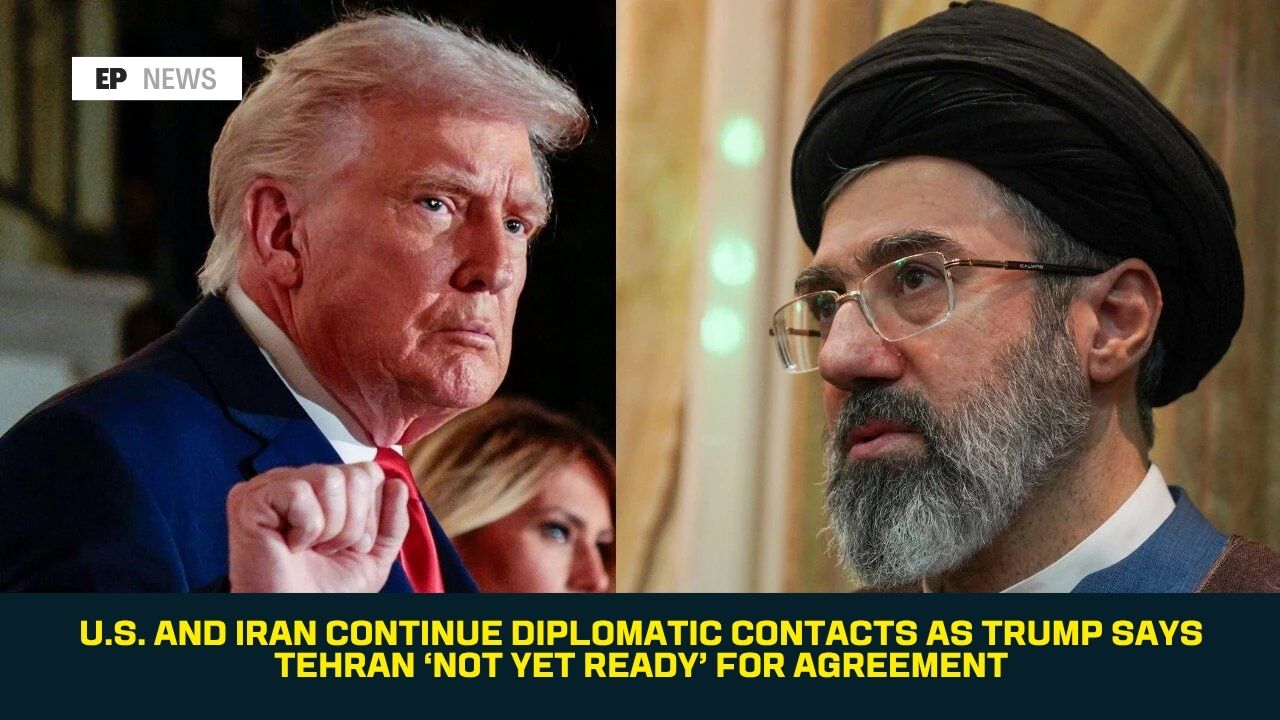
Trump Says U.S. and Iran Are Still Talking, but No Deal Is Imminent
President Donald Trump has confirmed that the United States and Iran remain engaged in diplomatic contacts, signaling that communication between the two countries has continued despite weeks of heightened military tensions across the Middle East.
Speaking to reporters at the White House, Trump said discussions are ongoing but cautioned that Tehran is “not yet ready” to reach a final agreement. His remarks suggest that while diplomacy remains an option, significant differences between the two sides still need to be resolved.
The comments come after a period of escalating regional tensions that affected international shipping routes, energy markets, and security across the Gulf region.
Diplomatic Talks Continue Despite Tensions
According to President Trump, U.S. officials have maintained communication with Iranian representatives in an effort to reduce tensions and explore the possibility of a broader agreement.
While expressing cautious optimism, Trump emphasized that negotiations remain difficult.
“We are talking to them… they’re being serious… but that doesn’t mean we get there,” Trump told reporters.
Officials have not released details about the format of the discussions or any specific proposals currently under consideration.
Why These Talks Matter
Relations between Washington and Tehran remain one of the most closely watched issues in global diplomacy.
The outcome of future negotiations could influence:
- Stability in the Middle East
- International oil markets
- Global shipping routes
- Regional security cooperation
- Future U.S. sanctions policy
Financial markets often react to developments because disruptions in the region can affect global energy supplies.
Recent Escalation Increased Pressure for Diplomacy
The diplomatic contacts follow a period of military escalation involving U.S. operations against Iranian targets and Iranian responses across the region.
Those developments increased concerns over broader regional instability and the security of major international shipping corridors. Even as military activity continued, U.S. officials left open the possibility of renewed diplomatic engagement.
Key Challenges Preventing an Agreement
Although both sides remain in contact, several major issues continue to complicate negotiations.
Nuclear Program
Iran’s nuclear activities remain one of the central issues in discussions between Washington and Tehran.
Regional Security
Both countries continue to disagree over military activity and regional influence across the Middle East.
Economic Sanctions
U.S. sanctions remain a major point of disagreement, with Iran seeking broader economic relief while Washington continues to link any changes to future negotiations.
Mutual Trust
Years of political disagreements and previous failed negotiations continue to make progress difficult.
Impact on Global Energy Markets
Energy traders continue monitoring every diplomatic update because the Middle East remains one of the world’s most important oil-producing regions.
A successful diplomatic breakthrough could:
- Improve market confidence
- Reduce concerns over supply disruptions
- Ease pressure on energy prices
Conversely, renewed escalation could increase uncertainty for global markets.
International Response
Several U.S. allies continue encouraging diplomatic efforts aimed at reducing regional tensions.
International observers generally view continued communication as preferable to further military escalation, although officials caution that meaningful progress may require additional negotiations.
What Happens Next?
For now, neither Washington nor Tehran has announced a timetable for a formal agreement.
Analysts expect discussions to continue while both governments evaluate possible diplomatic options.
Future developments may include:
- Additional diplomatic meetings
- Statements from the White House
- Responses from Iranian officials
- Potential confidence-building measures
- Continued international mediation efforts
Officials stress that negotiations remain fluid and that no final agreement has been announced.
Frequently Asked Questions (FAQ)
Is the United States still negotiating with Iran?
Yes. President Trump confirmed that communication between the United States and Iran continues, although he said Tehran is not yet ready for a final agreement.
Has a peace agreement been reached?
No. The President stated that discussions are ongoing, but no agreement has been finalized.
Why are these talks important?
The discussions could influence regional security, global energy markets, international shipping, and future U.S. foreign policy.
Could tensions increase again?
Yes. While diplomacy is continuing, officials have not ruled out additional developments if negotiations fail or regional security conditions change.
Conclusion
President Trump’s latest remarks indicate that diplomacy between the United States and Iran remains active despite recent military tensions. Although the administration believes discussions are becoming more serious, the President acknowledged that Tehran is not yet prepared to reach a final agreement. As negotiations continue, governments, investors, and international allies will closely monitor developments that could shape the future of Middle East security, global energy markets, and U.S. foreign policy.