
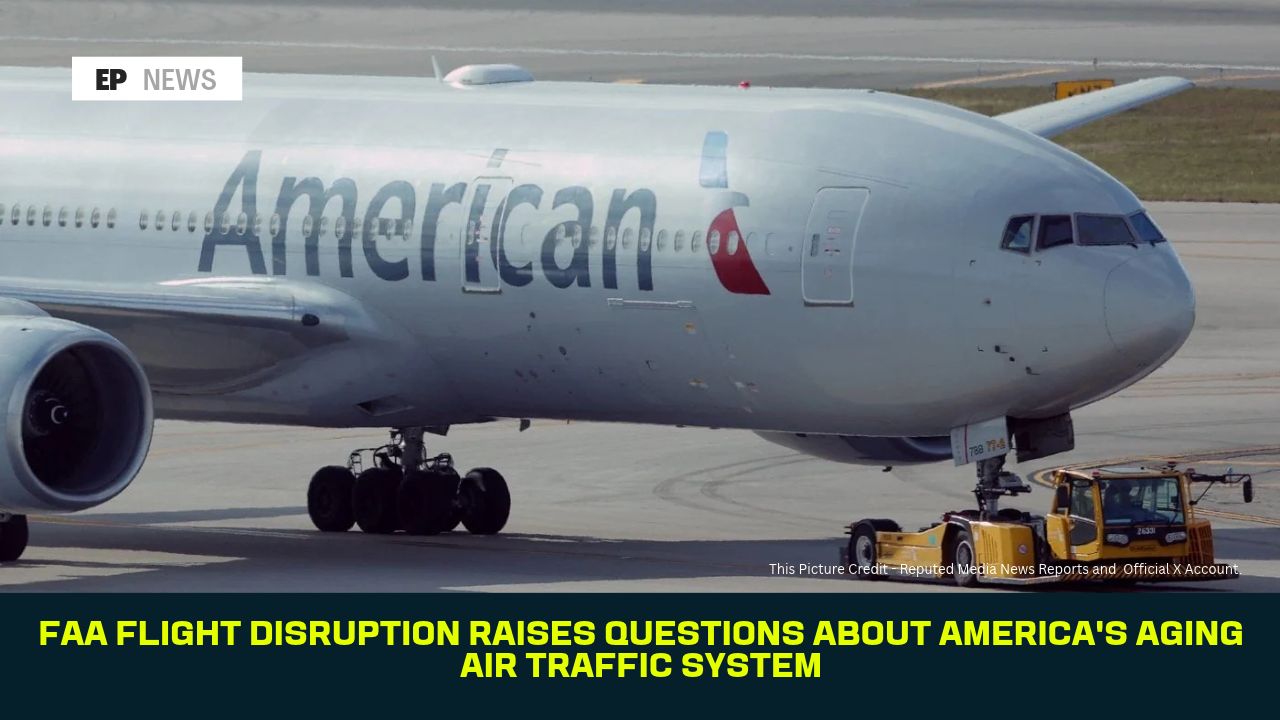
FAA Flight Disruption Raises Questions About America’s Aging Air Traffic System
Category: U.S. News / Transportation
A major communications failure affecting the Federal Aviation Administration’s air traffic control network disrupted airline operations across the United States on Friday, November 13, creating widespread uncertainty for passengers, airlines, airports and aviation authorities.
The incident resulted in a nationwide ground stop that temporarily prevented new departures while officials worked to address the communications problems. Although the Federal Aviation Administration later lifted the restriction, the disruption highlighted an important issue facing American aviation: the reliability of the technology supporting one of the world’s busiest air transportation networks.
The outage affected multiple air traffic control facilities and created operational difficulties for airlines attempting to maintain their flight schedules. Thousands of passengers experienced delays, cancellations and changes to their travel arrangements.
According to reporting by The Associated Press, the FAA lifted the nationwide ground stop after the communications problems were addressed. However, airlines continued to face operational challenges as aircraft and crews needed to be repositioned.
The incident has also renewed questions about the condition of America’s aging aviation infrastructure and the need for long-term modernization.
What Happened During the FAA Communications Outage?
The disruption began when communications problems affected regional air traffic control facilities. The problems interfered with the systems used by controllers to coordinate aircraft movements and maintain communication across the aviation network.
Air traffic control depends on reliable communications. Controllers must be able to exchange information with pilots, coordinate aircraft movements and maintain safe separation between planes.
When critical communications infrastructure becomes unreliable, aviation authorities may need to restrict departures to protect the safety of passengers and flight crews.
That is what happened on Friday.
The FAA implemented a nationwide ground stop, preventing new departures while the situation was assessed. Aircraft already airborne were permitted to continue toward their destinations under applicable safety procedures.
The restrictions affected domestic operations and created additional complications for international flights operating into and across the United States.
The FAA eventually lifted the ground stop, but restoring normal airline schedules required additional time.
Why Did the Flight Disruption Affect So Many Airports?
The American aviation system operates as an interconnected network.
Airlines do not operate individual flights in isolation. An aircraft arriving late at one airport may be scheduled to depart for another destination shortly afterward.
Similarly, pilots, cabin crews, airport personnel and ground-service teams operate according to carefully coordinated schedules.
When a major air traffic control disruption affects multiple facilities, the consequences can spread beyond the original location.
For example, a delayed departure in Chicago can affect a connecting flight in another state. A plane arriving late in New York may be unable to operate its next scheduled service on time.
This creates a chain reaction.
Passengers who are not traveling through the original affected airports may still experience disruptions because the aircraft or crew assigned to their flight has been delayed elsewhere.
The Friday incident demonstrated how quickly operational problems in a central aviation system can affect travelers across the country.
Aging Technology Raises Questions About Aviation Reliability
One of the most important issues emerging from the incident concerns the age and reliability of the technology supporting America’s air traffic control infrastructure.
Transportation officials indicated that the communications failure involved older network equipment and infrastructure problems.
Officials also discussed the possibility that new technology, equipment changes or system patches may have contributed to the disruption.
However, a definitive technical explanation was not immediately established.
The distinction matters.
It would be premature to conclude that a specific new aviation technology caused the outage without the results of a complete investigation.
The incident instead raises broader questions about how the FAA manages legacy systems while introducing modern technology.
Aviation infrastructure must operate continuously and reliably. Modernization projects therefore require extensive testing, careful implementation and backup arrangements.
Replacing outdated technology is important, but introducing new systems without sufficient safeguards can create additional operational challenges.
The FAA will need to establish precisely what happened and explain how similar failures can be prevented.
Was the Incident Caused by a Cyberattack?
Concerns about cybersecurity naturally emerged after the nationwide communications failure.
Modern aviation infrastructure depends on interconnected computer networks, communications systems and digital technologies. A disruption affecting such infrastructure can raise questions about possible malicious activity.
However, officials said there was no evidence indicating that the outage was caused by a cyberattack.
That distinction is important for accurate reporting.
A technical malfunction, equipment failure, software problem and deliberate cyberattack are different events requiring different investigations and responses.
Without supporting evidence, describing the incident as a cyberattack would be misleading.
Investigators will need to determine the exact technical cause and whether additional weaknesses contributed to the failure.
What Should Passengers Do After the FAA Ground Stop?
Passengers traveling during the recovery period should not assume that lifting the nationwide restriction means every airline has returned to its normal schedule.
Airline operations may remain disrupted after an airport or national restriction ends.
Travelers should take several practical steps.
Check flight status before leaving home. Airline websites and mobile applications generally provide the latest departure information.
Monitor connecting flights. Passengers with connections should check both the initial and connecting segments of their journey.
Contact the airline about cancellations. Travelers should review rebooking options and available refunds.
Keep travel documentation. Boarding passes, cancellation notices and receipts may be useful when requesting refunds or reimbursement.
Allow additional time at airports. Even when departures resume, airport operations may take time to stabilize.
According to AP reporting, passengers whose flights are canceled generally have a right to a refund if they choose not to travel, subject to applicable U.S. Department of Transportation rules. Refund rights should not be confused with additional compensation for inconvenience.
What Does the Incident Mean for the Future of U.S. Aviation?
The United States depends heavily on its aviation network for business travel, tourism, commerce and international transportation.
Reliable air traffic management is therefore an economic necessity as well as a public safety requirement.
A major communications outage can affect more than individual passengers.
Airlines may face additional operating expenses, airports may experience congestion, cargo deliveries may be delayed and businesses may need to adjust travel arrangements.
The incident also places renewed attention on the FAA’s modernization priorities.
Replacing aging infrastructure requires investment, but funding alone will not solve every problem. The agency must also ensure that new equipment is compatible with existing systems and that technical changes are carefully tested.
Effective backup systems, cybersecurity protections, maintenance programs and trained technical personnel are equally important.
What Happens Next?
The next major development will be the technical investigation into the communications failure.
Authorities will need to establish which systems experienced problems, why the disruption spread and whether existing backup arrangements performed as intended.
Congressional oversight may also become part of the discussion, particularly as lawmakers examine federal infrastructure spending and aviation safety priorities.
For passengers, the immediate concern remains whether airline schedules have returned to normal.
For aviation officials, the larger challenge is preventing another nationwide disruption.
Frequently Asked Questions
1. Why were flights grounded across the United States?
The FAA imposed a nationwide ground stop after communications problems affected air traffic control facilities and disrupted normal aviation operations.
2. Did the FAA cancel all flights?
No. The restriction temporarily prevented new departures. Aircraft already airborne were allowed to continue operating under applicable safety procedures.
3. Has the FAA lifted the nationwide ground stop?
Yes. The FAA lifted the restriction on Friday, November 13, although airlines continued to experience operational disruption.
4. Was the FAA outage caused by a cyberattack?
Officials said there was no evidence of a cyberattack. The precise technical cause required further investigation.
5. Can passengers receive refunds after canceled flights?
Passengers generally have a right to a refund when an airline cancels a flight and they choose not to travel, under applicable Department of Transportation rules.
6. Could flight delays continue after the ground stop ended?
Yes. Aircraft and crews may need to be repositioned, and airline schedules can take time to recover after a major disruption.
Conclusion
The nationwide FAA communications outage is a reminder of how much the United States depends on reliable aviation infrastructure.
Although the ground stop was lifted, the incident exposed the potential consequences of technical failures within a highly interconnected transportation network.
For passengers, the disruption meant uncertainty, missed connections and unexpected travel changes. For airlines, it created operational challenges that extended beyond the period of the original restriction.
The most important question now is not simply how quickly the system returned to operation, but what authorities learn from the failure.
Aviation modernization must remain a priority, supported by reliable backup systems, rigorous testing and transparent oversight.
The safety and reliability of America’s air transportation network depend on getting those decisions right.
Sources and Further Reading
- Associated Press – The Latest: FAA lifts nationwide ground stop on flights that halted travel across the US.
- The Guardian – U.S. flight outage and FAA ground stop live coverage.
- Reuters – U.S. domestic news coverage, November 14, 2026.
Editorial Note: This article is an independently structured news explainer based on the cited reporting. It does not claim that the investigation has established a final technical cause.